
Agatha All Along Act Two: What the Road Takes From Its Coven
Updated
 Priya.VEditor
Is the Witches' Road a journey that rewards courage, or a system that makes vulnerable people pay for somebody else's promise? Agatha All Along gives both interpretations room to grow before its finale changes the ground beneath them. The trials look at first like a sequence of elaborate supernatural challenges, each designed to suit a particular witch. Yet the middle of the season is more revealing when read as a study of mutual care: who contributes expertise, who takes the risk, who is believed and who is left behind. The poison, the recording studio and the later confrontations are not simply fresh sets for an anthology of witchcraft. They measure whether a coven assembled through an uncertain bargain can become a community. The answer is uncomfortable. Some members find purpose in protecting others. Others are harmed by the very institution supposedly leading them towards fulfilment. The revelation that Billy's powers manifested the Road makes those costs more, not less, important.
Two accounts of the same journey
The first account is the one Agatha sells. Travel the Road, survive its trials and receive what is missing. Its shape is reassuringly familiar: hardship is supposedly a fair price for reward, and every challenge is a necessary stage on a path towards improvement. The second account emerges from the people doing the travelling. None enters with the same information or the same ability to protect herself. Jennifer Kale's knowledge differs from Alice Wu-Gulliver's, and Lilia Calderu experiences time in a way the others cannot readily understand. Sharon Davis is not a trained witch at all. An attractive story about teamwork can conceal those asymmetries, particularly when a leader has powerful reasons to keep the company moving. The writer's task is to weigh the promise against the observed consequences rather than treating every ritual as proof that the Road is fair. The trials acquire their moral meaning from what happens to the people, not from the ingenuity of the spectacle.
The poisoned wine reveals an unequal bargain
In the first major Road trial, a suburban house, wine and an apparent antidote challenge turn ordinary domestic hospitality into danger. Jennifer's skills become essential, changing how the group sees somebody who may previously have been treated as a difficult recruit. The episode offers a version of mutual dependence that feels genuinely earned: knowledge dismissed in one context becomes indispensable in another. But Sharon's death prevents the successful work of the others from being mistaken for a tidy group victory. She came into the adventure as a civilian with a different relationship to magical risk. The fact that she can die in a trial in which others use specialist expertise is a severe comment on the original bargain. A reader should not explain her away as comedy relief or a token member required to fill a ceremonial role. Her loss is also a continuation of an earlier vulnerability. In WandaVision, she lived under somebody else's imposed domestic fiction. Here another person's larger story once again consumes the ordinary life she might reasonably have wanted to reclaim.
Alice's protection is a different kind of power
The music-studio challenge changes the emphasis from technical solution to inherited care. Alice's mother, Lorna Wu, left a song that has more than nostalgic value: her version of the Ballad serves as protection for her daughter. The distinction is important because it resists an easy story in which parents in this corner of the Marvel universe only impose their desires upon their children. Lorna's music expresses an effort to protect somebody who may be separated from her, whilst Alice must discover what that protection means in circumstances she did not choose. The performance becomes a moment when communal action and family history meet. It also reveals how different the song's uses can be. Agatha has made the broader Road legend serve deception over time, whereas Lorna's recording has a distinct protective purpose. The same cultural form carries contradictory intentions. Reducing the episode to a list of song versions would miss the harder question: who uses a shared tradition to safeguard someone else, and who uses its authority to draw people into danger?

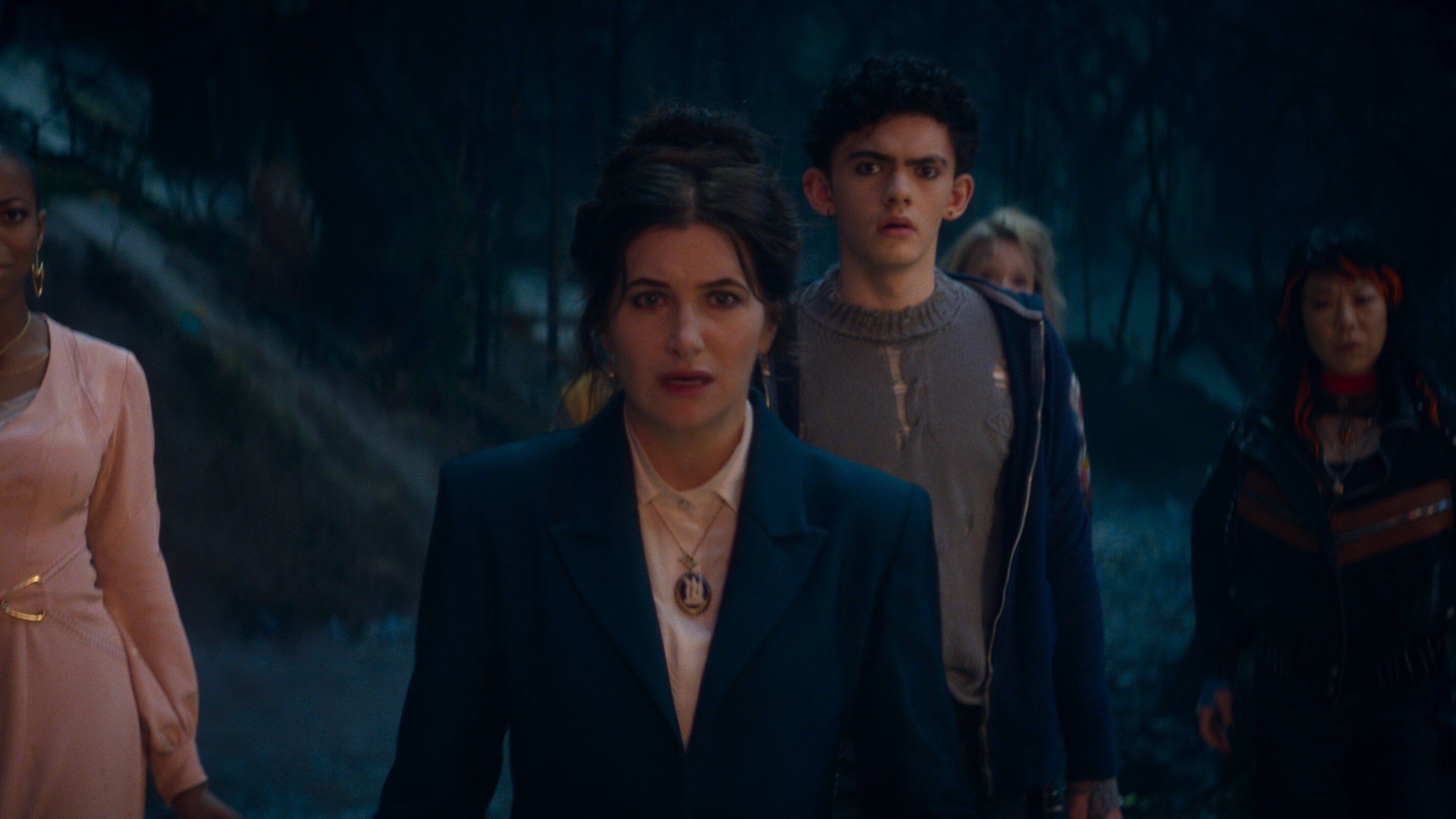
Alice's death dismantles the easy idea of progress
The later loss of Alice is especially cruel because it follows a story about an inherited form of protection. Her expertise and her family's history have become meaningful to the coven, yet they do not guarantee her safety. The episode involving Agatha's mother and the dangerous transfer of power raises difficult questions about intention and control. A careful reading should not announce more certainty about every aspect of Agatha's volition than the evidence supports. It can, however, describe the result: Alice's attempt to help ends in her death, and the group cannot simply put the pieces back together through another performance. This event exposes a fault in the traditional adventure bargain. If every trial supposedly brings the company closer to a reward, why does the path keep taking away people capable of earning it? The story's answer is not a mystical accounting rule. The losses are real events inside a reality that later proves to have been made under extraordinary and unstable circumstances.
Lilia turns apparent confusion into personal agency
Lilia's experience of time supplies the season with a different kind of development. What initially looks like scattered speech or mysterious foreknowledge later becomes intelligible through her own perspective. In the tarot-centred episode, the apparent disorder of earlier moments is reassembled as a personal story. A critic can admire the narrative arrangement without claiming that every event physically occurred in a different universal chronology. The point is less about solving a mathematical time puzzle than about granting someone the authority to understand her own life. Lilia's final decision is moving because the viewer is finally allowed to perceive its significance alongside her. Compared with Sharon's lack of preparation and Alice's failed attempt at protection, this is a different relationship between knowledge and sacrifice. Lilia is not merely another victim collected by the plot. The structure invites us to consider an act she makes with greater understanding of its consequences.
Jennifer's expertise and the problem of leadership
Jennifer is useful to the story because her competence cannot be reduced to whether Agatha approves of her. Her knowledge makes the coven's survival possible at an early stage, and her later journey concerns restrictions on power as well as the prospect of recovering it. The group needs abilities that Agatha cannot supply. This is what makes the series' portrait of leadership so suspicious: Agatha projects authority partly by invoking a legendary route, yet the actual labour of survival falls unevenly among people whose trust she has not earned. That pattern is worth distinguishing from the more generous ideal of a coven. A community of different specialists might work because each person's knowledge is respected and each person's safety matters. Here the same diversity is gathered under a promise with a hidden history of exploitation. The middle act lets viewers see the attraction of cooperation and its vulnerability to manipulation at the same time. Neither reading should be flattened into a slogan that all witches are selfish or that the group has magically become a family.
When the truth arrives, the deaths do not vanish
The finale reveals that Billy's powerful imagination and magic manifested a traversable Road from a story Agatha had long used in her deception. It would be tempting to conclude that the challenges were theatrical inventions and that therefore the suffering never mattered. Jac Schaeffer's discussion of the ending explicitly resists that result: the creative team kept the losses meaningful instead of restoring everyone through a convenient reversal. This is the difference between learning that a setting was made and discovering that events within it were harmless. A constructed environment can produce genuine consequences in the fictional world. The later explanation also complicates blame. Billy did not set out as a deliberate architect of each death; Agatha knew the legend was false in its earlier form but did not understand everything Billy could create. Neither insight turns Sharon's, Alice's or Lilia's stories into a dream to be dismissed. A responsible reading keeps cause, intention and outcome separate.
The middle act judges the promise by the people it leaves behind
If the Road were only a chain of visual riddles, its middle could be summarised as a succession of genres, tests and spell solutions. Its emotional design is more exacting. Sharon reveals the cost of treating a civilian as a convenient recruit. Jennifer demonstrates the value of expertise even when its owner has been underestimated. Alice brings the question of maternal protection into a world where inherited songs can have sharply different meanings. Lilia transforms an apparently broken sequence of experience into a moment of understanding and choice. These stories are linked not because they fulfil an ancient list of equally fair trials, but because they expose what happens when desperate people accept the same promise for different reasons. The second act grows darker as the apparent route to self-restoration proves incapable of protecting everyone on it. When the final twist arrives, the reader has a question that no revelation about magical mechanics can settle: who is responsible for the people lost along the way?
Evidence, episode anchors and image sources
The narrative evidence concerns episodes three, four, five and seven, set against the finale's explanation rather than treated as unrelated recaps. Disney's interview on the Ballad corroborates Lorna Wu's protective song. An episode-three report covers Sharon's death. Jac Schaeffer discusses the decision to retain real consequences in her finale interview. The two original images earlier in this article remain, credited to Disney UK Press, editorial use only.
Four additional Disney stills: care and danger on the Road
The early trials bring people with different skills and unequal risks into the same dangerous situation. These four official images follow those contrasting roles rather than pretending that the Road rewards everybody fairly.
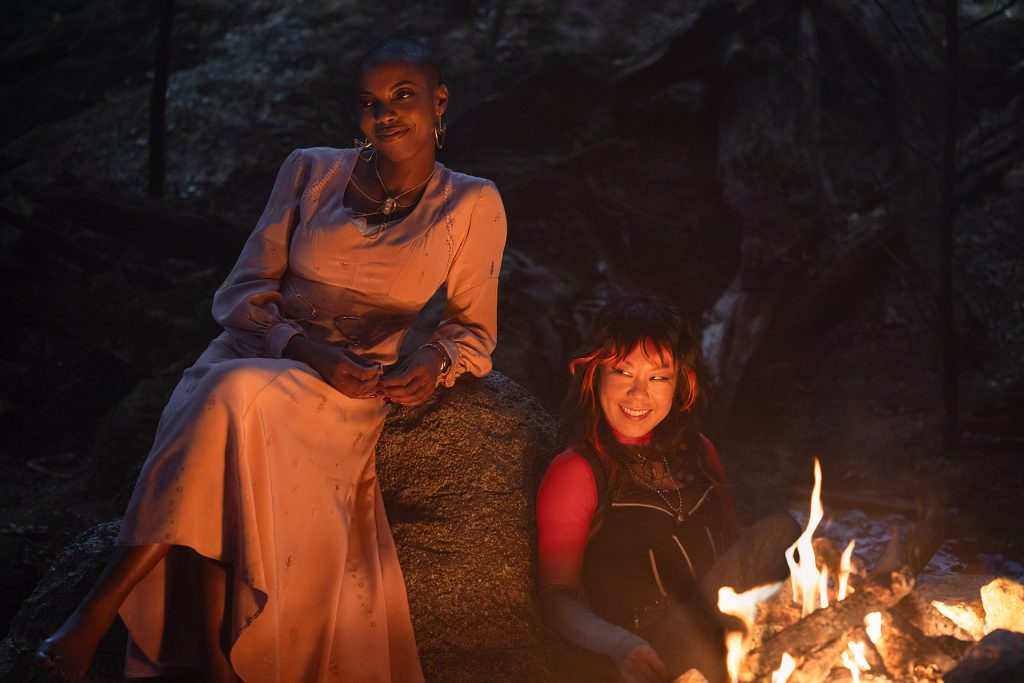
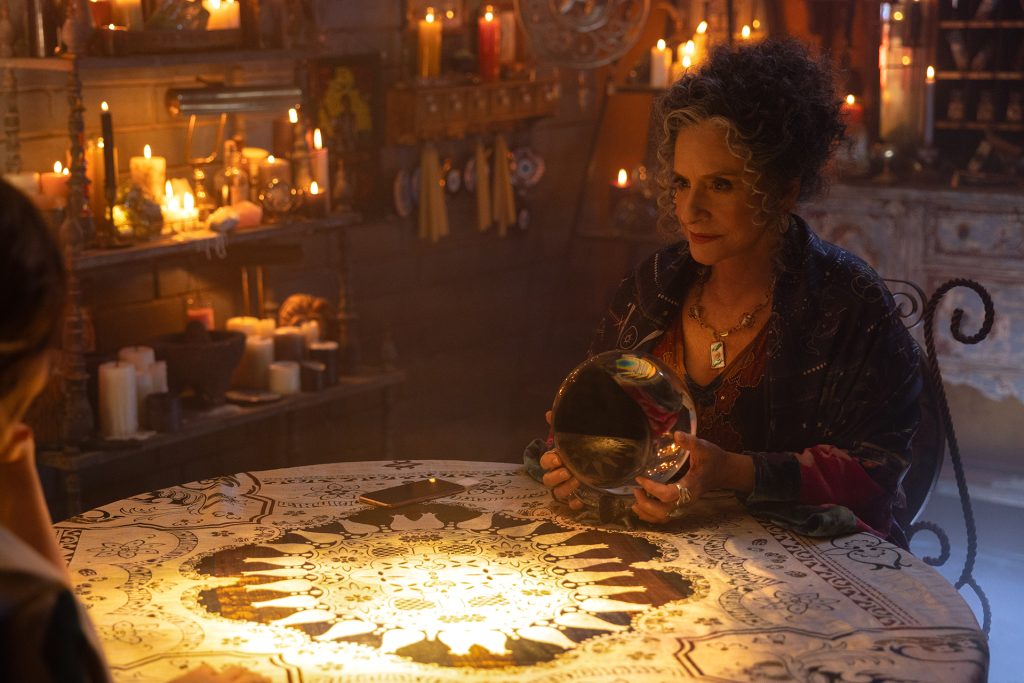
A journey whose leader is not its only source of strength
Agatha claims the expertise of a guide, but the survival of the travellers repeatedly depends on the people she has recruited. This is the tension between making a coven and using one.
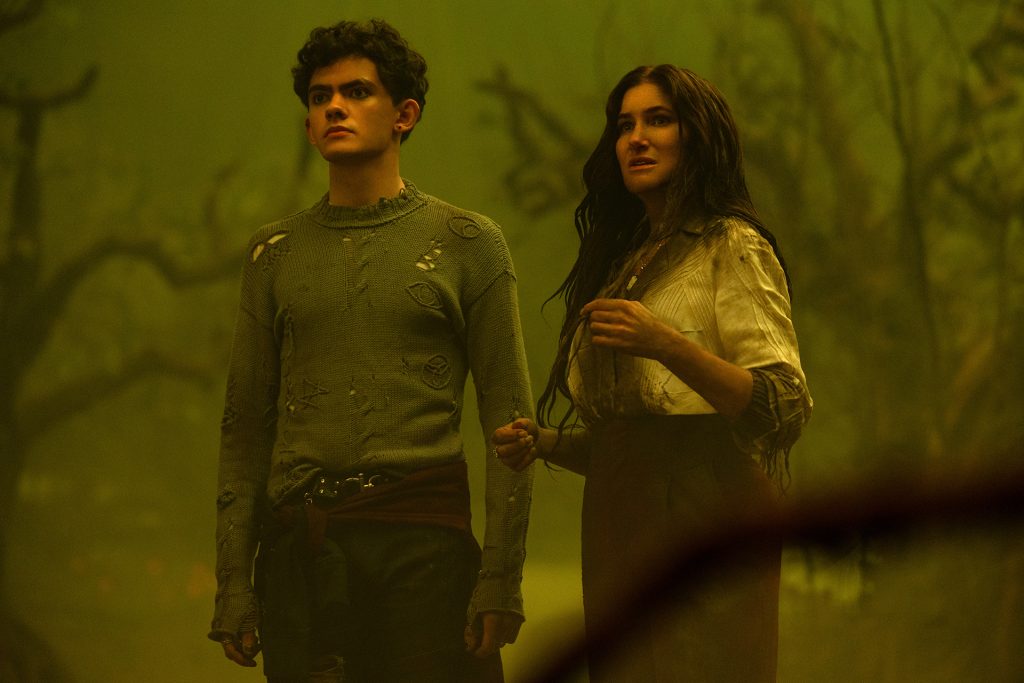

Four externally embedded stills added to the original two. Official image provenance established; public page loading, licence applicability to third-party use and mobile layout remain unverified.