
Agatha All Along Act Three: The Road's Double Twist
Updated
 Tomasz.NEditor
Billy wanted to find his brother. Agatha wanted her power back. Lilia wanted to understand what her life was trying to tell her. None of them began the Witches' Road expecting to learn that the ground beneath their feet was part of someone else's story. That is why the final revelation in Agatha All Along is more than an ingenious trick. We discover that Agatha had been selling the Road as a false legend for years, while Billy's magic has made a real and dangerous Road out of the tale he believed. The natural reaction is to ask who created what. It is a good question, but the people are more interesting than the answer. Billy has to face the consequences of a power he barely understood. Agatha must look at a lie she has lived inside for generations. Lilia makes an extraordinary choice after seeing her own time clearly. And the history of Nicholas, Rio and an old song breaks through the confident performance Agatha has used to keep everyone at a distance. The road turns; so do the people on it.
Billy believed so fiercely that his belief changed the world
At the beginning, the young man called Teen feels like the one person who is genuinely thrilled by the adventure. Agatha knows far more about witchcraft, or seems to. He knows the Ballad, the legend and what the Road is supposed to give a traveller. He has an earnestness that makes Agatha's sarcasm sound almost protective. Only later do we learn how much of his identity he has been struggling to recover. He lives as William Kaplan while bearing the consciousness of Billy Maximoff, and his desperate hope of finding Tommy is not an abstract hobby for a magic-obsessed teenager. He is a brother looking for his brother. That desire makes his willingness to believe painfully understandable.
Then comes the truth about the Road. Billy's power has made it tangible. The boy who thought he was walking into an existing legend has unknowingly helped produce the very world that tested the travellers. There is a devastating difference between creating a dangerous place and deliberately choosing every danger within it. Billy did not sit down to plan Sharon's death or engineer Alice's fate. But learning he never meant those things does not bring either woman back. His character changes at the point where wonder becomes responsibility. He cannot remain only the excited traveller asking Agatha to explain what happened. He has to ask what his own power has done, how he might live with it and whether finding Tommy can remain a good wish without making everybody else's suffering into a necessary price.
Agatha knew the sales pitch was false. She did not know the Road would appear
Agatha's position is almost the opposite. She has never been the innocent customer of the myth. The final episode reveals a long practice of using the Ballad and the promise of the Road to draw witches into a trap. That knowledge changes the opening recruitment scenes. Her apparent expertise was not simply wisdom acquired on earlier expeditions. Much of it was theatre, built around a story she knew how to exploit. Yet the twist is not that Agatha was secretly directing every second of the real journey. When Billy's power makes the Road appear, she is faced with something even her own scheme did not anticipate. A seasoned fraud has accidentally become a traveller inside somebody else's reality. That is a much better dramatic reversal than reducing her to the all-knowing author of the entire season.
There is a strange vulnerability in Agatha's inability to control everything. She can still lie, threaten and manoeuvre, and those habits are familiar. But she cannot explain away every trial by appealing to a con she constructed long ago. The other witches begin to matter as people rather than an audience for her performance. The consequences are awful. Sharon dies. Alice tries to help and dies. Lilia understands enough to make a sacrifice. Agatha's old method of surviving by taking power from others has not prepared her to respond honestly to their losses. The turn in Agatha is therefore not a simple conversion from villain to hero. It is the loss of her usual certainty that she can write the meaning of events for everyone else.
Lilia's broken chronology becomes the clearest kind of choice
For several episodes Lilia's speech seems to arrive in pieces. She says things that belong to another moment; she appears to know an answer before anyone has asked the question. It would have been easy for the show to treat these fragments as decorative magic, a way to make an eccentric woman appear suitably mysterious. The tarot episode gives the fragments back to her. We discover what it feels like to experience a life out of order and, crucially, to make sense of it from the inside. The audience has spent so long watching Lilia as an interruption in other people's scenes that her own perspective comes as a jolt.
Her last decision is not interchangeable with the deaths of Sharon or Alice. Sharon had little idea what she was entering; Alice's attempt to protect another person ends tragically. Lilia arrives at a different relationship with knowledge. Seeing the pattern does not grant her an easy escape. It allows her to decide what to do with what she knows. That is a turn of character, not just a clever rearrangement of flashbacks. She goes from seeming lost in time to becoming someone whose understanding matters at the moment of greatest danger. The series gives her back the authority to interpret her own life, even as it refuses her a painless future.

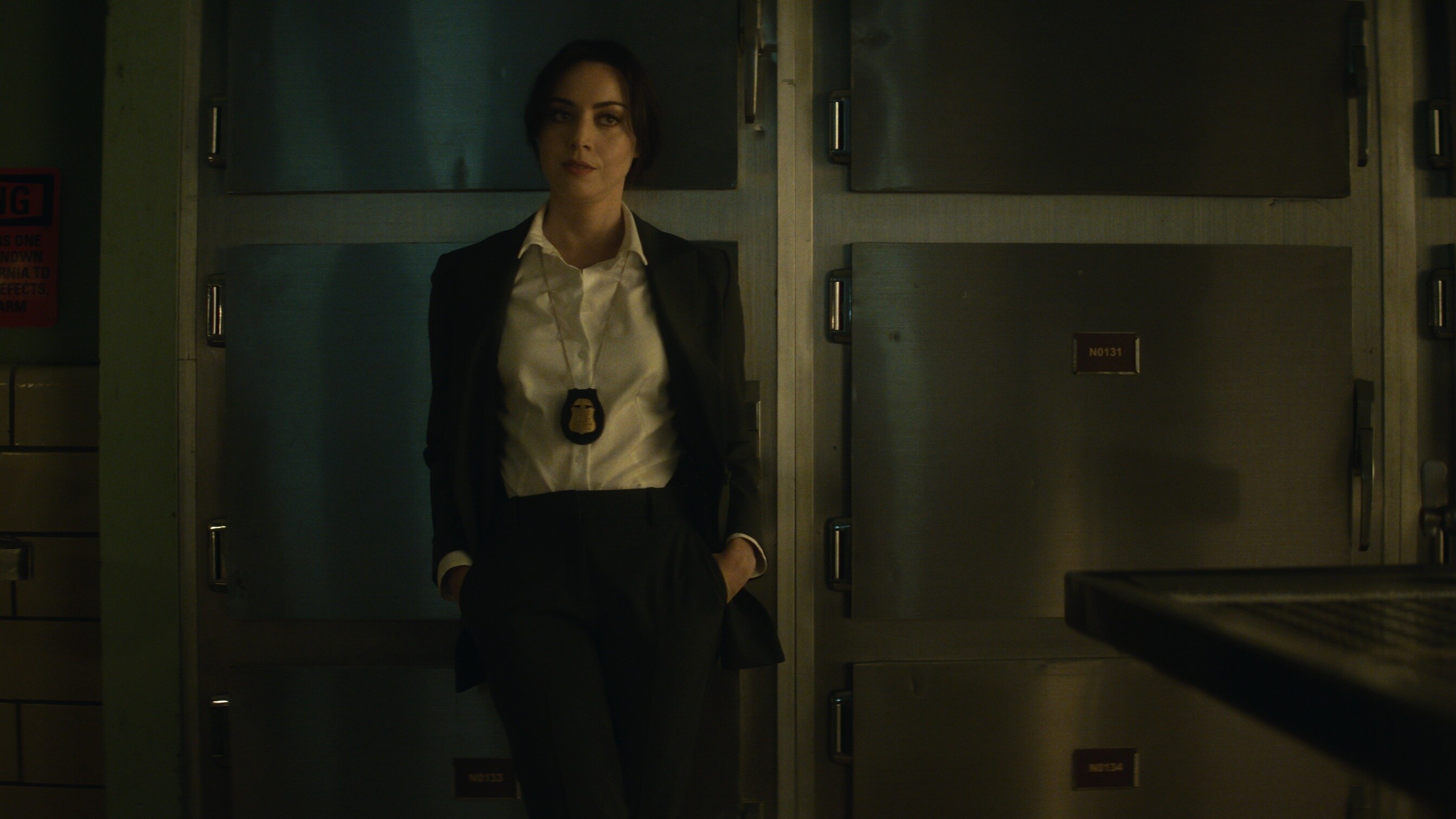
Nicholas is not a twist to explain away a child's death
Agatha speaks about Nicholas Scratch as though the name might cut her. The other characters cannot tell exactly what happened, and viewers naturally begin guessing. Did she make a bargain? Was her son taken because she crossed a magical line? A neat answer would turn grief into another set of rules: perform the wrong deed, pay with the life of a child. The finale chooses something harder to live with. It shows a mother and a boy who have time together, and then no longer have it. The song at the heart of the Road has roots in that relationship before it becomes part of Agatha's predatory legend. We are invited to hear a once-private song differently, without pretending that its later uses were innocent.
Showrunner Jac Schaeffer has specifically challenged the reading that Nicholas was killed as vindictive punishment for refusing to help his mother. It matters to resist that invention. Agatha has had every reason to rage at a loss she could not prevent. Her anger does not prove a bargain existed. Nor does it turn the witches she later preyed on into acceptable casualties of her mourning. The turn is painful because it permits both compassion and judgement. We can understand why Agatha reaches for control, song and performance when confronted with death. We can also hold her responsible for choosing to transform that material into a trap for other people.
Rio is not merely the person Agatha can blame
The revelation that Rio Vidal is Death changes the tone of their exchanges. Their intimacy, hostility and recognisable affection all become more unsettling. Agatha is furious at a figure who represents the very thing she cannot bargain away, and the personal history between them gives that fury an understandable shape. But Rio's cosmic function cannot be reduced to a jealous former partner collecting a debt in a conventional revenge story. Her presence forces a distinction between the person Agatha would like to blame and the mortality nobody in the story can simply defeat. That is not to claim their relationship is gentle or uncomplicated. It is to recognise that a critic can honour Agatha's emotional truth without inventing a motive for Nicholas's death that the narrative does not establish.
Alice and Sharon are not mistakes to be deleted from the answer
The Road was not a pre-existing institution in the way Agatha described. Billy brought a version of it into reality. Fine. But what does that mean for the people who died there? Nothing that makes the loss smaller. Sharon was an ordinary woman drawn into a danger she could not properly assess. Alice survived an inherited curse only to die while trying to help. Their stories are not false because a fictional magical world was manifested through a young person's power. They had relationships, hopes and choices before the audience understood the mechanism. To declare that the journey did not count because its legend was false would be to make the same mistake Agatha often makes: valuing people mainly for their usefulness to somebody else's plot.
Jennifer's survival throws this into relief. Her skill and later recovery matter in their own right. They do not reimburse the dead. Nor is Lilia's sacrifice an easy consolation for the lives taken before she understood the pattern. The group were never interchangeable witches collecting a shared reward. Each reached the Road with a different need, and each emerges from the season — if she emerges at all — with a different history. Billy's discovery has to include these other lives, because they are the evidence that his power has consequences beyond his private intention.
The biggest change is not who made the Road, but who will answer for it
Agatha began as the expert who promised a destination; Billy began as the young believer who needed her. Once the final facts are known, neither role can remain intact. She has to confront a real environment produced from the lie she spent years selling. He has to face the damage done within a world his magic made possible. Nicholas's history reveals why the Ballad can be both tender and terrible. Lilia's experience shows that receiving knowledge can be an act of freedom rather than control. Rio embodies the loss Agatha has tried so fiercely to evade. These revelations are linked, but the characters do not all learn the same lesson or receive the same justice.
It is easy to praise a twist for making us gasp. The better test is whether it changes the people we thought we knew. Watch Agatha recruit the coven again and hear the old lie beneath her confidence. Watch Billy look down the Road and know his faith has become something frighteningly concrete. Listen to Lilia's scattered words now that you have lived a little of her chronology. Remember that Nicholas was a child, not merely the answer to an occult riddle. The series' reversal works because all these earlier moments become harder, sadder and more human. When the final act begins, there is still a confrontation to resolve. But the deeper question has already changed. Nobody can simply claim the prize. They must live with what believing, deceiving and loving have done to other people.
Story evidence and interpretation
The double Road reveal and Nicholas's mortality are discussed by Jac Schaeffer in her original November 2024 interview. The different consequences of Billy's power and Agatha's history are also addressed in TheWrap's finale interview. Lilia's chronology, Alice's death and the relationship with Rio are interpreted as character events rather than substituted with invented dialogue or extra episode scenes. Two existing official Disney UK press images remain earlier in this article.
Four more Disney stills: character change behind the revelation
These original production stills show the contrast between Agatha and Billy's shifting relationship, Lilia's distinct perspective and the other travellers whose experiences remain real after the Road's origin is revealed.
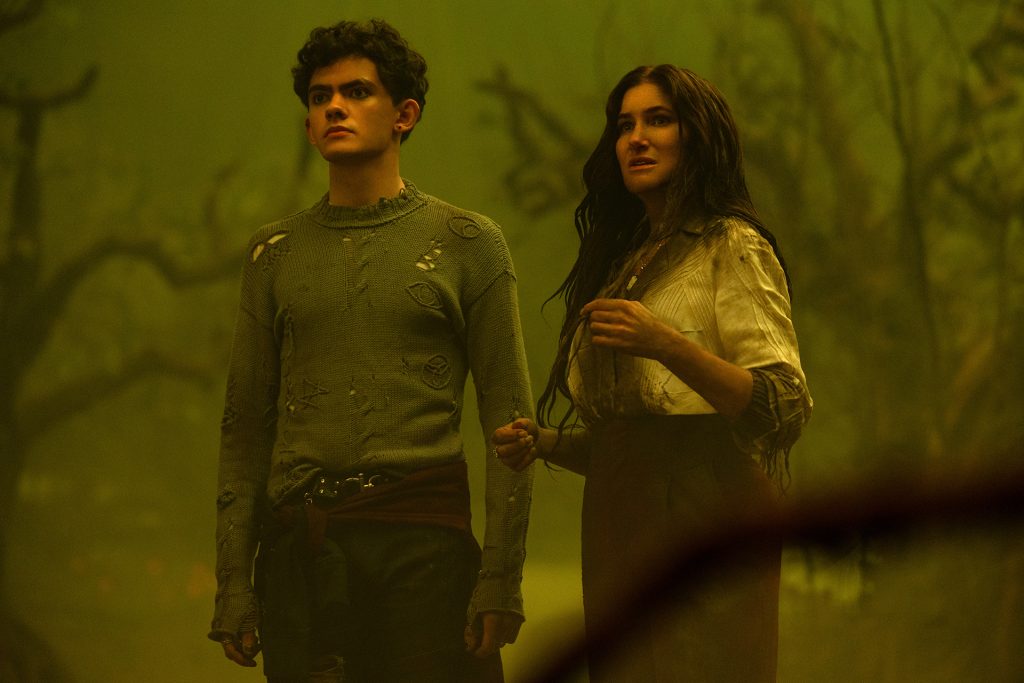

Not everyone reaches the same ending
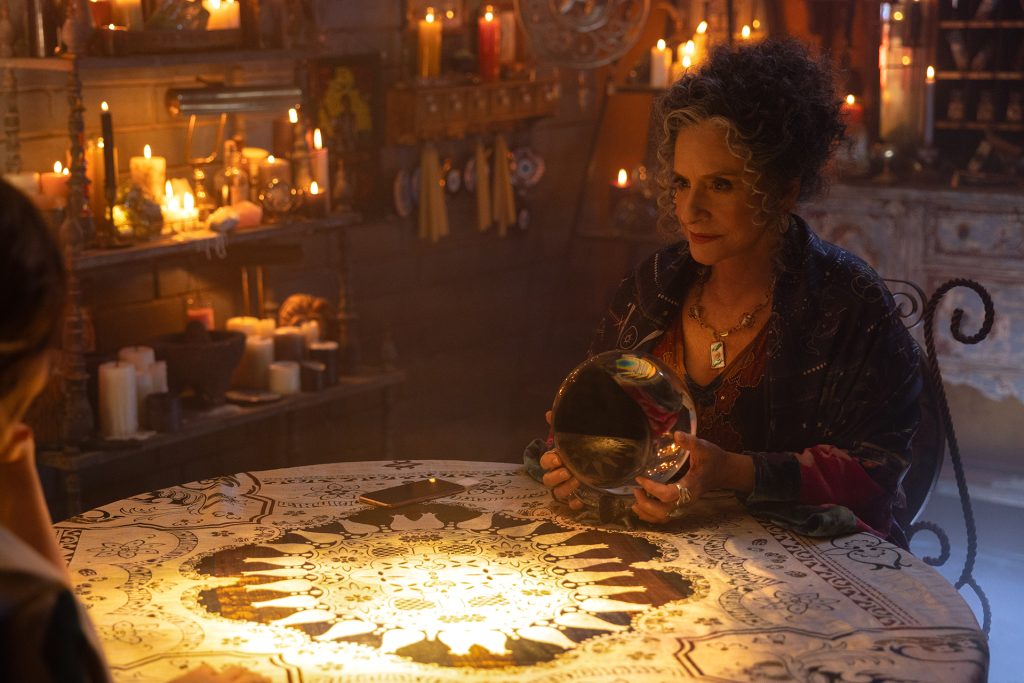

Six separate image embeds overall: two original Disney UK press images earlier in this article and four additional original Disney corporate stills in two further paired blocks. Externally linked without rehosting. Independent image-loading, mobile and permission review are pending.