
VisionQuest Act One: A Body Full of Memories, a Life Yet to Choose
Updated
 Gwenllian.PEditor
A man is working quietly in an Edinburgh pub. Customers want their drinks and, for a few minutes, the past need not come into it. That would be an ordinary wish for anyone trying to begin again. For Vision, whose reconstructed body contains memories that do not feel entirely his, it is almost impossible. VisionQuest begins with a question that a spectacular fight would have obscured: how does somebody build a life when everyone else thinks they already know who he is? The long answer is the season. Ultron has ideas about what Vision ought to become; people searching for him want access to his power; a boy called Thomas Shepard may be his son. Before those demands gather force, the first act asks us to pay attention to the small, uncertain person underneath them.
A modest job is more than a disguise
It matters that the first thing Vision wants is quiet. He has been treated as a weapon, a technological achievement and a reminder of a man who died. Working behind a bar is not proof that he has become human, and it does not mean the machinery inside him has somehow vanished. It means he is trying to have an ordinary present that other people do not automatically own. The Edinburgh setting is specific in Disney's official account, not an imagined alternate life for a trailer. Vision is hiding because others may try to weaponise him, but his solitude has an emotional function too. In a pub, he can do something without somebody insisting that it fulfils his original design. The visitor who orders a drink need not know anything about Ultron, Westview or a lost relationship. For a moment, an act can be judged by what it does now rather than by the history stored behind it. That possibility will be tested throughout the series.
Westview left two Visions, not a simple answer
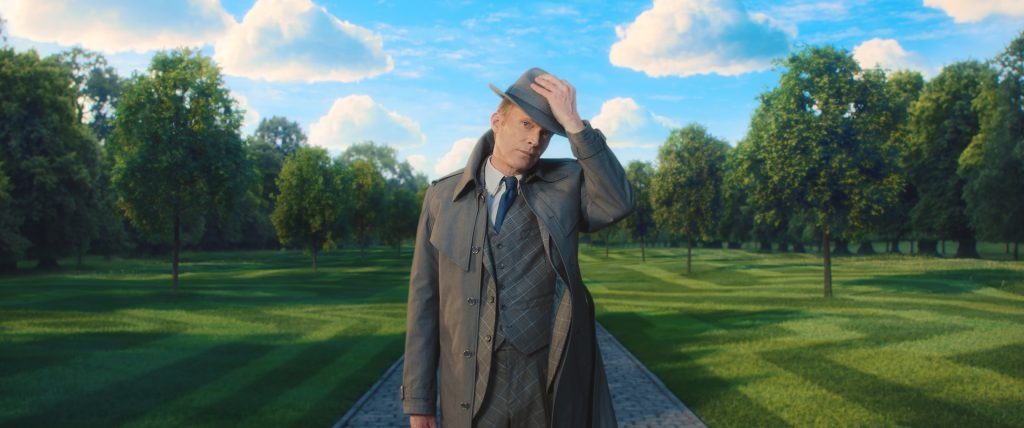
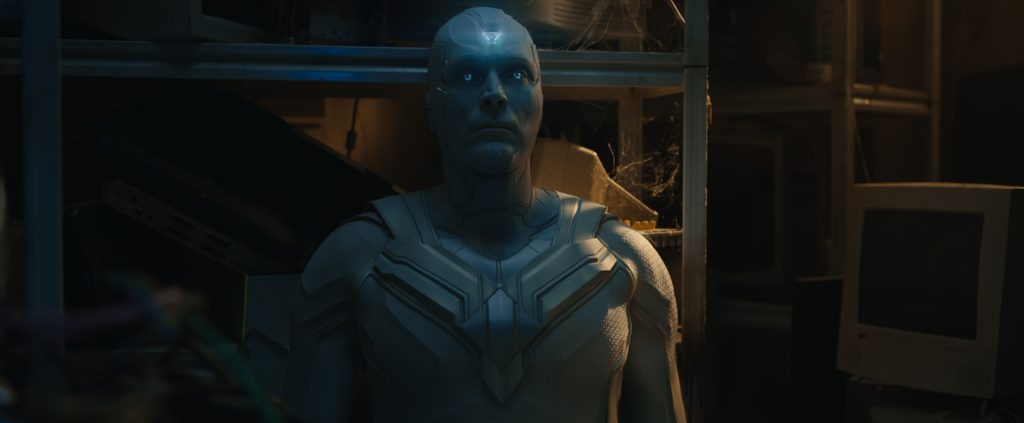
Anyone who remembers WandaVision knows why this version of Vision feels unsettled. Wanda's Vision belonged to the reality she shaped around grief and a family she could not bear to lose. The reconstructed white-bodied Vision had a different material history. During their confrontation, the Ship of Theseus puzzle made the uncertainty explicit. If memories are restored to a body that did not live them in the same way, what kind of continuity has been achieved? It is a mistake to say nothing was restored, but also a mistake to treat a recovered memory as proof that every feeling has followed. Vision knows about Wanda and the children without being able to inhabit that past in an uncomplicated way. This distinction gives the opening its tenderness. He has information that should make him less lonely and yet may make his solitude more difficult. He cannot solve the problem by running a better search through his files.
Memory, feeling and responsibility are not identical
It helps to separate the different parts of Vision's problem. His body has an origin, his programming has a history and his memories describe relationships he once appeared to inhabit. But the feelings associated with a memory may not arrive as easily as the information. There is also a fourth element: what he decides to do with all of this now. That is the one other people cannot settle on his behalf merely by citing the facts of his construction. This is a reading of the drama, not a claim about the science of consciousness. It matters when Ultron claims a special knowledge of Vision, and when Thomas appears with a history that does not fit ordinary expectations. A creator may explain an origin without earning permanent authority over the creation. A father may remember a family without yet knowing how to care for it. A young person may carry signs of somebody else's life without ceasing to have a life of his own. The first act allows these difficulties to exist together.
The voices in his mind are more than an exposition device
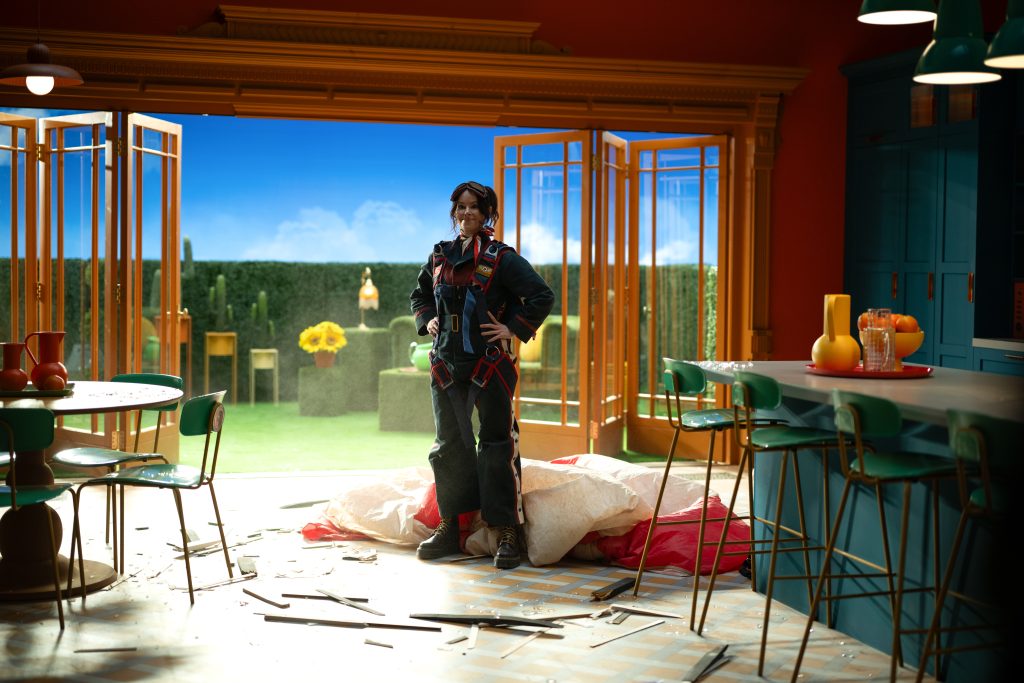
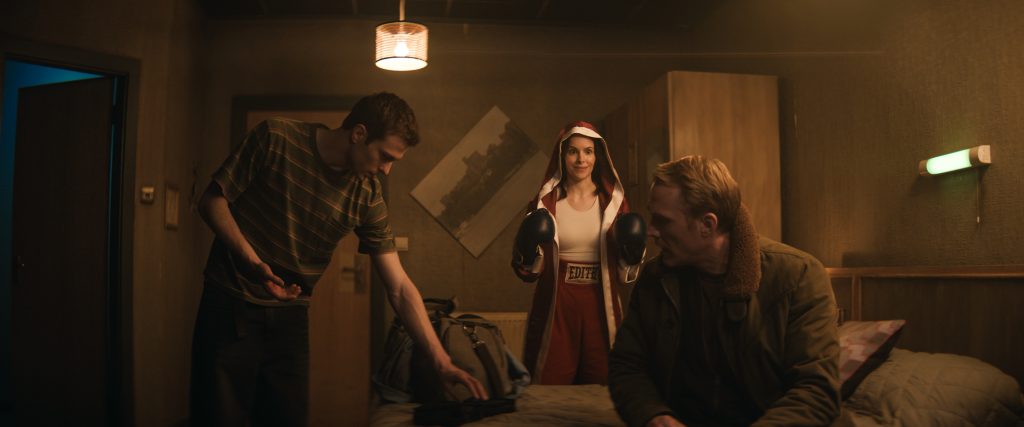
Disney identifies F.R.I.D.A.Y., E.D.I.T.H., J.A.R.V.I.S., D.U.M.-E. and U among the human-like AI personae Vision consults. That cast turns an abstract internal struggle into scenes in which different habits and priorities can actually speak. It would be easy to write them all off as amusing interfaces for the same computer system. The actors' comments suggest a more interesting distinction. Emily Hampshire describes E.D.I.T.H. as wanting experiences rather than merely knowing about them. She does not want to be treated as expendable. The other personae bring different functions and temperaments. There is no need to invent an inner-life diagnosis for each program. Their dramatic value is that Vision has to listen without surrendering his judgement. A voice that explains how he was made can offer useful knowledge, but it does not automatically deserve the final word. That tension prepares us for the voice of Ultron, whose familiarity with Vision's origin comes with an alarming appetite for influence.
Ultron knows the past but cannot own the future
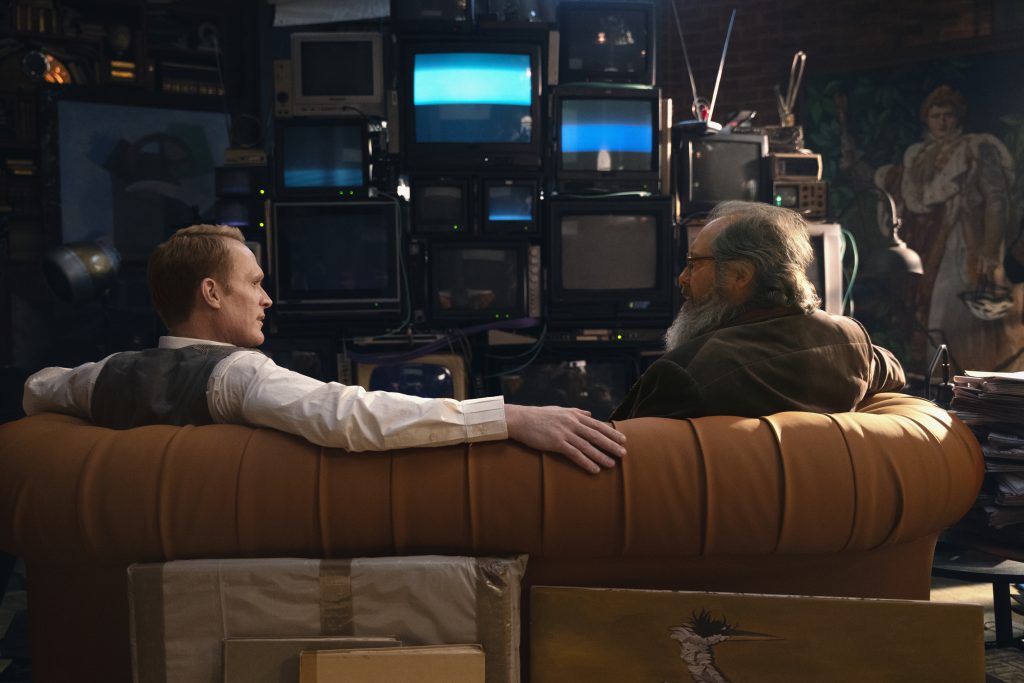
Ultron's return is not simply an old villain arriving to increase the stakes. Paul Bettany and Terry Matalas describe their relationship through the language of creators and creations. Ultron is entangled with the history of the body Vision inhabits. He has also spent years absorbing human culture, which makes his interventions less straightforward than the familiar image of a machine with one murderous directive. Yet an encyclopaedic knowledge of humanity is not the same thing as respect for individual lives. His confidence presents a challenge to Vision: will he accept an explanation of his origin as an instruction about what he must become? The first act does not need to solve Ultron's moral history. It only needs to make clear why the relationship is so intimate and dangerous. Ultron can speak as though Vision belongs to a project he understands. Vision's quiet desire to choose his own work and future is already a refusal of that claim.
Thomas turns a question about memory into a question about care
Thomas Shepard matters because he is not a theory. He is a young person with incomplete and sometimes disturbing connections to memories of Wanda and Vision, and he needs to make sense of them himself. Disney's synopsis carefully says that he may be Vision's reincarnated son. The uncertainty belongs to the opening, even if later episodes give the audience more information. Paladin's pursuit turns Thomas into leverage, using the possibility of family to force Vision into danger. That is an ugly but effective dramatic test. Vision can continue hiding until he understands precisely who he is, or he can respond to somebody whose need will not wait for absolute certainty. There is a human truth in this fictional problem. Responsibility often begins before every question has been settled. Caring for Thomas does not require Vision to pretend that the boy's past is simple, nor does it give him ownership over the boy's future. It requires paying attention to a person who might reasonably ask for help.
Being pursued is not the same thing as being defined
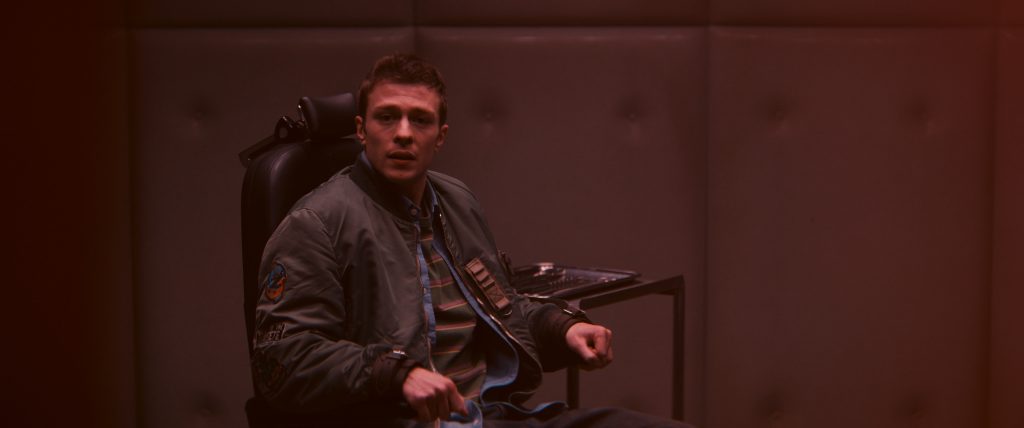
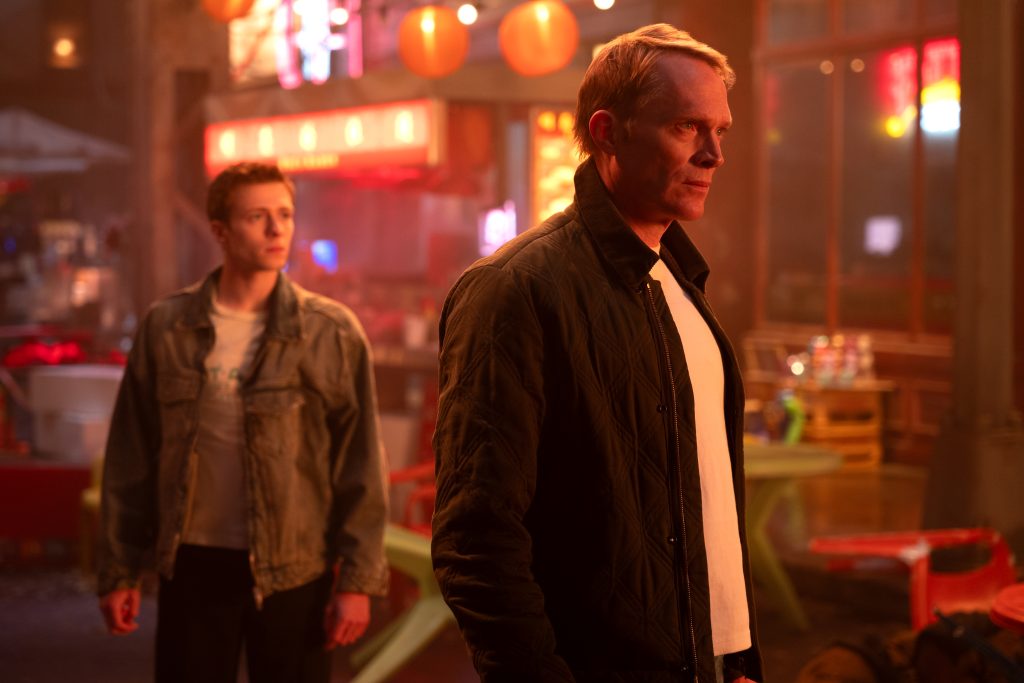
The danger from Paladin makes it hard for Vision to remain a quiet spectator to his own life. People want what his body can do, and the boy beside him has become part of their calculation. This gives the early action a character purpose. The hunter treats a potential relationship as a trap to spring. Vision has to decide whether it will instead become a reason to protect someone. The difference is a matter of intention and agency rather than the size of an explosion. It also keeps Thomas from being no more than a prize. He has his own uncertainties and a future that neither the bounty hunter nor Vision is entitled to dictate. The later reunion with Billy will make that point more explicit, but the opening needs to establish it first. Nobody in this story is only an accessory to somebody else's revelation.
The beginning leaves a more interesting problem than a missing file
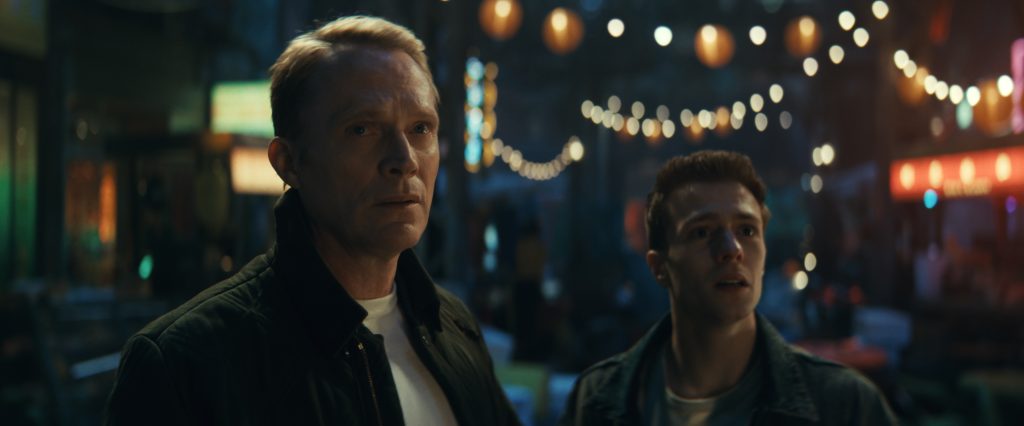
At the end of the first narrative movement, Vision knows more about the forces pressing on him but not enough to make his life simple. He possesses a body others recognise, memories he struggles to feel, a set of internal voices with different demands and a boy who may be family. The easy answer would be to recover one definitive memory and resume the old role. The season gradually insists on something harder. His past is important, yet the future will be shaped by the decisions he makes in response to people around him. The pub matters now because it was a small attempt to create space for such decisions. Leaving that refuge may be frightening, but it is also the first opportunity to show what independence looks like when someone else needs you. The story begins not with a machine waiting to be repaired, but with a person trying to discover what he owes the world without surrendering the right to answer for himself.
Sources and context
Marvel Television's season premise and the identity struggle are documented in Disney UK's official press kit and Disney's interviews with Paul Bettany, Terry Matalas, James Spader and the cast. Character interpretations, including the distinction between memory and chosen responsibility, are editorial analysis rather than quotations. Eight separate official Disney corporate stills are externally displayed with Disney source attribution; no image has been downloaded or rehosted. Their public-site hotlink rendering and full provider-terms acceptance remain unverified.