
WandaVision's First Act: A Perfect Home with a Secret
Updated
 Siobhan.GEditor
There is a terrible moment at the Harts' dinner table when a joke forgets how to be funny. Mr Hart is choking. Mrs Hart keeps smiling, asking her husband to stop it, and Wanda looks as though she is trying to remember what sort of programme she is supposed to be in. I wanted to reach into the television and help. That's a remarkable thing for the first episode of a superhero story to achieve with an evening meal. For me, the opening of WandaVision is at its very best here, when the laughter drops away and the people at the table suddenly seem terribly alone.
First, let us enjoy the house
I like that the series gives Wanda and Vision a little happiness before it starts asking us to distrust it. In Filmed Before a Live Studio Audience, their home is black and white, the furniture looks reassuringly familiar, and everything that goes wrong seems destined to be sorted out before bedtime. Vision has an employer to impress. Wanda wants to be a good hostess. They are both rather sweet at it.
Elizabeth Olsen plays the eagerness without treating Wanda as foolish. Paul Bettany makes Vision's earnest attempts at ordinary behaviour genuinely funny. He tries so hard. When they worry about the boss's visit, you can almost forget how extraordinary they are. I found myself willing to make that bargain for a few minutes, too.
That willingness is what makes the first cracks hurt. If the house had felt menacing from its first shot, we would have had a puzzle, but not much to care about. The affectionate sitcom style is doing emotional work. Sometimes the homage leans rather heavily on being recognisable; the series seems to trust our fondness for old television more than it needs to. Yet Olsen's face brings it back to Wanda. The moment a simple question catches her unprepared, the neat little set begins to feel less like a shelter.
What should have been an ordinary question
The Harts want to know how Wanda and Vision met, when they married and what their shared life has been like. They are the sort of questions guests ask when they have run out of other things to say. Here they leave the couple stranded. Wanda cannot summon a memory. Vision cannot help her. All the social rules that seemed so cosy a minute ago become a way of keeping people from admitting that something is wrong.
Debra Jo Rupp's Mrs Hart is wonderful in that sequence. Her pleasant voice carries on past the point where politeness makes sense. You hear the strain beneath it. When her husband begins to choke, her smile is awful to watch. Nobody at the table needs to explain what is happening to the viewer; Rupp and Olsen let the fear emerge through the failure of a perfectly rehearsed evening. I would choose this small, dreadful dinner over a grand burst of red magic every time. It tells us what sort of danger the town holds.


Vision wants to get it right
Vision's nervousness about the boss is more than an easy joke. He is a being who has spent so much of his existence looking at human life from an unusual position, and now he is trying to participate in its smallest rituals. Bettany makes that effort tender rather than ridiculous. You can laugh at his panic and still hope things go well for him.
It is worth keeping that version of Vision in mind when he begins questioning Westview later. His attention has always been drawn towards people. He wants to understand them, not merely perform whatever part keeps the peace. Wanda has a different relationship with the rules. She knows what kind of evening she wants. Olsen lets us see the effort it takes to hold that picture together: the quick smile, the tiny hesitation when someone asks about the past, the determination to steer the room somewhere safer.
I don't need every teacup to hide a clue. Watching a person lose her footing in a conversation can be much more revealing than inspecting the furniture.
And then there is Agnes
Kathryn Hahn arrives as though she has been waiting next door all morning for a reason to visit. Agnes is funny because she is so confidently helpful. She knows when to appear, how to fill an awkward silence and how to make herself part of the household in seconds. Hahn is wonderfully generous with the silliness. There is something a little too perfect about Agnes's timing, but not so much that I wanted her gone. She makes the town more entertaining to live in, which is important when we later learn to question why she was there.
The stranger details — a beekeeper, sudden colour, a break in the familiar rhythm of a television broadcast — certainly make you look twice. My one frustration is that they can encourage a treasure hunt when the series has something more moving in front of us. Not every strange object deserves more attention than the person standing beside it. The early episodes are much stronger when they remember that.


The promise underneath the laughter
Those old-fashioned television homes offer a comforting promise: even when dinner is a disaster, the family will still be there for the next episode. Wanda has good reasons to ache for something so certain. But the series gives that promise a painful condition. In this house, a question about the past cannot be answered, and a man in distress cannot interrupt the scene without everybody freezing.
My feeling about this first act is affectionate, but not uncritical. I love the patience of the performances, the slightly clumsy couple and the courage to make a dinner party the first real shock. I could do with fewer mystery signals insisting that I keep score. What stays with me is Mrs Hart's face when the joke goes wrong, and Wanda's helpless pause before she acts. The little house has already become a place I care about. That's why I am afraid of it.
Sources: Disney UK premiere announcement; Disney+ original production media kit; Disney's sitcom-history feature. Acting assessments and scene judgements are editorial criticism of the released episodes, not purported filmmaker quotations.
What to watch for on a first and second viewing
On the first viewing, notice how the dinner scene changes the emotional rules and how the couple struggle to answer simple questions. On a second viewing, compare those early omissions with the later explanation of Westview. The point is not to treat every prop as a certified clue, but to distinguish the episode's visible storytelling from later interpretations. The first act asks a central question: can a domestic dream remain comforting when it depends on not asking what happened before it began?
Original WandaVision studio stills: the early sitcom world
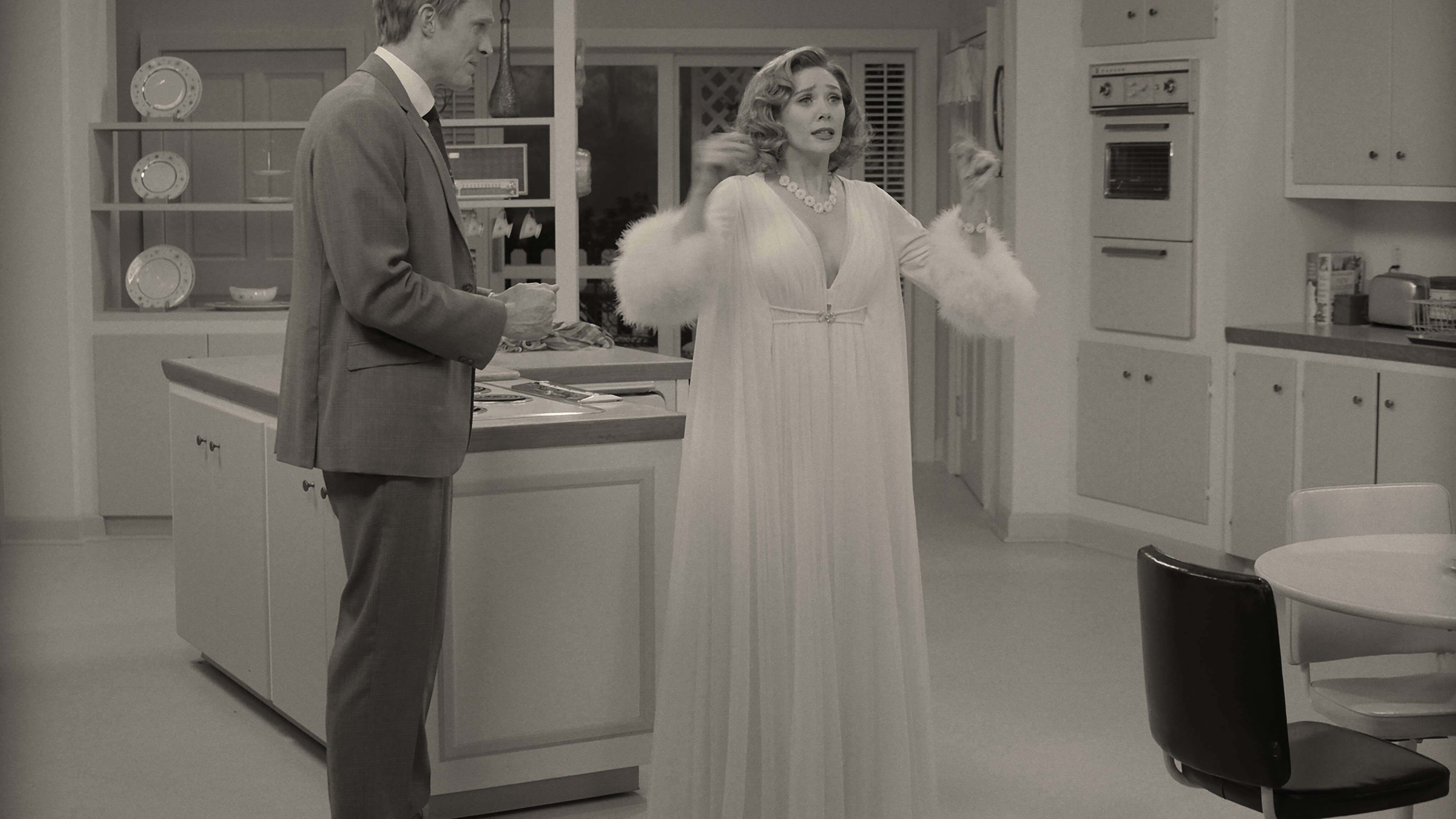
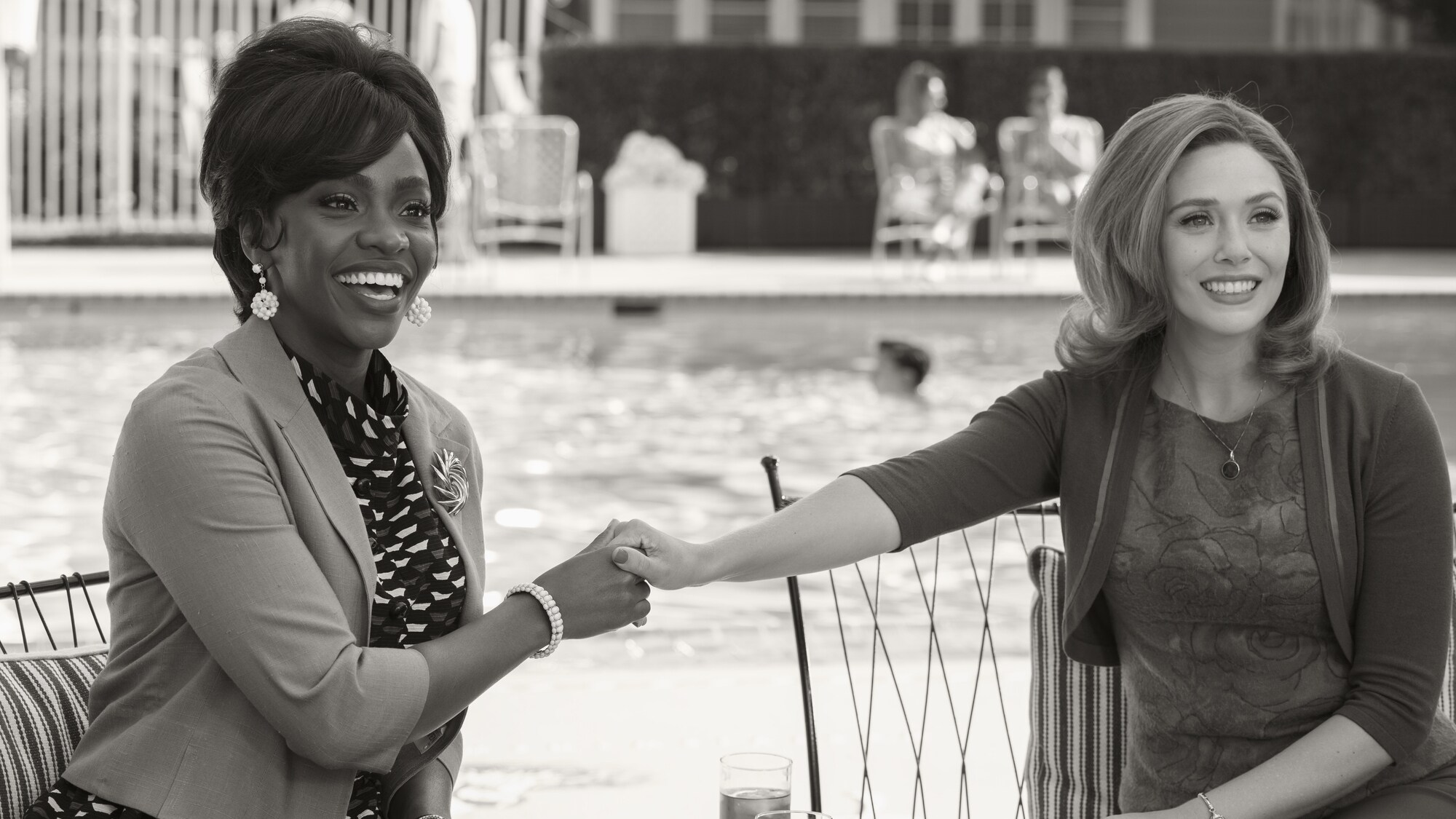
Four further official images: a marriage the camera makes believable
The first-act mystery depends on a simple paradox: these are recognisable people in a convincing television home, but the history beneath the smiles is missing. The following paired photographs let viewers compare the wedding, the cheerful couple portrait, a neighbour's entrance and the impeccably staged domestic routine. None is evidence that the world is safe for everybody in it.
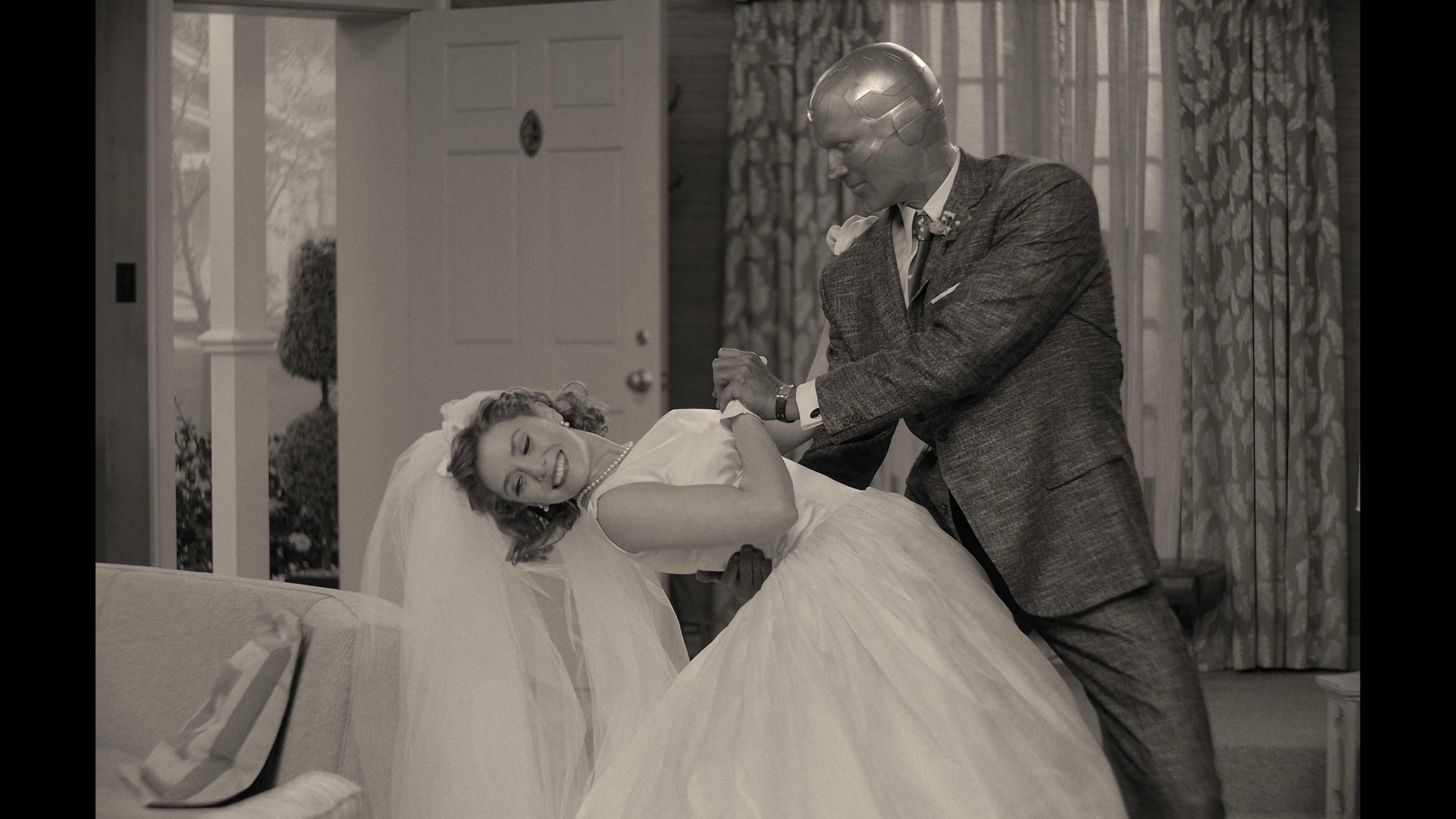

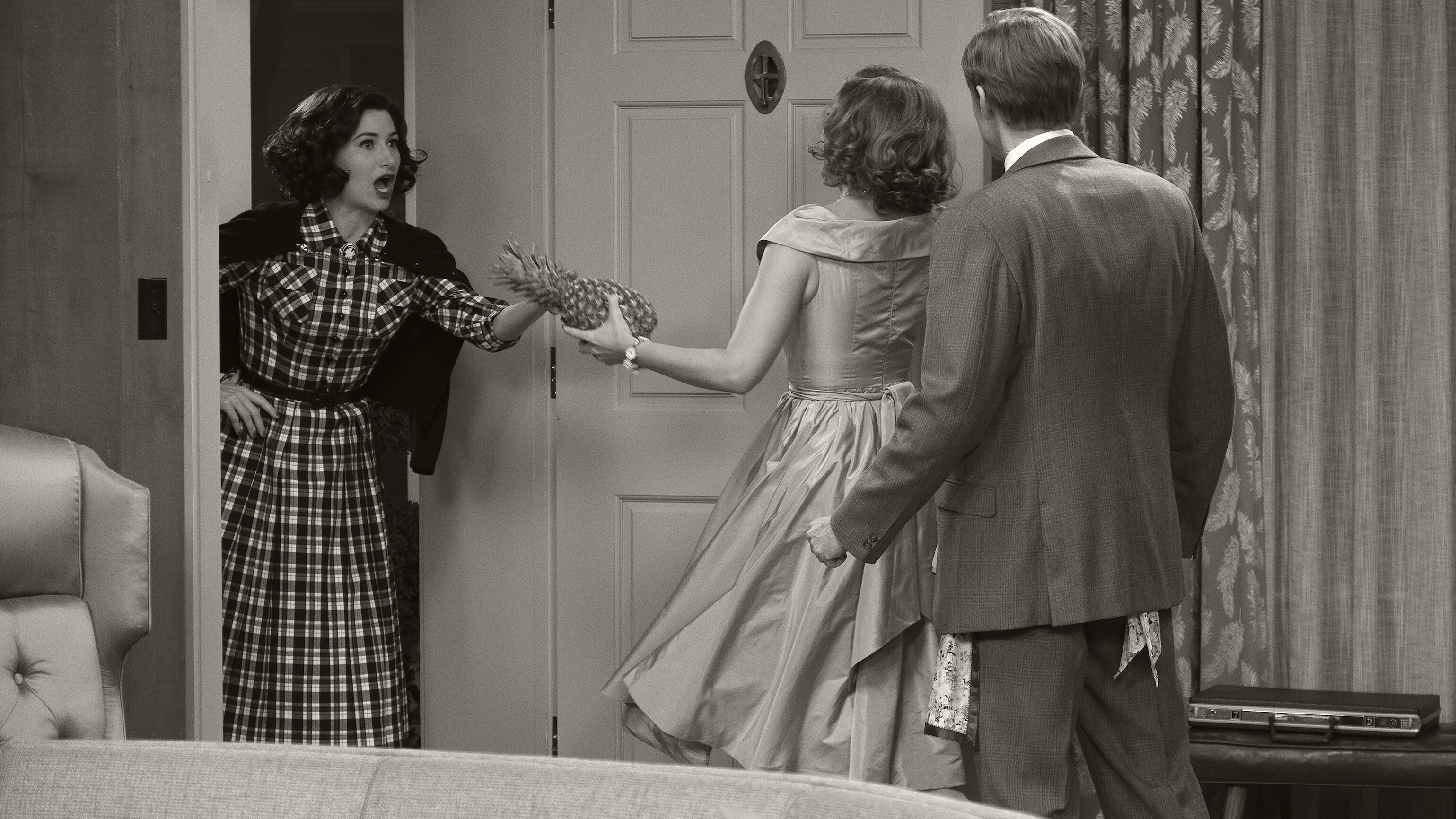

Externally hosted original Disney press JPEGs, without local rehosting. Two historical photographs earlier in this article and two previously embedded studio photographs are retained. Official source identification is confirmed; independent public-page rendering, reproduction permissions and mobile QA remain outstanding.