
WandaVision's Final Act: The Cost of Letting Go
Updated
 Siobhan.GEditor
What I remember most clearly about the end of WandaVision is not the magic in the sky. It is a family putting the children to bed while the house begins to disappear. Wanda and Vision have made a life together, even if it cannot survive what is happening beyond the front door. The quietness of their goodbye is almost unbearable. I think the series earns that scene beautifully. I also came away wishing it had found a little more time for the other families of Westview, whose lives are only beginning to return to them. The farewell is complete in a way the town's recovery is not.
The old television programmes were a refuge
Agatha takes Wanda back through her memories, and the changing sitcom styles begin to feel less like a clever history lesson. They are linked to moments when Wanda needed somewhere to hide from what was happening around her. Childhood television offered a room where things could be put right, if only for half an hour. Later, when Vision became part of her life, that promise was no longer just about watching a family. It was about wanting to have one.
Olsen does not need to turn every memory into a grand speech. Sometimes the effort of walking into an empty place is enough. She pauses, holds herself together and then lets us see how fragile that effort is. Bettany meets her with a gentleness that makes Vision's kindness feel ordinary, in the best sense. I find those scenes far more affecting than another reminder of how powerful Wanda might become. They show us what she has been trying to keep.
The loudest fight is not the best scene
Agatha is a formidable opponent. Kathryn Hahn clearly relishes the chance to turn the apparently helpful neighbour into somebody hungry for Wanda's abilities. The magical battle is busy and handsome. Yet I have to admit that the clash of powers held me less than the earlier moments when Agnes could make a room uncomfortable by smiling at precisely the wrong time. The show is capable of such wonderfully small disturbances; its large fight feels more familiar.
Wanda's emergence as the Scarlet Witch matters for the stories that may follow, but the name is not what makes this ending moving. Being told what she can do does not tell her how to live with what she has done. Nor is Agatha's defeat a way of putting everything wrong in Westview on a single villain. Wanda must still decide what happens to the world around her. The programme knows that, and I am glad it lets the decision cost her something.
Two Visions, one thoughtful conversation
Then there is the encounter between Vision and White Vision. It begins with the promise of a fight and finds a gentler, much stranger destination. Their conversation about the Ship of Theseus asks what makes a person the same person when the body, memories or experience have changed. I think Bettany is excellent in these scenes. He makes both versions of Vision attentive to the question instead of turning one into a simple obstacle for the other to destroy.
It would be too easy to say the conversation solves every problem of identity. White Vision's memories are not a replacement for the life Wanda shared with her Vision. But I like that the exchange gives him a little space to think about who he might be. When he leaves, there is sadness in the uncertainty, and possibility as well. The quiet intellectual curiosity feels much truer to Vision than another blast of light.


Westview's neighbours have something to say
I was relieved when the residents finally got to tell Wanda what life inside the Hex had been like. Their fear has followed us through the series in small glimpses. Now we hear what being trapped has meant to them and to the people they love. It is an upsetting confrontation, and it should be. The neighbours are not simply figures standing around a superhero's grief. They have children, relationships and private worries of their own.
This is where the ending leaves me unsatisfied. Once the Hex falls, we stay close to Wanda, whose loss we know intimately, but spend much less time with the people who are recovering their freedom. Monica's sympathy for Wanda is understandable, especially given what she herself has lost. Still, that sympathy cannot speak for the whole town. I did not need to see Wanda punished or sit through a long accounting of every household. I wanted the story to look at the residents just a little longer, after all those hours in which their frightened faces told us something was wrong. The finale hurries past them.
The most painful goodbye happens at home
Back in the house, Wanda and Vision try to give their sons a gentle end to the evening. The room is familiar. The family do the things they have done on other nights. That ordinariness is what breaks my heart. All through the series, a television household has promised to return, unchanged, for another episode. Here Wanda must let the household go. The walls and rooms can no longer protect the people inside from what the rest of Westview has endured.
Olsen and Bettany allow the farewell to breathe. They do not play it as a victory and they do not try to make the children or their relationship feel unimportant simply because the circumstances were impossible. Wanda chooses to release the town, and the choice takes away the world she made for herself. I believe her grief. I also believe the neighbours' pain. The ending would be stronger if it gave both feelings the room they deserve.


There are still lives to live
White Vision goes away with questions about himself. Wanda leaves without the home she wanted. Westview's people begin to return to lives that have been interrupted in ways we have only partly seen. The wider MCU may revisit these characters and follow them into new stories, but I do not think later adventures should be needed to make this particular goodbye work.
For Wanda and Vision, it does work. We have seen enough of their little habits and daily tenderness to understand what is being lost. For the town, the recovery feels more like an ending announced than an ending lived. That is a real weakness in a programme that has asked us, time and again, to notice the neighbours at the edges of the picture.
My verdict
I love the farewell in WandaVision. The children going to bed, the rooms growing quiet and two people trying to be brave with each other are the most powerful images the finale gives us. White Vision's conversation is a lovely surprise. I am less moved by the great exchange of magic, and I wish the residents of Westview had been allowed more of the last word. It's an uneven ending, but not an empty one. Wanda's goodbye stays with me. So does the thought of those other doors opening the next morning, with no cameras left to show us what happens inside.
Sources: Disney+ production media kit; Disney UK creative-team featurette; Disney official episode images; Marvel Studios series overview. Acting and ending assessments are editorial criticism of the released series.
Three different questions the ending answers
Personal: Wanda must accept that her cherished domestic world cannot be maintained as it is. Social: Westview's residents must regain their ability to choose how to live. Philosophical: White Vision raises questions of identity, embodiment and memory that cannot be reduced to appearance alone. The finale connects those questions but does not make every emotional or ethical consequence identical. Consider the conclusion on its own terms before applying later franchise developments.
Official WandaVision finale imagery: White Vision and the Hex

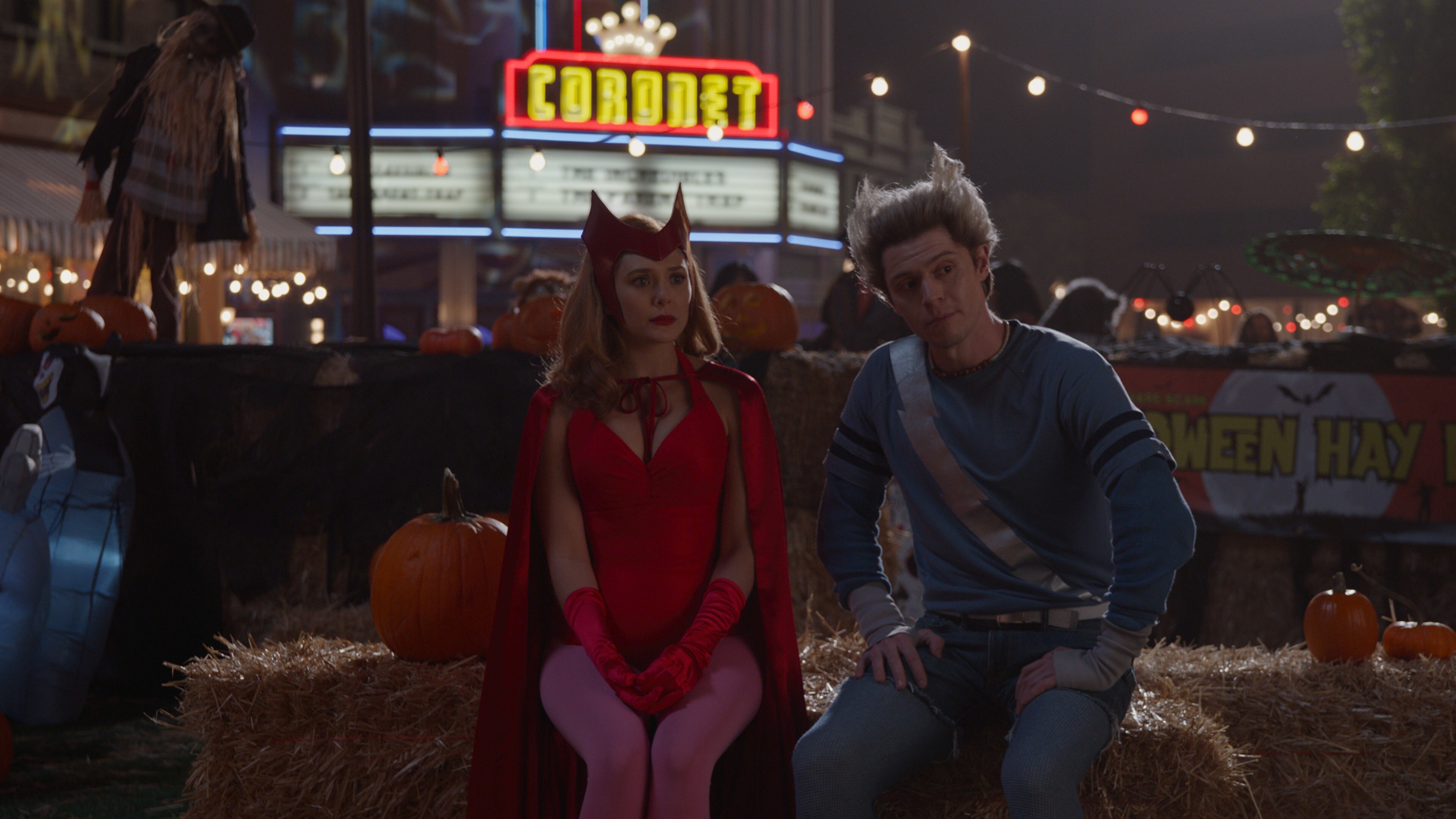
Four further studio images: the faces behind the cost of saying goodbye
These photographs range across the series rather than pretending to document a single final scene. Wanda's familiar costume and a quieter day in her kitchen show what the domestic world means to her. Vision looking at the Hex and his separate appearance outside that setting make the contrast between love, memory and physical survival tangible.
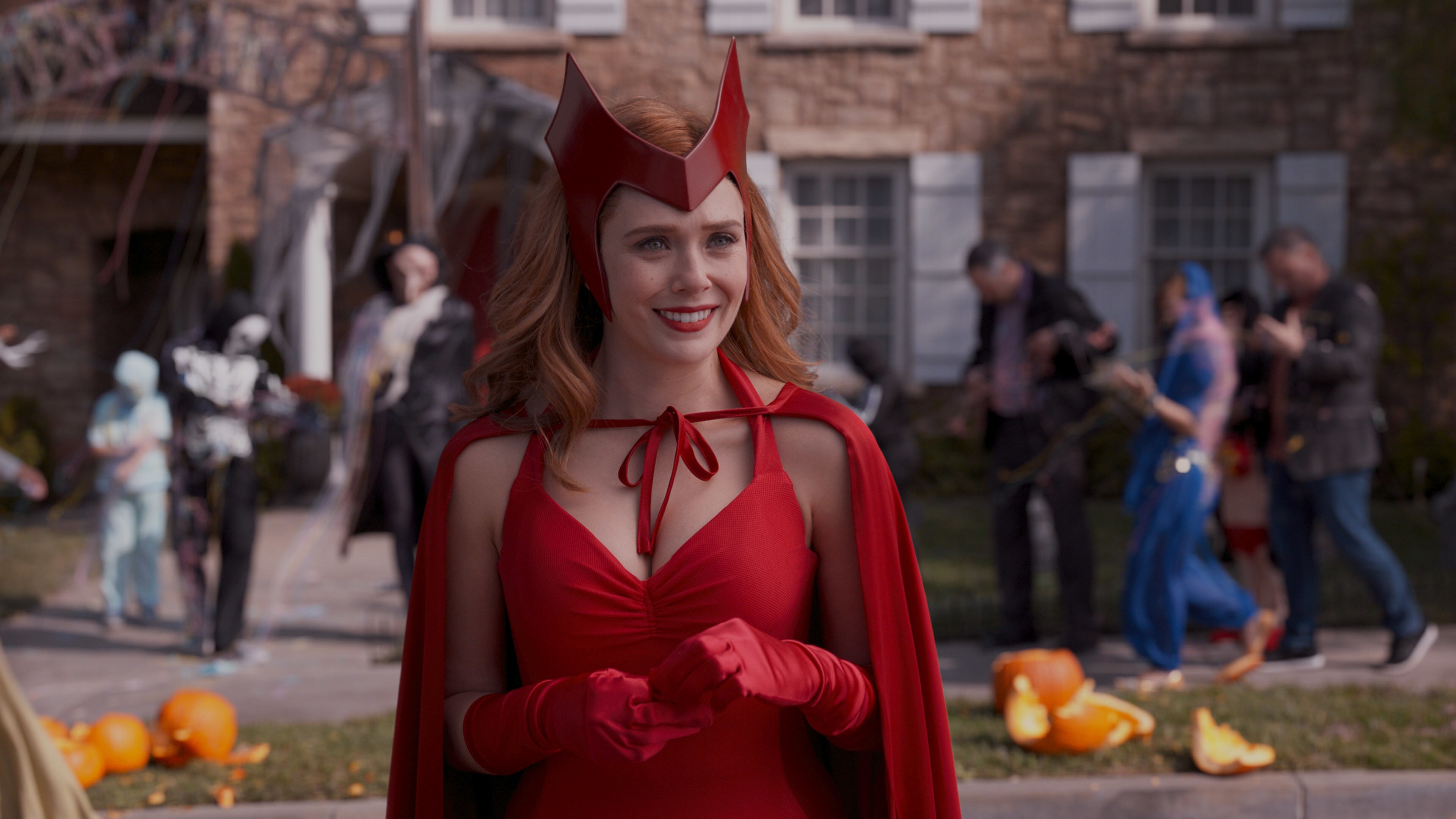
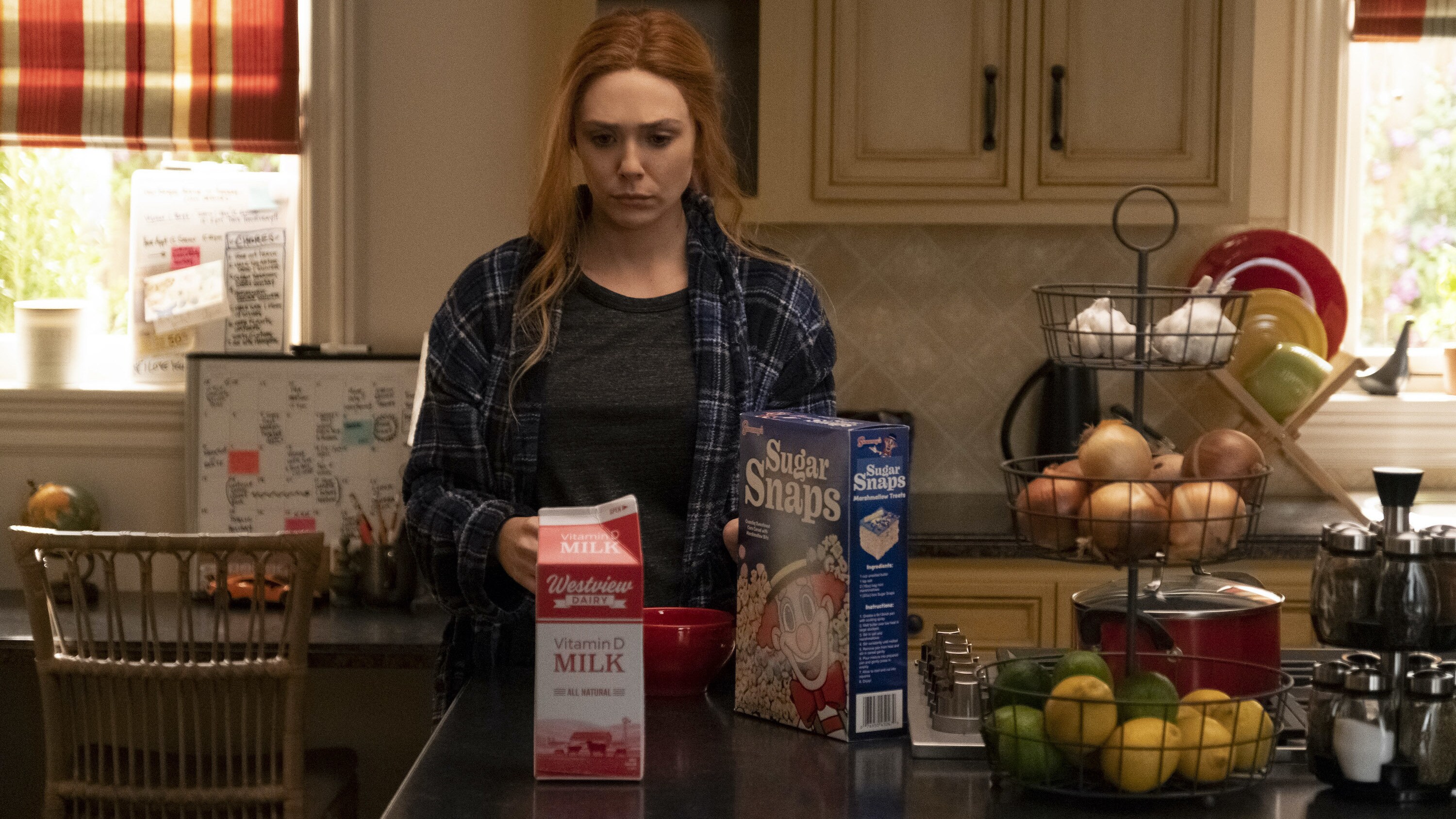
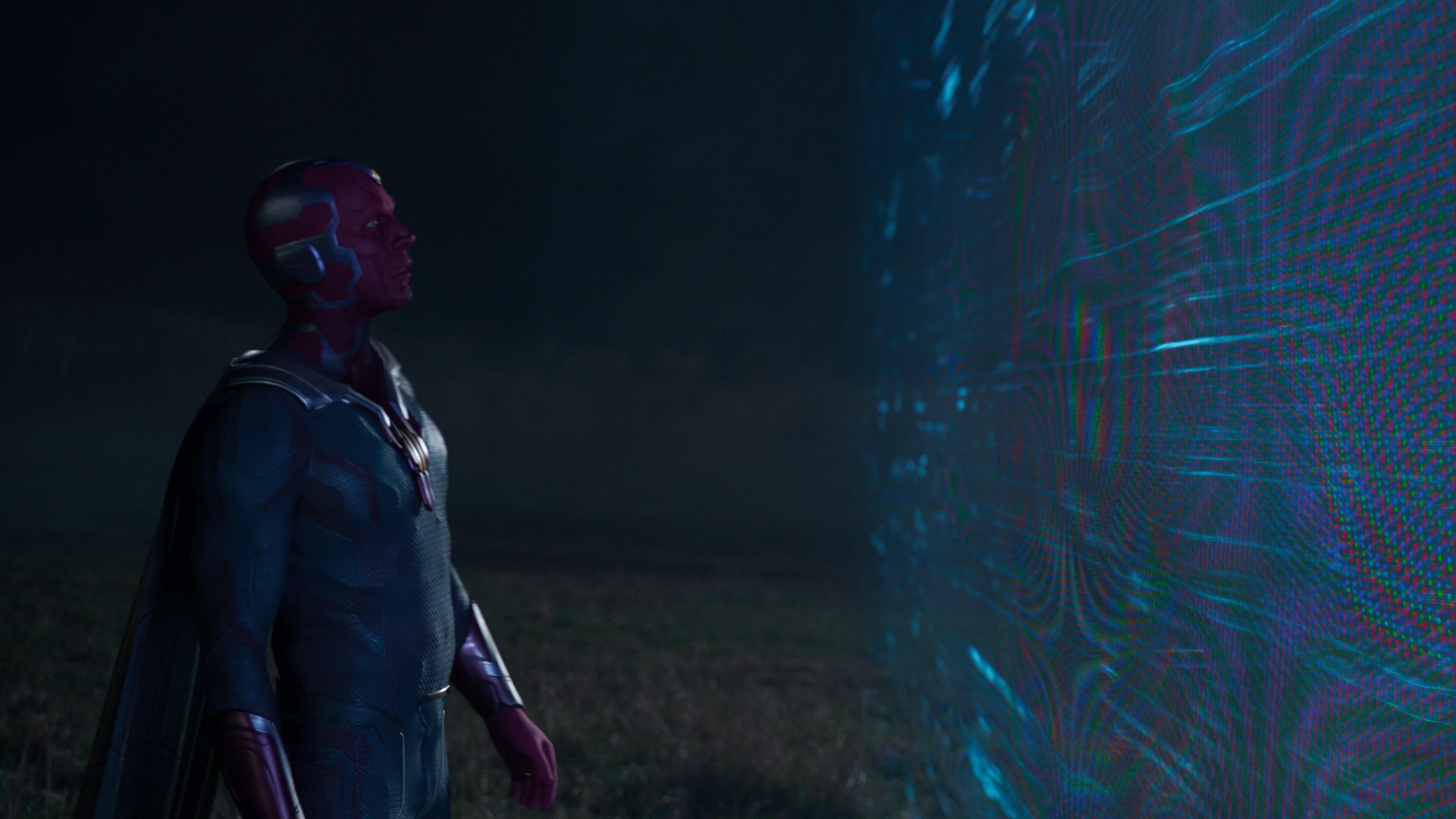
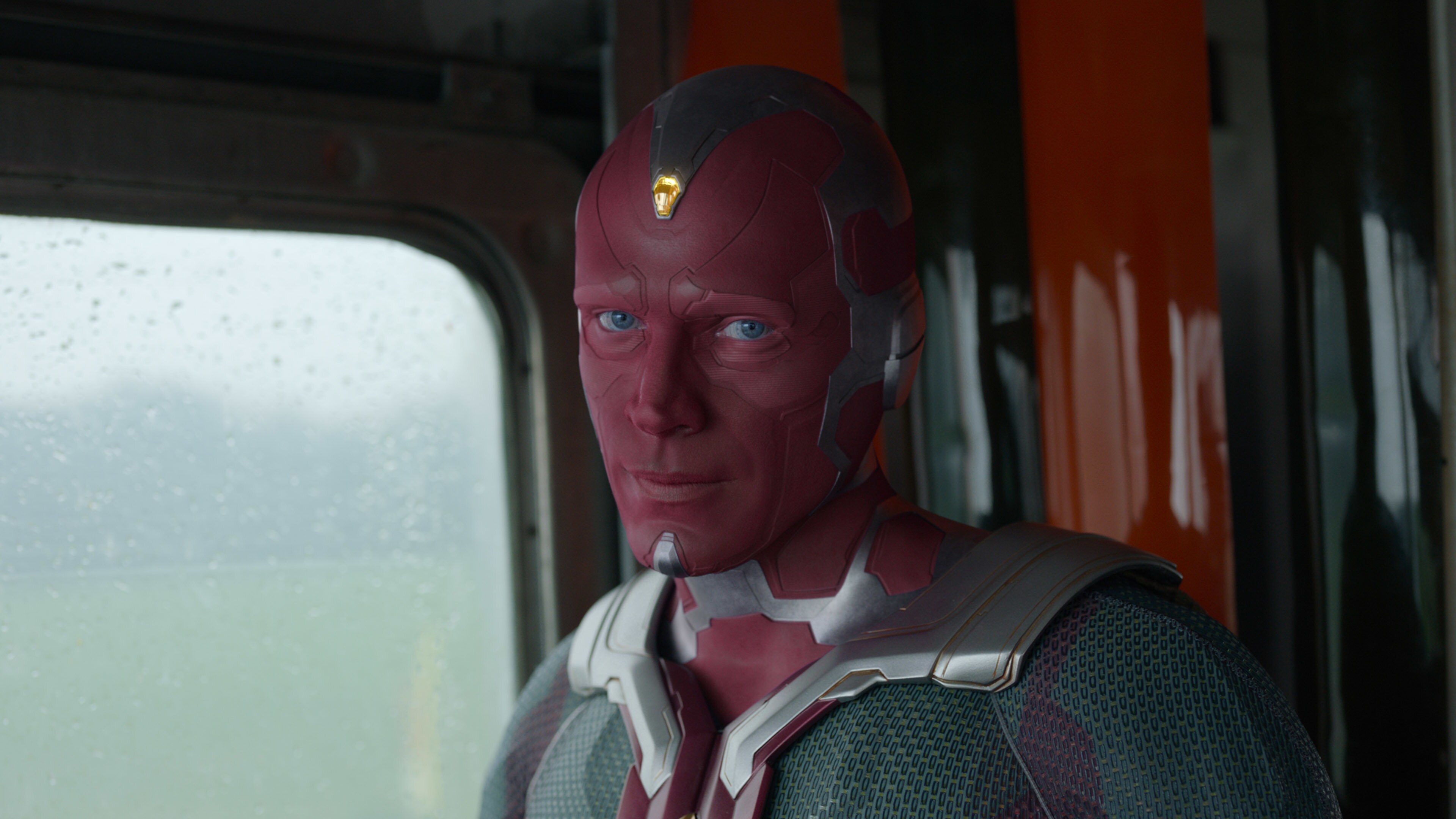
The new images are original Disney/Marvel studio CDN assets from the official WandaVision gallery, not downloads or rehosted files. Two historical context photos earlier in this article and the two existing studio stills shown above are retained. These are not all finale frames. Rights beyond identified ownership, hotlink permission and actual MSM public/mobile rendering remain independently unverified.