
Civil War: Why the Avengers Split
Updated
 Margaret.HEditor
Most arguments are cheap to start and dear to finish, and the Avengers' falling out is the clearest example the Marvel films have. So begin with the bill, not the quarrel. Captain America: Civil War is usually remembered as a fight between two friends over who was right. It reads better as a dispute about price. Each side had a sensible account of what power costs, neither could afford the other's account, and the people who actually paid were mostly not the two arguing.
That is the view taken here, and it can be tested against what the studio and its cast have said in public. It looks back at released films only. Nothing below is a guess at the plot of Avengers: Doomsday, and where the film is silent, the article says so.
The invoice that started it
Disney's own summary of the 2016 film, which was released on 6 May that year, is short. An incident involving the Avengers causes collateral damage, political pressure builds to hold the team accountable, and the resulting battle drives a wedge between Captain America and Iron Man. Marvel's character profiles fill in the order of events. After several innocent lives were lost on a mission, in an incident Marvel says Wanda Maximoff inadvertently caused, the team was presented with the Sokovia Accords, an agreement that would place them under the control of the United Nations.
Think of the Accords as a service contract. You get legitimacy, a recognised role and someone else to share the blame with. You give up the right to decide for yourself when to act, and you accept that somebody else may say no. Whether that is a fair price depends entirely on how far you trust the party on the other side of the table, and that, rather than the paperwork, is what the team could not agree about. What the Accords would have demanded week by week is the part the published accounts leave thin. The argument is about the principle, and the principle is where both sides are strongest.

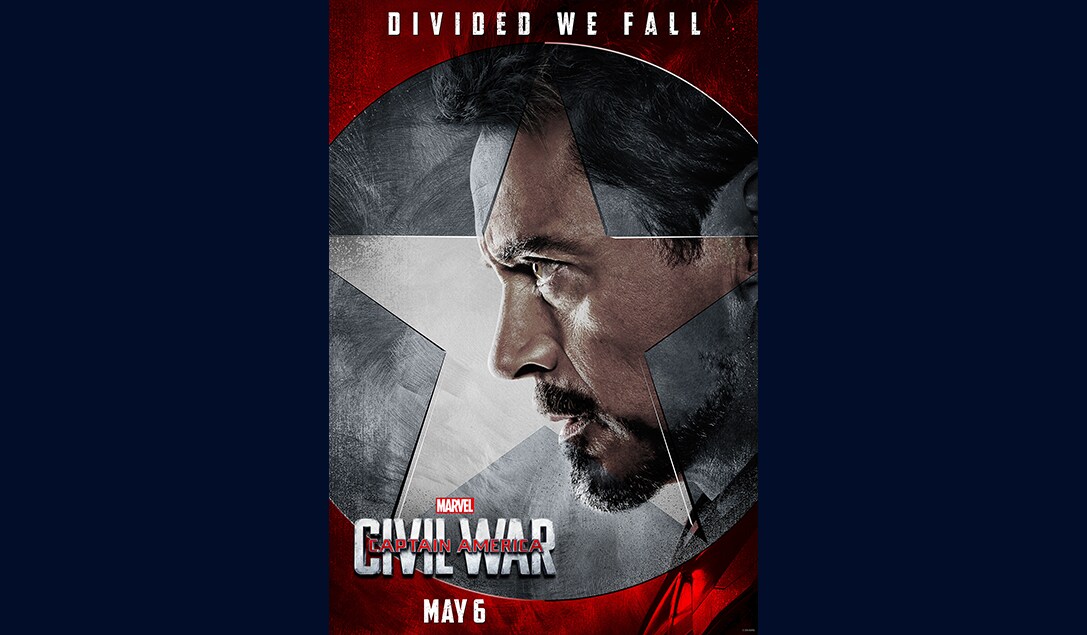
What each side thought it was buying
Tony Stark's side was buying insurance. Marvel's profile of Vision, who sided with Tony, says he came to believe the Avengers' very existence had led to an increase in super-powered threats, so accepting limits looked like the responsible thing to do. Insurance is dull and it is rarely thanked, but it exists because people who think they are careful still have accidents. The position has a plain humility in it: I might be the problem.
Steve Rogers' side was buying independence, and the price of that is exposure. His case is that a rule written by a committee can be turned against the people it was meant to protect. Chris Evans, speaking to Disney on the set of Infinity War, described Steve's outlook as having been through a destruction of a belief system, first with a government structure that fell apart and then with a friendship that let him down. That explains the lean of the character. A man who has watched institutions fail him has a reason to prefer people he can see.
My own reading is that Tony's case is the stronger argument and Steve's is the stronger instinct. It is hard to say that a group of people who can level a city should answer to nobody. It is equally hard to blame a man for not wanting to hand his judgement to politicians who had just lost his friend's trust. The film lets both stand, and I think that restraint is its best decision. A story that picked a winner would be easier to watch and far less useful.
Who actually paid
This is where the ledger turns uneven, and it is the part of the film that I find most persuasive. The people who argue are Steve and Tony. The people who pay are somebody else.
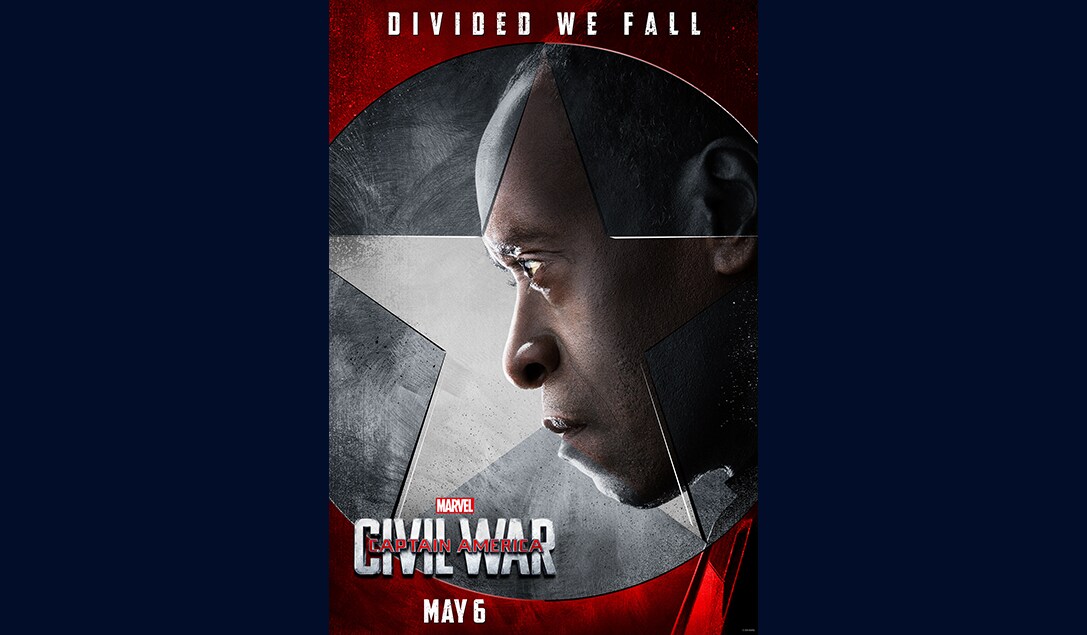
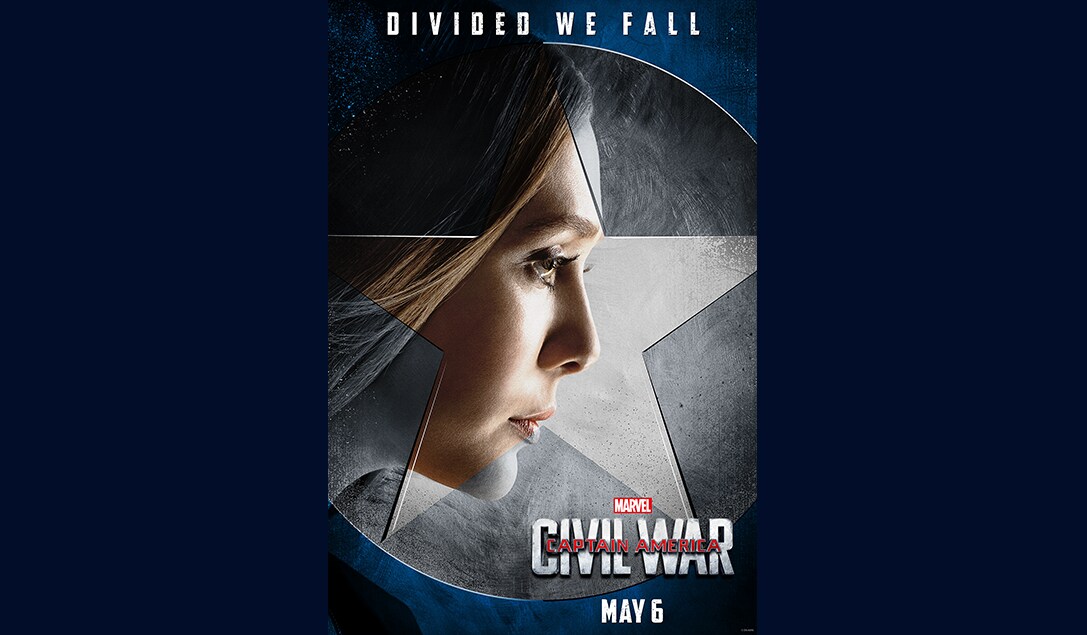
James Rhodes pays first and most visibly. Marvel's account of the Berlin fight says Vision's beam missed Sam Wilson and cut through Rhodey's armour, and that Rhodes survived but lost the full use of his legs. Vision then carries the guilt. Disney's 2018 interview with Paul Bettany and Elizabeth Olsen describes him as coping with the guilt of having accidentally injured Rhodes, whilst Wanda, a member of Team Cap, had been imprisoned on the Raft in the middle of the ocean. Two people who had grown close were separated by a policy dispute neither of them wrote.

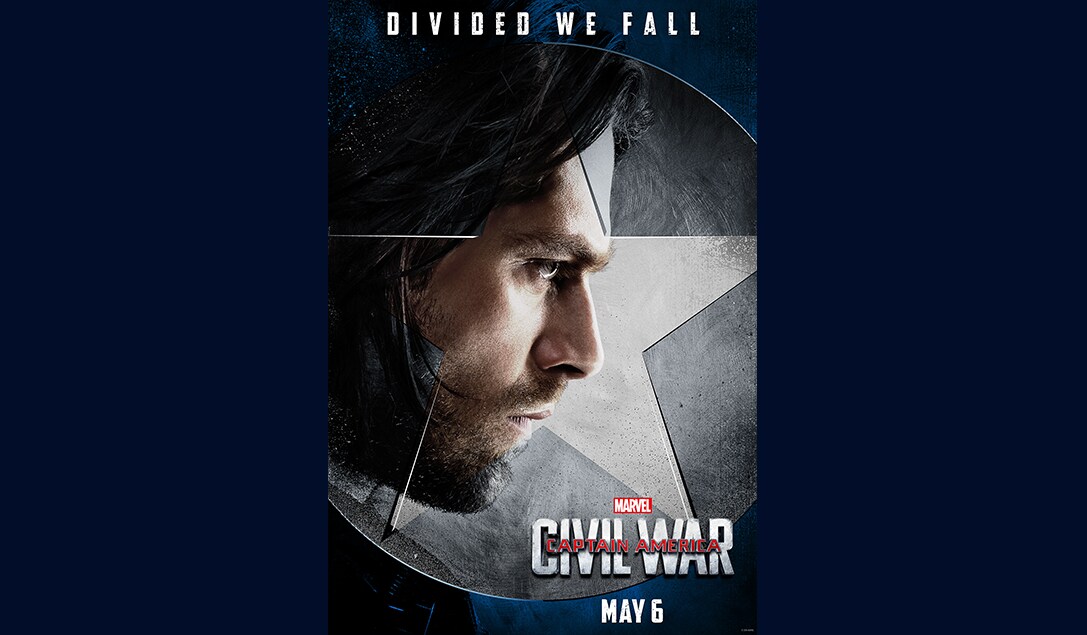
Bucky Barnes pays in a different currency. The Winter Soldier is accused of a bombing he did not commit, and Marvel records that T'Challa swore to kill him for it. Sam Wilson and Steve end up in custody, and Natasha Romanoff, who had joined Tony's side because she thought staying together was the better play, holds off the Black Panther so that Steve and Bucky can reach Zemo, then leaves the compound as a fugitive. Her reward for choosing the middle was to lose both camps.
The cost that lasted: from Berlin to Wakanda
A fair test of any argument is whether the settlement is still standing a couple of years on. This one is not. Anthony Russo told Disney in 2018 that Infinity War was very much about how to move forward from Civil War, and what that division does when the greatest threat the Avengers will ever face arrives while they are divided. A filmmaker saying so on the record is worth more than any amount of fan reconstruction.
The cast describe a split that was postponed, not mended. Evans said he did not think either he or Tony held grudges and that some things had maybe been buried, then added that the group was not really the Avengers, that circumstances had made them come together. Bettany put it more bluntly: the cost and danger facing everyone mattered more than certain beef, so old grudges were put off until next time. Scarlett Johansson described Steve and Natasha working underground for a long time without recognition, which, she said, takes a certain toll. These are three different people independently describing the same thing, a bill that had not been settled and only deferred.
Marvel's profile of Natasha shows what deferral looked like in the end. She, Steve, Sam, Vision and Wanda gather at the compound, are reunited with Rhodes and Bruce Banner, and travel to Wakanda in the hope of removing the Mind Stone from Vision. Wakanda is itself part of the answer, because it was T'Challa who had offered Steve and Bucky refuge after Siberia. The split had a cost, and for a while the costs also bought the allies who later turned up on the right side of a field.
My one reservation is about balance. The film is far better at showing what refusing the Accords cost than what signing them would have cost, because the fugitives and the Raft are on screen while the day-to-day price of oversight is mostly a debate. That tilts the books towards Steve without ever saying so. A viewer should know the tilt is there before deciding who was right.
Plotline: the threads the split leaves behind
The table lists continuity threads that run from the 2016 film into later released material, each tied to a public source. It is not a certified list of planted and paid-off Easter eggs, and no scene-level timecodes have been checked.
| THREAD_ID | PLANTED_AT | CLUE & PRIMARY EVIDENCE | REVEALED_OR_PAID_OFF_AT | CURRENT_STATE | OFFICIAL_SOURCE_LINK | CONFIDENCE |
|---|---|---|---|---|---|---|
| ACCORDS-PRESSURE | Civil War, pressure to hold the team accountable | Disney's synopsis: collateral damage, political pressure, a wedge between Captain America and Iron Man | The film's own clash between the two teams | Resolved inside the film as a split, not as agreement | Disney Movies | High for the premise; scene proof open |
| VIENNA-BOMB-FRAME | Civil War, the Vienna summit bombing | Marvel's profile: Zemo's bomb kills T'Chaka and frames Bucky Barnes | Zemo identified as the bomber; T'Challa stops his suicide and holds him for trial | Resolved in the film | Marvel.com, T'Challa profile | High for the profile; scene proof open |
| RHODEY-AND-VISION | Civil War, the Berlin fight | Marvel's profile: Vision's beam cuts through Rhodey's armour and he loses full use of his legs | Rhodes reunited with the fugitives at the compound before Wakanda; Vision's guilt noted by Disney in 2018 | Carried into Infinity War | Marvel.com, Vision profile | High for the profile; scene proof open |
| WANDA-ON-THE-RAFT | Civil War, Team Cap imprisoned | Disney 2018: Wanda imprisoned on the Raft, Vision coping with guilt, allegiances divided | Wanda and Vision meet in secret before Infinity War | Carried into Infinity War | Disney News | High for the cast account; scene proof open |
| STEVE-AND-NATASHA-UNDERGROUND | Civil War, Natasha leaves the compound as a fugitive | Johansson and Evans, 2018: they worked quietly outside any organisation and it took a toll | Their return to the open in Infinity War | Carried into Infinity War | Disney News | High for the cast account; scene proof open |
| WAKANDA-REFUGE | Civil War, T'Challa welcomes Steve and Bucky | Marvel's profile: Captain America, now a fugitive, brings Barnes to Wakanda for safety and healing | The Avengers regroup in Wakanda in Infinity War | Paid off in a later released film | Marvel.com, Natasha profile | High for the profile; scene proof open |
Evidence count: 6 source-bounded threads. Five are carried into or paid off in a later released film by Marvel's or Disney's own accounts, one is resolved inside Civil War, and none is a certified two-scene Easter egg or a confirmed Doomsday outcome.
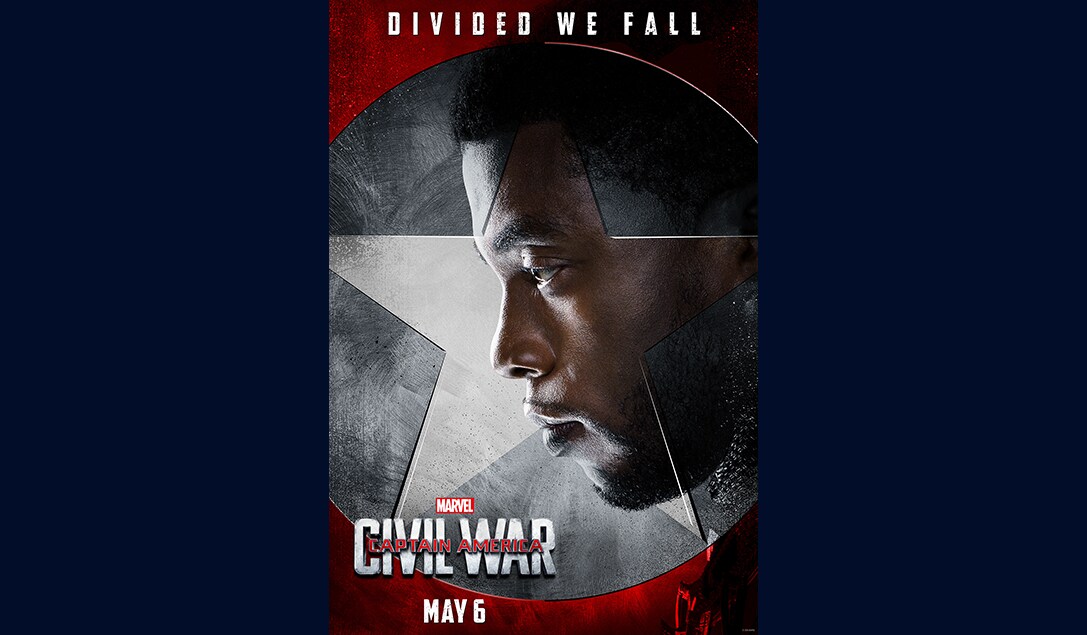
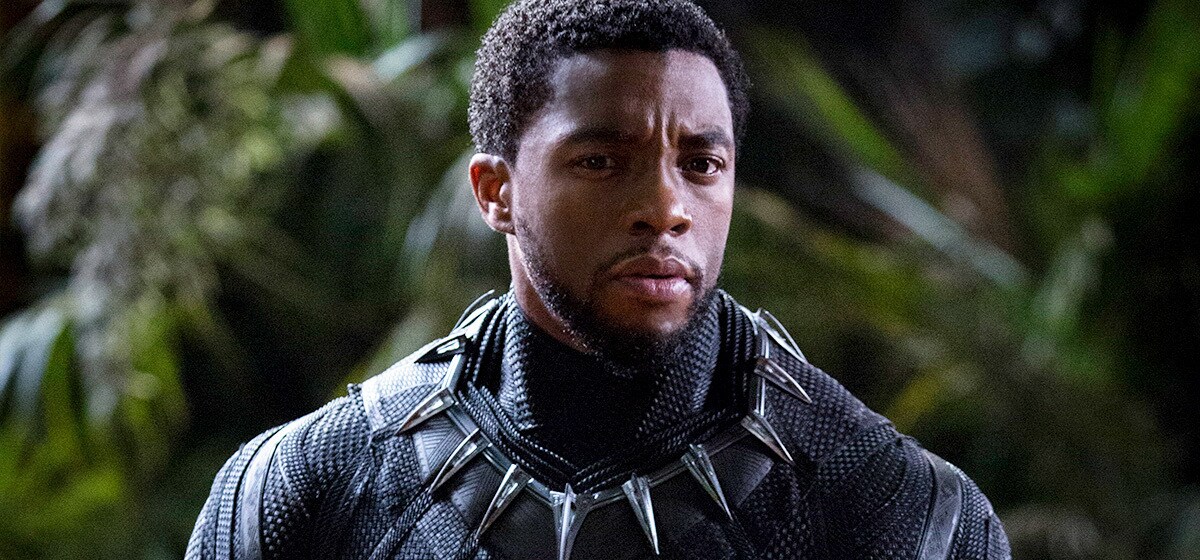
Hero Psychology: T'Challa
T'Challa is the character least responsible for the split and most changed by it, which makes him the best person to study. He arrives as a prince at a diplomatic summit and he leaves as a king. In between, according to Marvel's profile, his father is killed by a bomb at the ratification of the Sokovia Accords, the throne passes to him, and he inherits what Marvel calls the task of revenge for the death of the king.
Here is the interesting part, and it is worth reading slowly. Grief gives him a target, and he tracks Bucky Barnes with the single-mindedness of a man who needs the pain to have a name. Then the target turns out to be wrong. When Zemo is exposed as the real bomber, T'Challa stops him from taking his own life and decides he should stand trial. He had every reason to let it end otherwise. What he chooses instead is the harder, less satisfying thing: process over vengeance. That reads as a man whose loyalty is to the idea of a law, not to his own anger, which fits a prince who came to the Accords summit with his father in the first place.
The strength is restraint, and the contradiction is that it sits beside a hard edge. The same man who spares Zemo had set out to kill Bucky, and he sided with the Accords whilst keeping a country's secrets behind him. If there is a fear underneath, my reading is that it is the fear of failing the people who depend on him, first his father and then Wakanda, which makes him cautious about power in the way Tony is. The later welcome he gives Steve and Bucky, a fugitive and a man still fighting his brainwashing, whom he once wanted dead, shows what the change cost in pride and what it bought in trust. Marvel's profile adds that his rule is then tested by a cousin whose father was wronged by T'Chaka, which is the question of an unpaid debt asked about his own family. Take that as my interpretation of the screen evidence, not a diagnosis; only the people who made the films could say what he thinks beyond what he does.
Keeping the books on a rewatch
If you are going back to Civil War before December, here is a plain way to read it. Keep a running ledger. For each fight, ask what was said, who stood to lose and who actually did. You will find the debits fall on people with the least say in the argument. Then watch Infinity War for how many of those debts are still open.
As for what comes next, Disney's September 2026 report on the Endgame Encore preview quotes the Russos on the groups meeting in Doomsday: the Avengers, the Fantastic Four, the Talokan, the Thunderbolts, the Wakandans and the X-Men. Nothing in that report says whether the old split returns, and it would be unwise to assume it. If you want a single question to carry into the cinema on 18 December, the date Disney gives, make it this one: who is answerable for the power in the room, and who is quietly paying for the answer?
Sources used in this guide
- Disney Movies, Captain America: Civil War: the synopsis on accountability and the wedge between Captain America and Iron Man; release date 6 May 2016; character poster images.
- Disney News, Everything We Learned from Directors Anthony and Joe Russo on the Set of Avengers: Infinity War, 15 March 2018: Anthony Russo on moving forward from Civil War and the divided condition of the Avengers.
- Disney News, Chris Evans and Scarlett Johansson on the Infinity War set, 16 March 2018: Steve and Natasha working underground, Evans on a belief system destroyed, and the remark on buried grudges.
- Disney News, Elizabeth Olsen and Paul Bettany on the Infinity War set, 26 March 2018: Wanda on the Raft, Vision's guilt over Rhodes, and old grudges put off until next time.
- Marvel.com, Black Panther (T'Challa) on-screen profile: the Vienna summit, the bombing, T'Challa's vow, Zemo and the welcome given to Captain America and Barnes.
- Marvel.com, Vision on-screen profile: the Sokovia Accords, Vision's reasoning and the injury to Rhodes.
- Marvel.com, Black Widow (Natasha Romanoff) on-screen profile: Natasha's choice during the conflict, the fugitive years and the move to Wakanda.
- Disney Movies, Black Panther: released-film still of T'Challa.
- The Walt Disney Company, Russo Brothers Unpack Explosive Avengers: Doomsday Footage in Endgame: Encore, 29 September 2026: the groups named by the Russos and the 18 December date as stated by Disney.