
Endgame: Loss, Time Travel and Choice
Updated
 Delroy.CEditor
Let us name the worry first, because plenty of people feel it before they press play. Avengers: Endgame runs for three hours. It is about grief. And it involves time travel, which has a reputation for making viewers feel they should be taking notes. If that is you, there is no need to panic. You do not need a diagram, and you will not be tested. What the film asks of you is smaller and a good deal kinder: pay attention to how people behave once the worst has already happened.
That is the reading offered here. The time travel is the method and the choices are the point. It comes from released material and from what Disney and Marvel have said on the record, and it looks back at 2019 only. Nothing here is a forecast about Avengers: Doomsday, and where the sources go quiet the article does too.
Where the film starts: after the loss
Disney's synopsis, for a film released on 26 April 2019, says that the grave course of events set in motion by Thanos wiped out half the universe and fractured the Avengers' ranks, compelling the remaining Avengers to take one final stand. Notice the order. The synopsis begins with what has been lost, and only then mentions anything the survivors will do. The Russos have said, on a Marvel.com watch-along, that they wanted viewers to expect a mission to hunt Thanos and then to send them somewhere else entirely, which is a polite way of saying that the grief is the film, not the prelude to it.
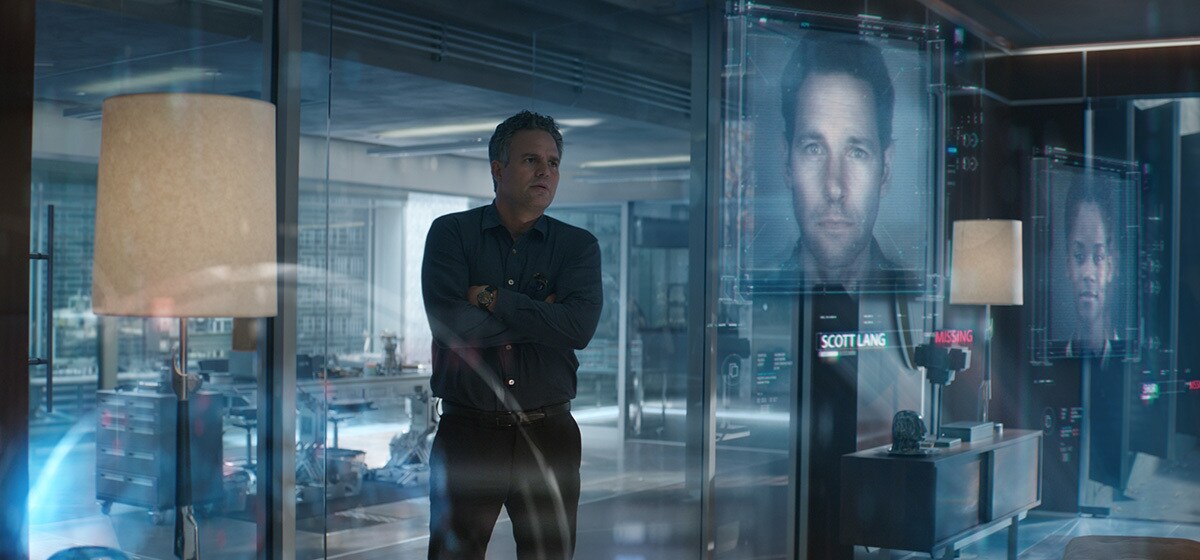
Marvel's own recaps give a sense of how that grief is carried. At the end of Captain Marvel, Natasha is seen frantically trying to work out a pager while population numbers drop around the world. Marvel's profile of Scott Lang adds that he came back from the Quantum Realm to find that, although it had felt like five hours to him, five years had passed and half the population was gone. Both are ways of arriving late to a loss. The people in this film are not starting from strength. They are starting from tired, and the film has the decency to let them be.

How a group decides to try again
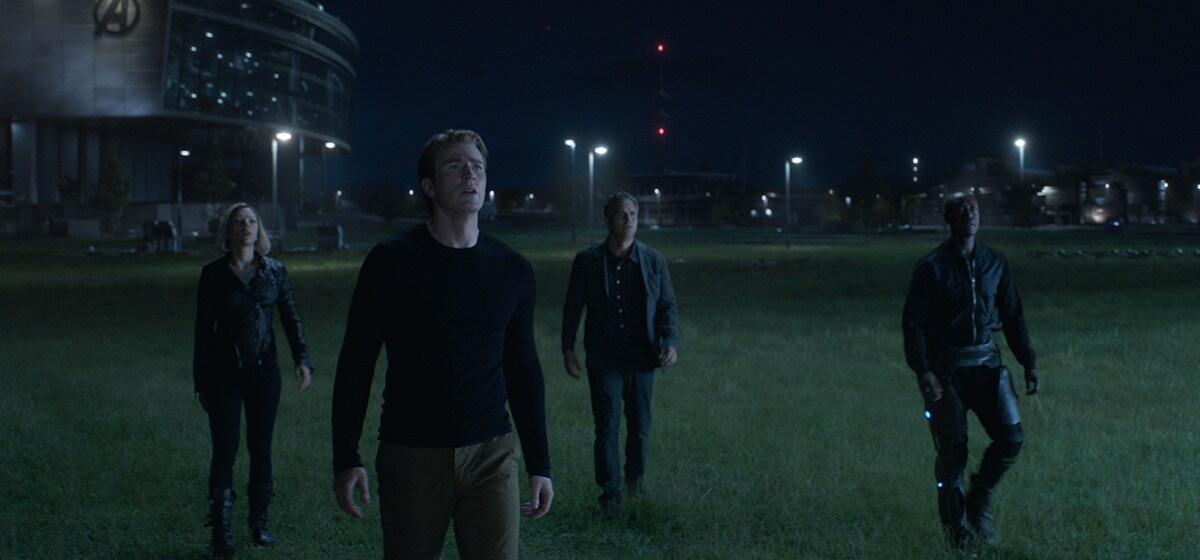
The hardest step in any recovery is not the plan. It is agreeing that a plan is worth the risk. Marvel's profile of Scott records that he took his idea, using the Quantum Realm to go back in time and stop Thanos, to Natasha and Steve. They went to Tony Stark, who by then was no longer working as an active Avenger, and Tony heard the idea out and declined to help. The three returned to the compound to try to work out time travel on their own.
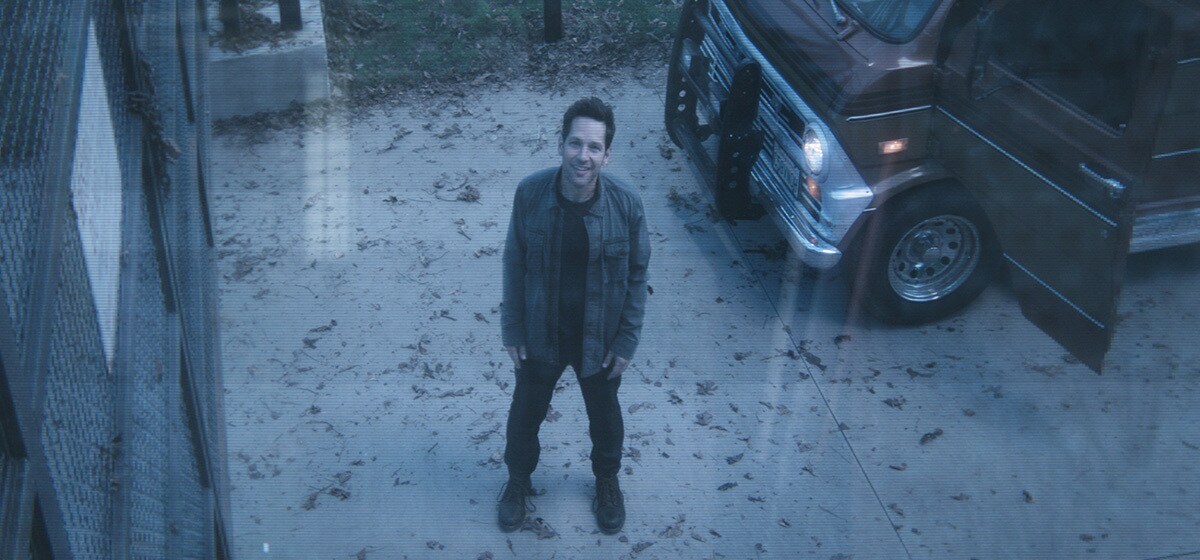
Here is where I would like to offer some reassurance about the rules. Marvel's account of the experiments is played for comedy: Hulk, working the portal in the van, accidentally turns Scott into a baby, a teenager and an old man before bringing him back as himself. That tells you how the film wants you to take the mechanics. Keep an eye on the idea, not the paperwork. The plan is to go back, collect the Infinity Stones before Thanos ever uses them, and return. A viewer who holds that much will follow the film comfortably. Anyone wanting a watertight theory of time will be a little disappointed, because the film does not offer one and, in my view, is wise not to try.
What actually shifts the group is Tony. Marvel says he could not shake the idea after declining it, and that after a successful trip back by Hawkeye the Avengers renewed their hope and began planning the Time Heist. That is a human turning point, not a technical one. A man who had stepped back from the team decides, against his own caution, that he cannot leave it alone.
The cost of putting things right
The heist is not smooth, and I think that is one of its kindest features. Marvel says Scott, Tony, Steve and Bruce travelled back to 2012 to retrieve the Time Stone, the Mind Stone and the Space Stone, and that Tony and Scott managed to get the Tesseract before being blocked at the last moment by an upset Hulk and tricked by Loki, who escaped with it. Tony and Steve then resolved to go further back, to 1970, with Scott worried about whether there would be enough Pym Particles to get home. Everything has a price, and the film keeps reminding you that the price is paid by someone.
Once the Stones are collected, Marvel describes a new Nano Gauntlet, which Hulk puts on, and his snap undoes Thanos' destruction. Scott is the first to notice a surge of life on Earth. The relief is short. A Thanos from 2014 arrives and storms the compound, and Marvel's profile says that the Avengers win, though at a terrible cost to the team. Two of those costs are stated plainly in public sources. Marvel.com's 2026 interview with Anthony Russo describes Tony sacrificing himself to save the universe with a single snap, and Russo recalls that the pickup for that scene was shot on a stage opposite the Paramount lot where Robert Downey Jr. auditioned for Iron Man. And Marvel's profile of Vision says that Wanda and Clint shared a quiet moment by the lake at Tony's memorial service, honouring their fallen friends Vision and Natasha.
My view is that the film earns its sadness by the way it paces them. The losses do not arrive as a countdown. They arrive after a victory, in a quiet place, with people standing by water. That is a restrained and humane choice, and it is the reason the film lasts.


After the choice: who carries it on
Recovery has a last step, which is deciding who looks after what has been rebuilt. In a 2025 Disney piece on Brave New World, the studio states that Steve picked Sam Wilson to take over from him as Endgame closes. That is a handover in the plainest sense. The survivors do not stay in place forever, and the film accepts that, which is a good part of why it feels like an ending rather than a pause.
That framing matches what the directors say. Anthony Russo, in that September 2026 Disney report, calls Endgame an ending rather than the start of something new, and says that when the idea of Doomsday arrived it felt natural to continue from where Endgame stopped. Nothing there tells us what that story is. It is worth being honest about the limit, because the temptation to guess is strong.
Plotline: the threads that run through the film
The table lists continuity threads with public sources, from Endgame back to earlier material and forward to later released work. It is not a certified list of planted and paid-off Easter eggs, and no scene-level timecodes have been checked.
| THREAD_ID | PLANTED_AT | CLUE & PRIMARY EVIDENCE | REVEALED_OR_PAID_OFF_AT | CURRENT_STATE | OFFICIAL_SOURCE_LINK | CONFIDENCE |
|---|---|---|---|---|---|---|
| HALF-THE-UNIVERSE | The end of Infinity War | Disney's synopsis: Thanos' course of events wiped out half the universe and fractured the Avengers' ranks | Endgame, the survivors' final stand | Paid off in Endgame | Disney Movies, Endgame | High for the synopsis; scene proof open |
| NATASHA-AND-THE-PAGER | Captain Marvel, closing tag | Marvel's recap: Natasha tries to work out a pager as population numbers fall | Endgame, her role among the survivors | Carried into Endgame | Marvel.com refresher | High for the recap; scene proof open |
| SCOTT-AND-FIVE-YEARS | Ant-Man and the Wasp, Scott in the Quantum Realm | Marvel's profile: five years passed, felt like five hours | Scott's idea of a time heist in Endgame | Paid off in Endgame | Marvel.com, Ant-Man profile | High for the profile; scene proof open |
| TONY-SAYS-NO-THEN-YES | Endgame, the first meeting | Marvel's profile: Tony declines, then cannot shake the idea | The Time Heist is planned and carried out | Resolved inside Endgame | Marvel.com, Ant-Man profile | High for the profile; scene proof open |
| TESSERACT-AND-LOKI | Endgame, the 2012 trip | Marvel's profile: Loki escapes with the Tesseract | Not stated in the sources used here | Open in these sources; see the Marvel series for what follows | Marvel.com, Ant-Man profile | High for the event; consequences not sourced here |
| NATASHA-SACRIFICE | Endgame | Scarlett Johansson, Marvel.com 2021, calls it Natasha's ultimate sacrifice; the Vision profile has Wanda and Clint honouring her | Black Widow, which Johansson says looks at why she made it | Carried into a later released film | Marvel.com, Johansson interview | High for the statements; scene proof open |
| STEVE-TO-SAM | Endgame, the closing handover | Disney, 2025: Steve picked Sam as his successor | A released series and a later film | Continues beyond Endgame | Disney feature | Studio statement; episode timing not checked |
Evidence count: 7 source-bounded threads. Six rest on released films or official statements and are paid off, carried on or resolved; one, the Tesseract and Loki thread, is open in the sources used here. None is a certified two-scene Easter egg and none is a confirmed Doomsday outcome.
Hero Psychology: Natasha Romanoff
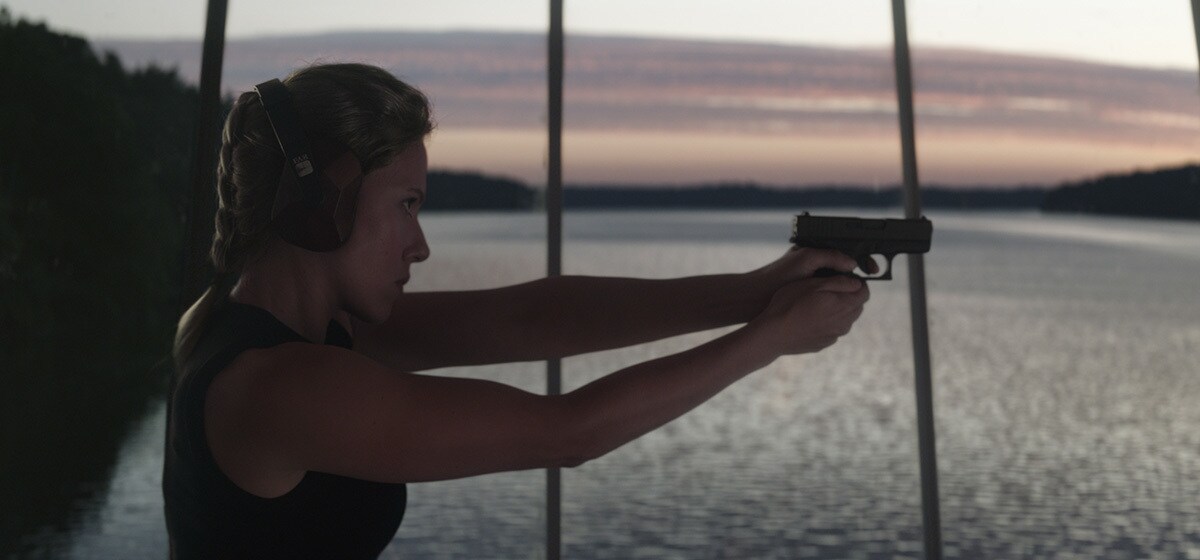
If the film has a quiet centre, it is Natasha, and her psychology is worth reading gently. Marvel's profile describes a woman trained from a young age in a Russian programme, raised to be autonomous and without attachments, who has nonetheless proven herself an exceptional team player. That contradiction is the key to her. She is good at depending on no one and she has spent her adult life depending on people anyway.
Her strengths are discipline and judgement. Scarlett Johansson told Disney in 2018 that these characters do not make decisions emotionally, especially Natasha, and that she is very strategic. My reading is that this is also a protective habit. Someone trained to treat feelings as risks learns to convert them into plans. The attachments that survive that training are therefore chosen ones. Marvel records that Clint Barton seems to be her best friend, and that she feels she owes him a debt for helping to bring her over from the KGB. A person who thinks in terms of debts is a person who feels that something is unpaid.
That is why the choice at the end of her story looks, to me, like the consistent act of a particular mind and not a sudden one. Johansson, speaking to Marvel.com in 2021, called it Natasha's ultimate sacrifice and said it gave her a different view of who the character is, what drives her and where her emotional core lies. I will not describe the scene, because the sources I have used do not. What they do establish is that those closest to her treated it as a loss to be honoured, not as a mission completed. As a reading, it makes her the Avenger most able to give something up, and also the one least able to say she needs anything in return. It is a reading of what the films and their makers show, not a diagnosis.

Safeguards for a first or fiftieth watch
If you are going to watch Endgame again before December, a few small steps make it gentler, and they are in a sensible order.
First, set the rules down. Remember the plan, go back, collect, return, and leave the rest. The film does not expect more.
Second, watch the quiet scenes as closely as the loud ones. The compound lawn, the lakeside, the handover. That is where the film states what it is about.
Third, keep the unreleased film separate. Disney's report says Doomsday opens on 18 December and brings groups from several universes together. It does not say how, or what happens to anyone you are fond of. Treat every confident theory as exactly that, and look after your expectations.
Sources used in this guide
- Disney Movies, Avengers: Endgame: the synopsis on half the universe and the fractured Avengers ranks, release date 26 April 2019 and released-film stills.
- Marvel.com, Ant-Man (Scott Lang) on-screen profile: Scott's return after five years, the Time Heist plan, the experiments, the 2012 and 1970 trips and the battle at the compound.
- Marvel.com, Avengers: Endgame Refresher: Black Widow: Natasha at the end of Captain Marvel and her position before Endgame.
- Marvel.com, Endgame watch-along with Anthony and Joe Russo: the intention to subvert expectations about a Thanos hunt.
- Marvel.com, Anthony Russo on Avengers Endgame: Encore, 24 September 2026: Tony's final scene and the filming of its pickup.
- Marvel.com, Vision on-screen profile: the memorial scene at which Wanda and Clint honour Vision and Natasha.
- Marvel.com, Scarlett Johansson on Natasha Romanoff's sacrifice, 28 June 2021: Johansson's account of the sacrifice and what it revealed about the character.
- Marvel.com, Black Widow (Natasha Romanoff) on-screen profile: her training, her attachments and her debt to Clint Barton.
- Disney News, Chris Evans and Scarlett Johansson on the Infinity War set, 16 March 2018: Johansson on how the characters decide and on Natasha in particular.
- The Walt Disney Company, Captain America: Brave New World cast feature, February 2025: Steve choosing Sam to succeed him.
- The Walt Disney Company, Russo Brothers Unpack Explosive Avengers: Doomsday Footage in Endgame: Encore, 29 September 2026: Anthony Russo on Endgame as an ending, the groups in Doomsday and the 18 December date as stated by Disney.