
Agatha All Along Act One: The Promise That Starts the Lie
Updated
 Gwenllian.PEditor
Consider the audacity of selling a road before anyone has checked where it goes. In Agatha All Along, an impossible journey begins with an unusually ordinary human weakness: people need something, and they are willing to listen to the person who says she knows how to find it. Agatha Harkness offers a route towards lost magic, answers and a fresh beginning. She is not, however, the reliable guide that an adventure story usually promises. Knowing the final revelation — that the Road legend was part of an old deception, while Billy's power later made a Road horribly tangible — changes how its opening act works. The first two episodes are not simply the recruitment section before the exciting trials. They are the demonstration of how a charismatic person turns separate wishes into a shared belief, and of how the audience is encouraged to trust a destination before asking who benefits from that trust.
A detective story traps the person who used to understand the trick
The series introduces Agatha inside a detective-fiction distortion. The hard-boiled mood seems like an odd way to restart a witch's story until its structural purpose becomes clear. In WandaVision, Agatha entered somebody else's television world while concealing her own knowledge. Here her confidence has been turned against her. She cannot comfortably distinguish her imagined investigation from her actual position, and the revelation of her powerlessness deprives her of a familiar method of forcing events in her favour. The comparison matters because it prevents a simplistic introduction in which the formerly dangerous witch merely wants another dangerous adventure. Agatha has lost both control of the story she inhabits and access to the power by which she once imposed control. Her theatrical bravado survives the loss. That gap between her appearance and her circumstances creates the first important question: what will somebody accustomed to taking power do when persuasion is the only weapon left?
Teen's invitation has a second meaning after the finale
The mysterious Teen helps break the spell and presses Agatha towards the Witches' Road. On a first watch, he appears to be the young believer asking an experienced witch for guidance. Agatha appears sceptical but interested in the possibility of recovering what she lacks. This balance is almost comically unstable. The supposed expert needs her inexperienced companion, and the supposed novice possesses information and abilities she has not recognised. The finale makes the instability more interesting, not less. Billy Maximoff's powers will manifest a real Road around an idea originally sold as legend. The boy who looks like the customer of a dubious adventure has unwittingly become its maker. Yet this later knowledge should not erase the way the scenes originally play. He is also a young person seeking family and a future, rather than a mastermind directing every harm. The act establishes an imbalance of knowledge that will eventually reverse the audience's assumptions about who is leading whom.
The promise works because every recruit hears a different reward
Agatha's search for a coven could easily have been a cheerful montage of witches joining a team. Instead, every recruitment reminds the reader that agreement is not the same thing as trust. Jennifer Kale, Alice Wu-Gulliver and Lilia Calderu have different histories, expertise and reasons to hesitate. Their individual needs allow the general promise of the Road to sound personally relevant. Someone who desires the return of power hears one offer; someone troubled by a family legacy hears another. This is the old strength of a flexible legend: nobody has to agree on the exact object of the quest in order to believe the journey might answer them. Agatha can exploit that flexibility, precisely because the destination is difficult to test before the journey begins. Her apparent knowledge supplies authority; their desire supplies momentum. The coven is assembled through a bargain, not through a shared moral outlook.
Sharon makes the danger visible before the magic does
Sharon Davis is the most important person to remember when the recruitment scenes seem merely mischievous. She is an ordinary Westview resident, familiar from the role assigned to her as Mrs Hart in Wanda's earlier fantasy. Her presence offers comic contrast to a gathering of trained or experienced witches, but it also exposes an uncomfortable difference in informed participation. Sharon's relationship with magical adventure is not the same as Agatha's or Jennifer's. She has already lived through somebody else's imposed story, and now she is being drawn into another woman's quest. The third episode gives this fact devastating force when Sharon dies during the poisoned-wine trial. A season-wide first-act analysis has to read her recruitment in the light of that outcome. The joke about an unsuitable companion becomes evidence that a persuasive leader may treat another person as a convenient answer to a problem of numbers. Sharon was never merely a disposable gag; what happens to her is an early moral measure of the expedition.
The Ballad gives the deception a beautiful social form
The coven's performance of the Ballad is a brilliant piece of dramatic camouflage. Song makes a group act together even when its members remain deeply suspicious of one another. The rhythm implies an inherited order; the repeated ritual makes the proposed route sound as though generations have tested it. Disney's account of the music confirms that different versions of the Ballad have specific narrative jobs, including the later Lorna Wu variation used to protect Alice. That does not establish that every claimed magical rule in the song is an ancient truth. In fact, the finale brings a radically different origin to the legend. Nicholas Scratch and Agatha are connected to the Ballad's earlier life, and Agatha has used the Road story to lure witches into a trap over time. From that perspective, the episode-two ritual demonstrates how cultural familiarity can be manufactured. The beauty of a song and the sincerity of its singers do not independently certify the promise made by the person who taught it to them.

The Salem Seven make deliberation impossible
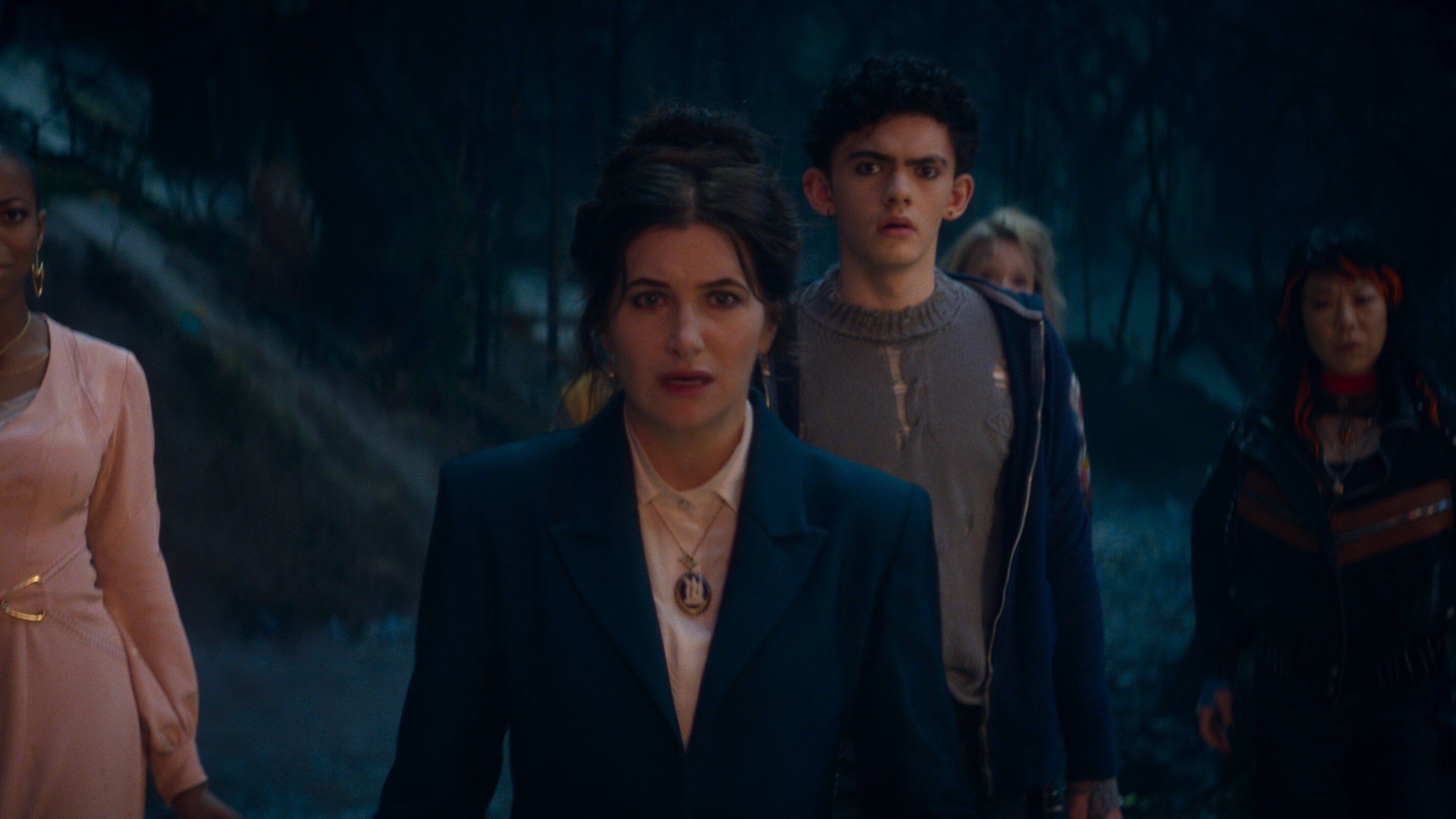
As the Salem Seven approach, the story converts an attractive theory into an urgent choice. The coven cannot continue negotiating until every member is satisfied; danger is closing the distance. This is an effective adventure structure because external pressure can disguise the quality of an internal decision. A door opens, threats gather and the audience feels the pleasure of a team escaping together. Later knowledge complicates that excitement. The apparent Road was not waiting as an objectively reliable institution with a published set of rewards. The characters are entering a situation whose explanation even Agatha cannot fully anticipate. She knows the old deception, but not Billy's unrecognised power to make the invented world real. Her confidence and ignorance coexist. That contradiction is a major source of the series' suspense. The leader is concealing one truth while remaining blind to another.
What a rewatch changes — and what it must not change
A rewatch gives the opening a sharper ethical outline. Agatha's promise can be tested against her later history of exploiting witches. Billy's delight in the myth becomes tragic because his powers can turn belief into a dangerous environment. Sharon's inclusion no longer seems harmless, especially when the deaths of the journey prove permanent within the story. Yet there is a tempting overcorrection to resist: calling the whole quest imaginary and therefore meaningless. Billy's manifested Road has consequences. Alice's, Lilia's and Sharon's experiences are not cancelled by learning the legend was dishonest. Nor does Agatha's grief over Nicholas make all her schemes involuntary. The opening act is powerful precisely because competing kinds of reality coexist: a fabricated tradition, an actual magical creation and authentic human choices made on faulty information. That combination explains why the journey can feel real while the sales pitch is false.
The first act is an argument about who gets believed
The beginning of Agatha All Along is ultimately less interested in geographical distance than in authority. An apparently knowledgeable witch tells other people what a Road can give them. A teenager believes her, although his own powers will become part of the explanation. A group accepts a ritual it does not fully understand, and one woman without the training of the others is brought along for the ride. Each choice is intelligible in the moment; none is risk-free. By the finale, the audience knows that the Road legend carried a much older, darker purpose. That knowledge does not make the early episode a mistake. It reveals that the story began exactly where a deception must begin: with an answer that sounded beautifully fitted to what people wanted. The next act will show what those people pay for accepting it.
Original evidence and a spoiler-aware rewatch
This analysis considers the entire nine-episode season, especially the first two episodes and the finale's retrospective Road revelation. The original Disney production interview describes a powerless Agatha being forced to form a coven: Disney studio interview. The later double reframe concerning Billy, Agatha and Nicholas is discussed directly by Jac Schaeffer: showrunner interview. The original two images earlier in this article are externally served editorial stills from Disney UK Press; the gallery states ©Disney, editorial use only. This article stores no copies.
Four further original Disney stills: the people behind the promise
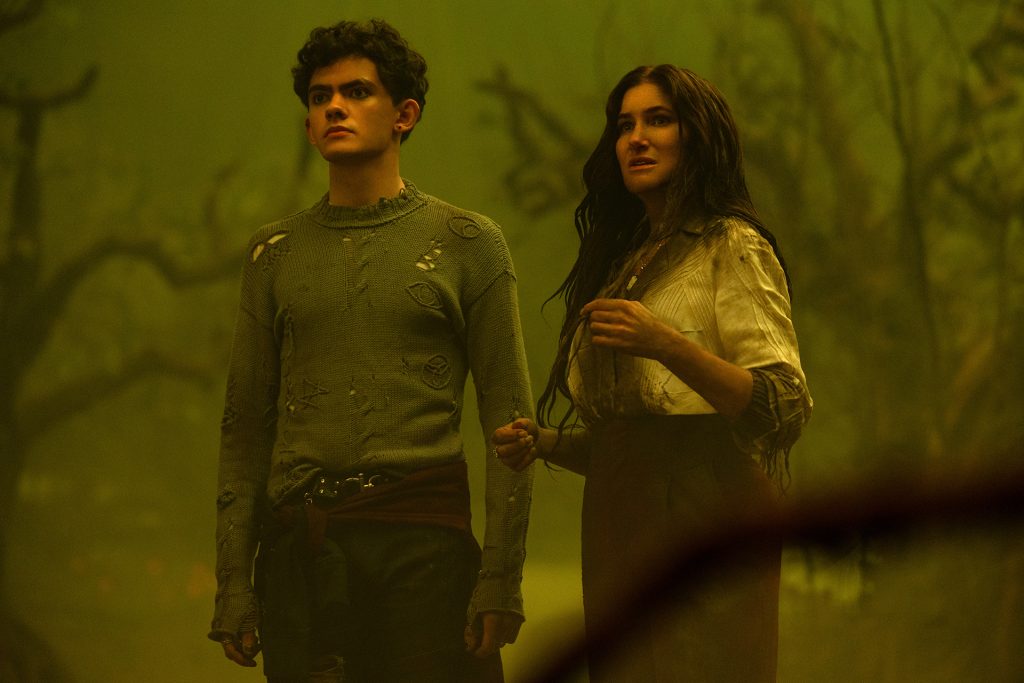
Revisit the first act with the faces of the travellers in mind. Billy appears alongside Agatha as a believer who will eventually discover his own power; Agatha's apparent confidence in Westview is a performance by somebody without her old control. Jennifer, Alice and Lilia enter with very different needs, which is why the same promise can sound persuasive to all of them.

Different witches, different reasons to listen
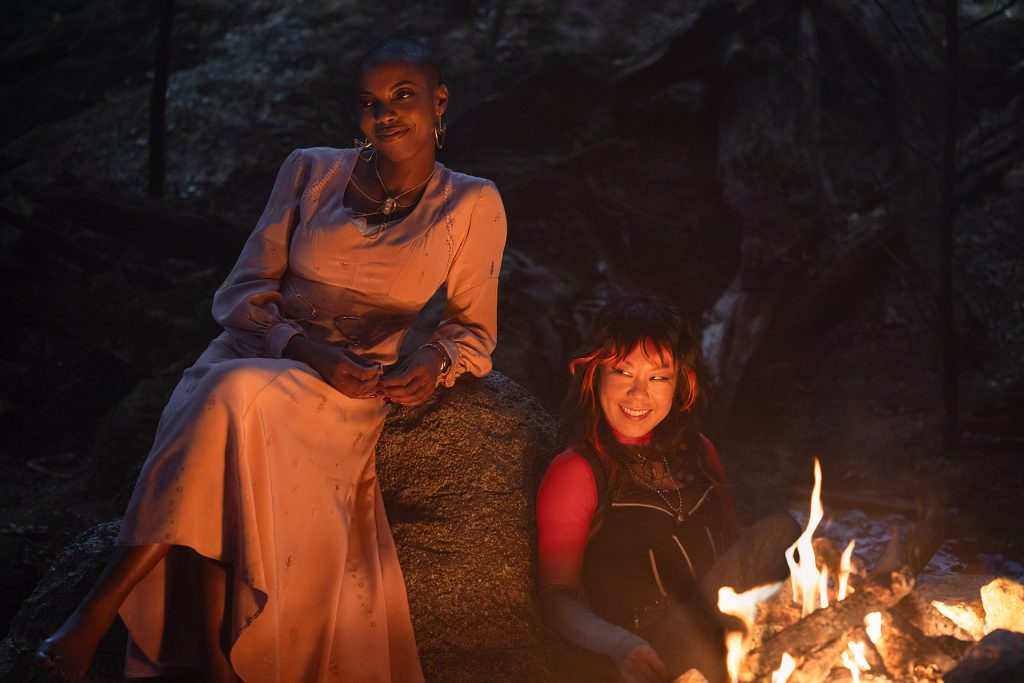
These two characters are more than additions to the coven's headcount. Jennifer and Alice bring their own histories; Lilia's quiet ability to read what others overlook will become crucial. Their presence makes the opening both more promising and more dangerous than Agatha lets on.
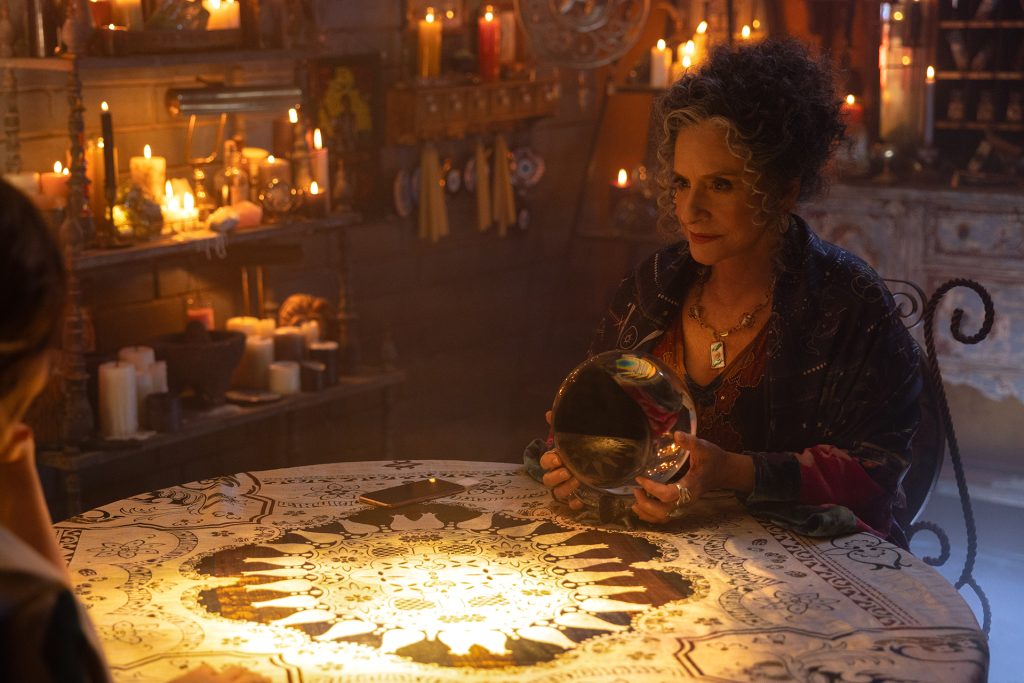
Original two Disney press embeds earlier in this article retained, four different official Disney corporate stills added here, three two-image blocks and six images overall. All are externally linked; no image has been copied or rehosted. Public hotlink/display and third-party editorial reuse permission remain to be independently verified.