
WandaVision's Second Act: Family Life Meets Westview's Limits
Updated
 Siobhan.GEditor
The boys are growing up so quickly that Wanda hardly has time to catch her breath. It should be a funny family problem, the kind a sitcom would sort out with a cuddle and a clever line. But there are other families in Westview, and nobody has asked them if they want to live by Wanda's rules. That's the part of this second act that troubles me. I understand why she wants to keep her own children close. I also find it increasingly difficult to watch the neighbours smile and wonder what they may be feeling underneath.
Outside, there are people trying to understand
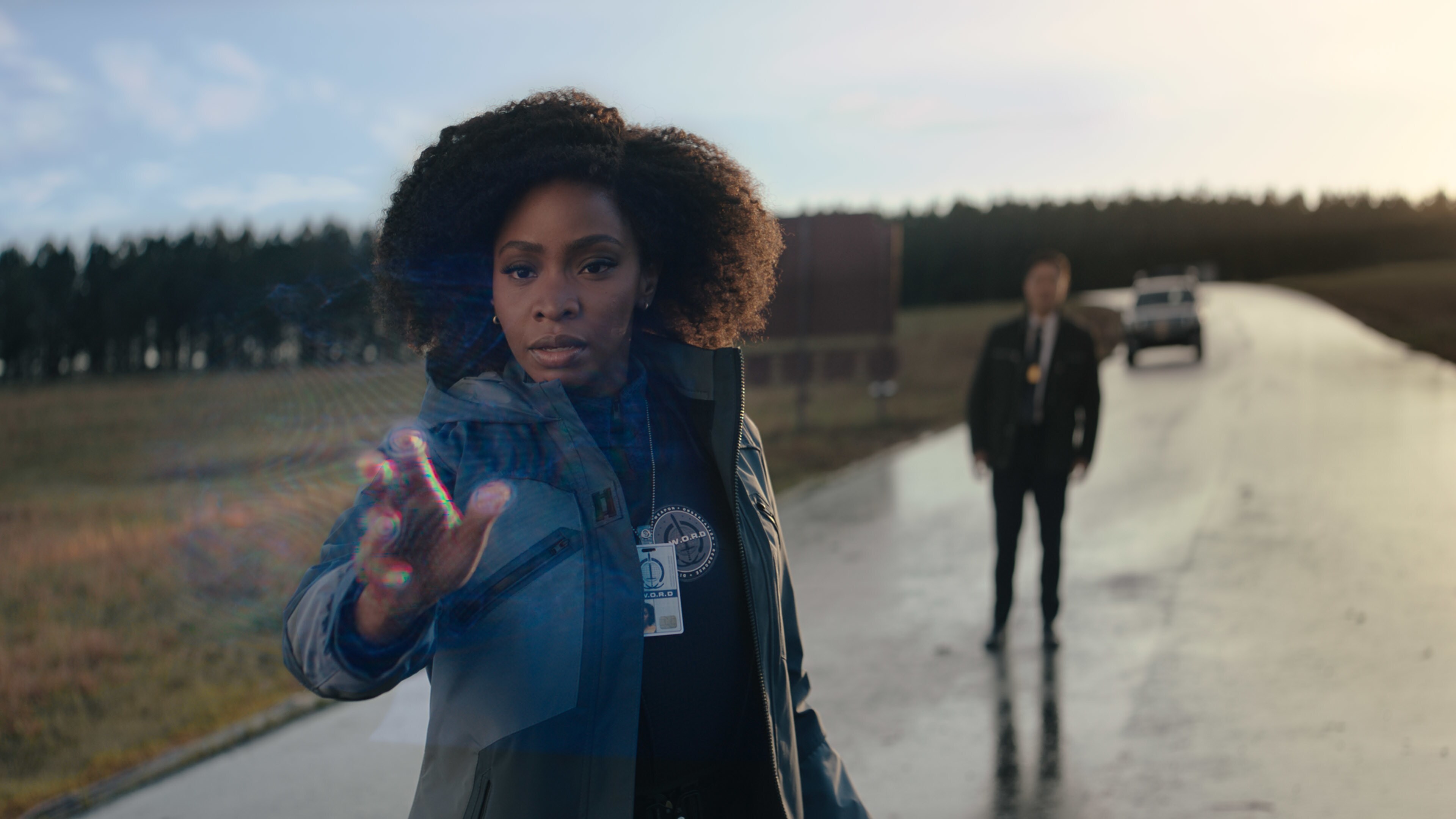
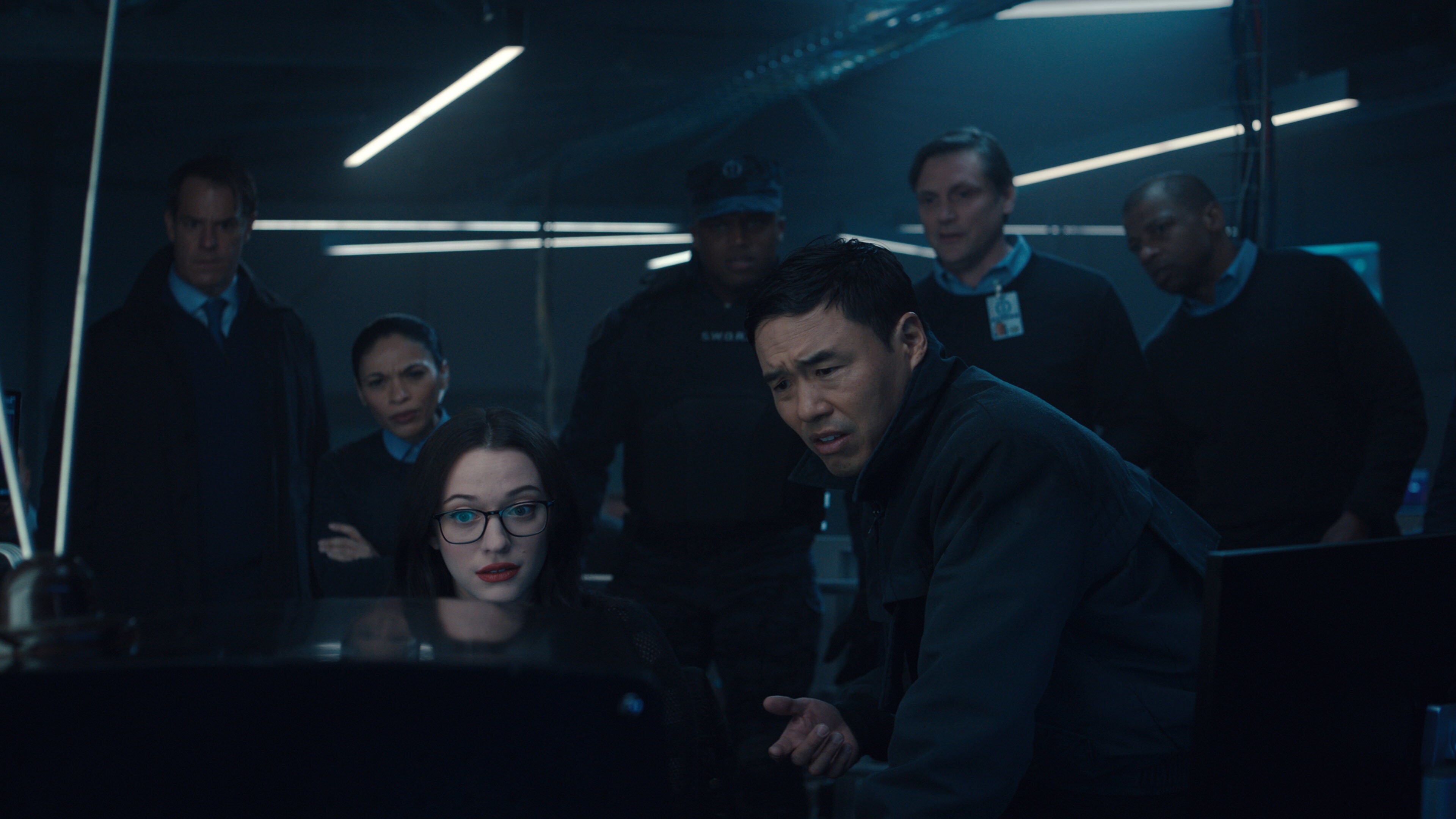
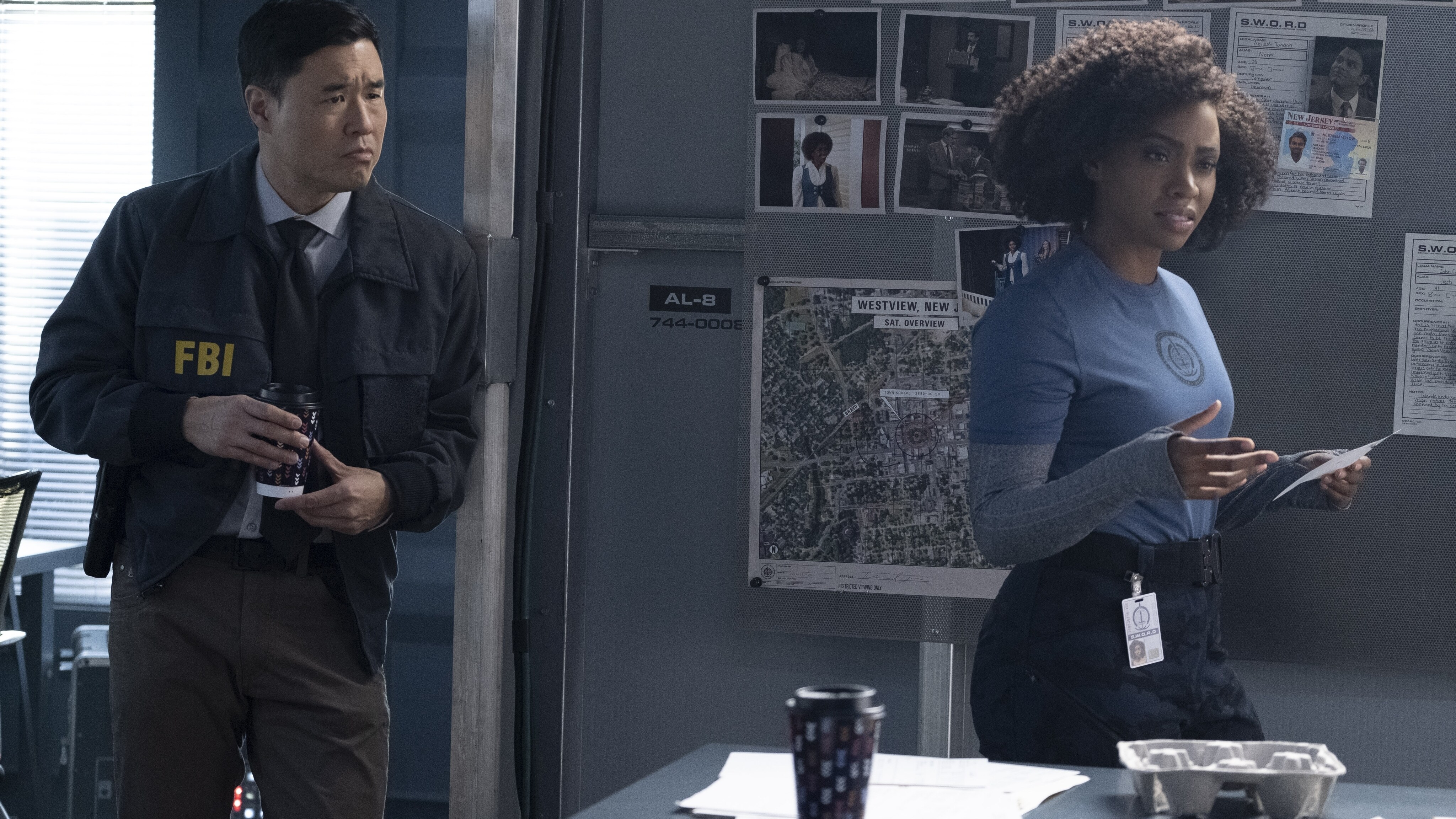
Episode four gives us a welcome change of company. Monica Rambeau, Jimmy Woo and Darcy Lewis are watching the strange television world from the other side. Jimmy asks patient questions, Darcy spots things other people miss, and Monica has already been inside the place they are all studying. Randall Park and Kat Dennings are lovely together: they make investigation feel like work done by people, with curiosity and humour, rather than a queue of experts waiting to explain the plot.
Monica's perspective means the most to me. She has lost her mother and been caught up in the terrible dislocation that followed the Blip. Now she is looking at a woman trying desperately to hold on to a family. That familiarity could make her excuse almost anything. Instead, she keeps asking how the people inside might be reached. I admire that she does not stop caring about Wanda, even when Wanda's choices become harder to defend.
Hayward's approach feels different. He sees the town as a security problem, and his plans grow more forceful as the mystery deepens. There are genuine risks outside the Hex, of course. But when I compare his decisions with Monica's, I trust the person who is still trying to speak to those caught in the middle. It's one of the second act's better ideas: the investigators are not simply clever or foolish according to how much information they possess. Their choices tell us what they think other people's lives are worth.
Childhood in fast-forward
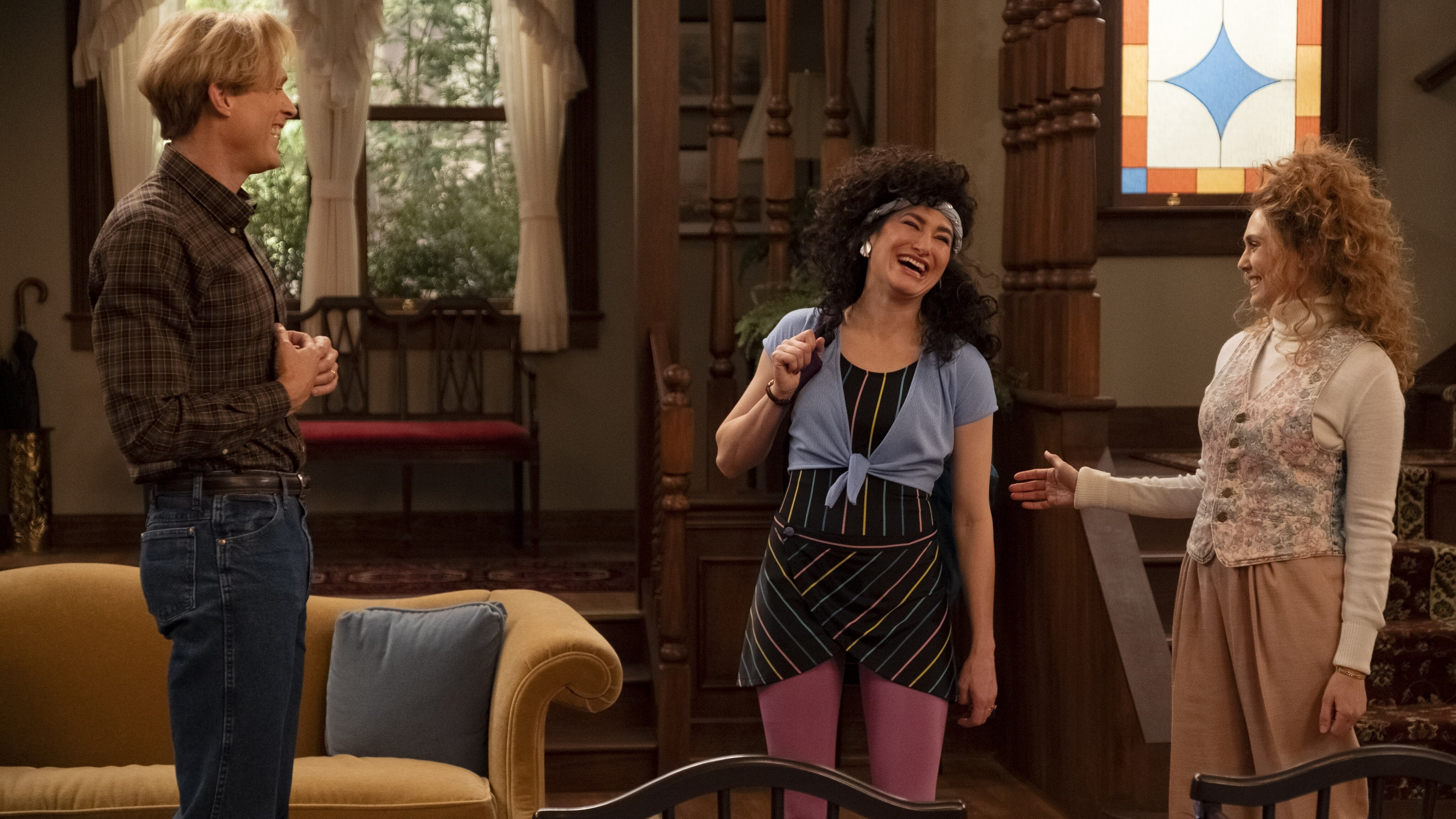
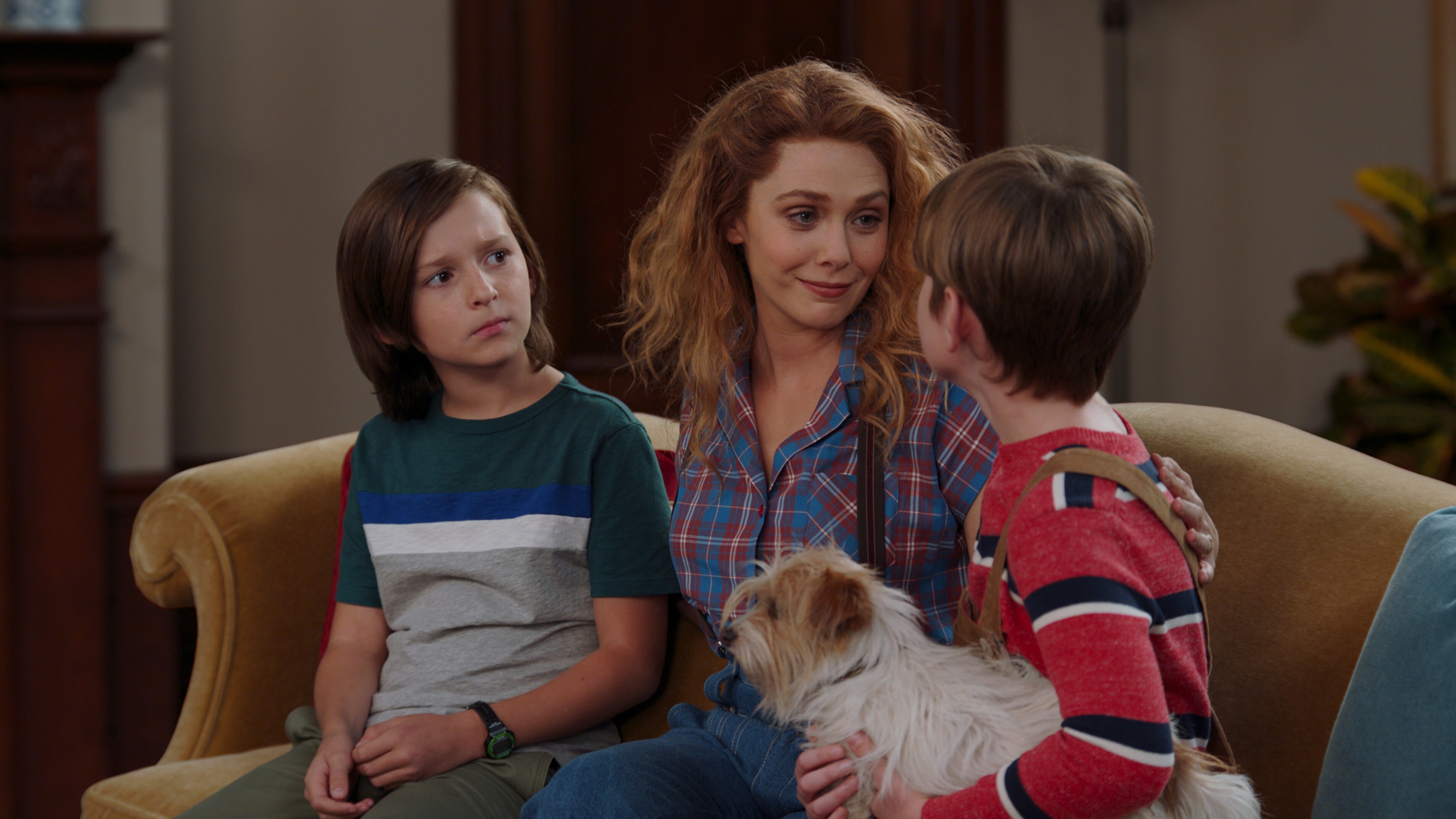
Billy and Tommy rush through stages of childhood that most parents spend years learning to manage. The boys ask for things, push their luck and want to know why their mother cannot simply fix a problem for them. Wanda and Vision have to answer as parents, even when the world around them makes ordinary parenting look almost impossible.
I find the rapid ageing surprisingly sad as well as funny. Wanda wants a household that will stay hers. Yet every time the children grow, she is reminded that loving them does not mean keeping them at one age or under one rule. Olsen often tries to soothe a situation with a warm expression that is just a little too quick. When the boys are upset, you can see how badly Wanda wants to mend the moment before anyone has time to sit with it.
Bettany approaches their changing family from another direction. Vision still loves Wanda, but he is becoming less willing to accept that a reassuring answer must be the right one. The couple are not strangers. That is why their unease feels so recognisable. Many of the most difficult conversations at home begin when two people care for each other and cannot agree about what needs to be said.


Norm's frightened voice
There is one scene I wish everyone outside Westview could see. Vision interrupts Norm's assigned behaviour, and for a little while the man is able to speak about his distress. The cheerful employee disappears. In his place is somebody frightened and desperate to be free.
What Bettany does next is very quiet. Vision listens. He does not try to make Norm more comfortable by offering a joke or telling him that things are probably fine. He gives the man's fear room to exist. That kindness makes the moment harder to watch. It is also what convinces me Vision is changing. He is becoming unwilling to enjoy a home if the people around him have to suffer to keep it standing.
I wish the outside operation had more of that patience. Hayward and Monica disagree for good reasons, but the writing sometimes makes Hayward so plainly aggressive that their conflict loses a little complexity. Monica should have to answer difficult questions about the risks she takes. Hayward should be made to face the human cost of his. The series is richer when neither side can win an argument simply by being assigned the nicer line.
The family at the centre cannot keep every door shut
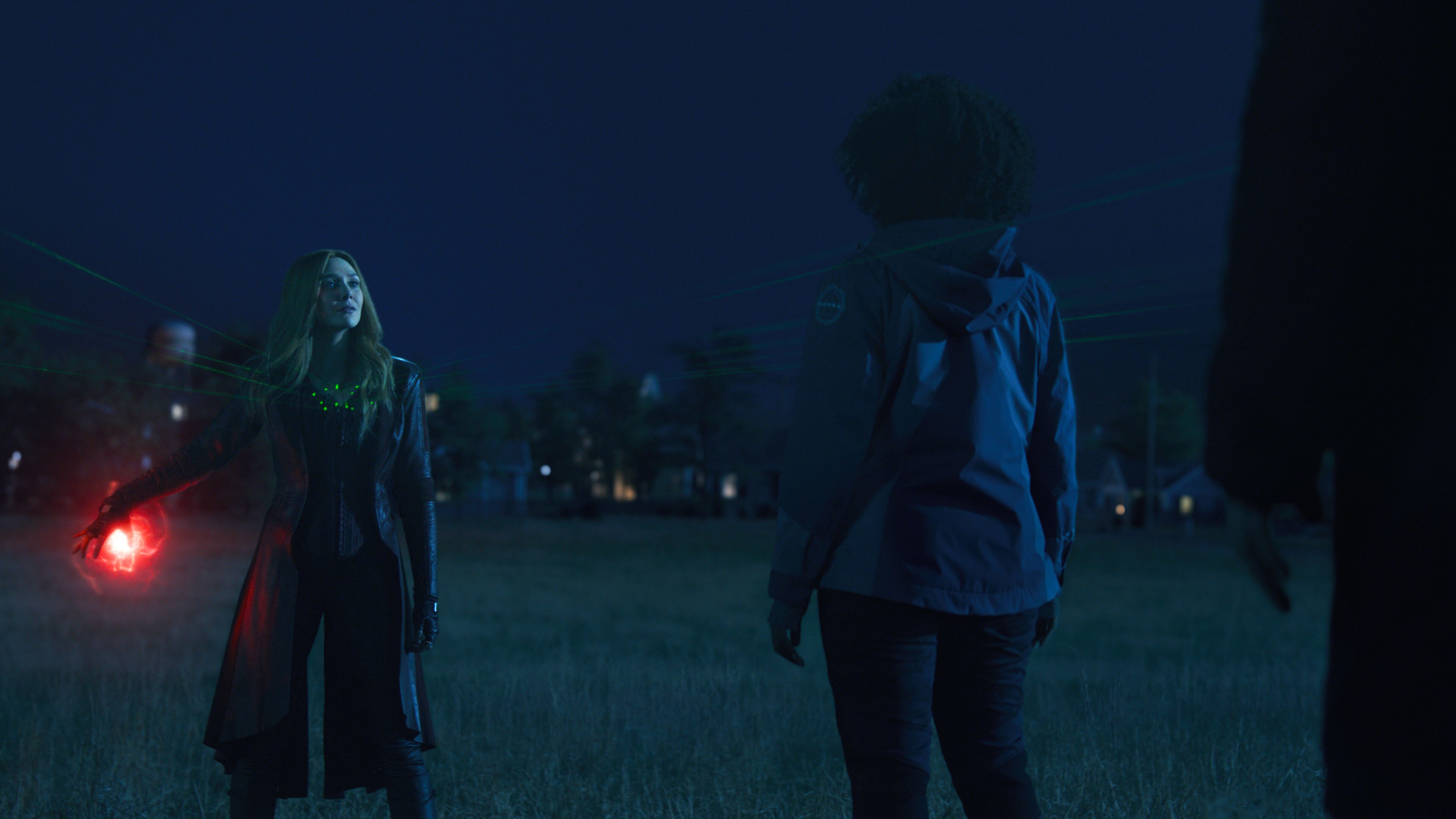
Monica's experience inside the Hex gives her a perspective no television monitor can provide. Later, her choice to cross its boundary again is courageous, though it is not safe or easy to defend. She may reach Wanda; she may place herself in real danger. I appreciate that the story lets compassion involve a decision, rather than leaving it as a lovely word people say in meetings.
Wanda, meanwhile, tries to protect the children and restore calm whenever her carefully arranged household begins to slip. Vision's questions make that increasingly difficult. When he pushes her for an explanation, their argument has the sorrow of a marriage in which both people are frightened of losing something. The glowing lights and shifting surroundings are spectacular. I am watching the faces.
The boys' pet, the neighbour who cannot speak freely, Monica at the perimeter and Vision confronting Wanda all belong to the same rising pressure, but they are not the same problem. Each asks the family for something different. A child needs comfort. A resident needs freedom. A husband needs an answer. A visitor needs to be heard. No single promise of a happy home can meet all four needs.


My feeling about the second act
I think WandaVision grows more compelling here because it stops asking only what the secret is and begins showing who has to live with it. Its best moments are with Norm, the boys and the worried couple whose love does not give them the same understanding of their home. The S.W.O.R.D. conflict is sometimes written too broadly for my liking. Monica's willingness to take a personal risk, though, gives the investigation a human heart. By the end of this stretch I still want Wanda to find some comfort. I just want her neighbours to be able to open their own front doors, too.
Sources: Disney UK episode-four notice; Disney UK mid-season footage; Disney UK cast and creative featurette; Disney+ production kit. Assessments of performances and choices are editorial criticism of the released episodes.
Two perspectives worth comparing
Wanda sees the suburb as a chance to protect her family. Monica and the outside team see a phenomenon that affects people who did not freely choose it. Vision's growing doubts create a third perspective within the home itself. The significant tension is not whether the family matters, but whether its existence can be separated from the cost imposed on Westview's other residents. Rewatch the episodes with attention to which characters actually possess reliable information at each moment.
Original Marvel images: Monica and the boundary
Four additional images: evidence outside, childhood inside
Monica, Jimmy and Darcy must piece together events from incomplete evidence; meanwhile Wanda's household contains people the investigators cannot treat as disposable. The first pair contrasts the inquiry with the family. The second pair shows how professional observers and Wanda herself confront the boundary from opposite directions.
Four external Disney/Marvel studio files added and two existing producer files retained, alongside two pre-existing historical context photographs earlier in this article. No image is rehosted. Official source verified, independent embed permission/public render/mobile test pending.