
MCU Movie Timeline: Key Events Explained
Updated
 Gwenllian.PEditor
Ask a train guard for the order of stations and you get a straight answer. Ask a cinema fan for the order of the Marvel films and you get an argument. The trouble is that Marvel released its universe in one order, while its characters lived through it in another, so a simple question such as 'Which MCU film comes first?' has two defensible answers. A tidy numbered list of all the films tends to hide that, rather than solve it.
If you mean the first film released, begin with Iron Man in 2008. If you mean the earliest major events in the characters' lives, Steve Rogers' Second World War story in Captain America: The First Avenger comes much earlier. Yet that film also has a modern-day ending, and other films revisit older years or take place in parallel universes. A fair story timeline has to say what it is placing, not merely attach one number to every title.
The most useful approach is to follow each film's principal story, keep flashbacks and end-credit scenes separate, and openly mark the periods where films overlap. The MCU contains time travel, alternate Earths and adventures far beyond our planet. Treating all of those as calendar dates in one city gives you a neat table at the price of a false explanation.

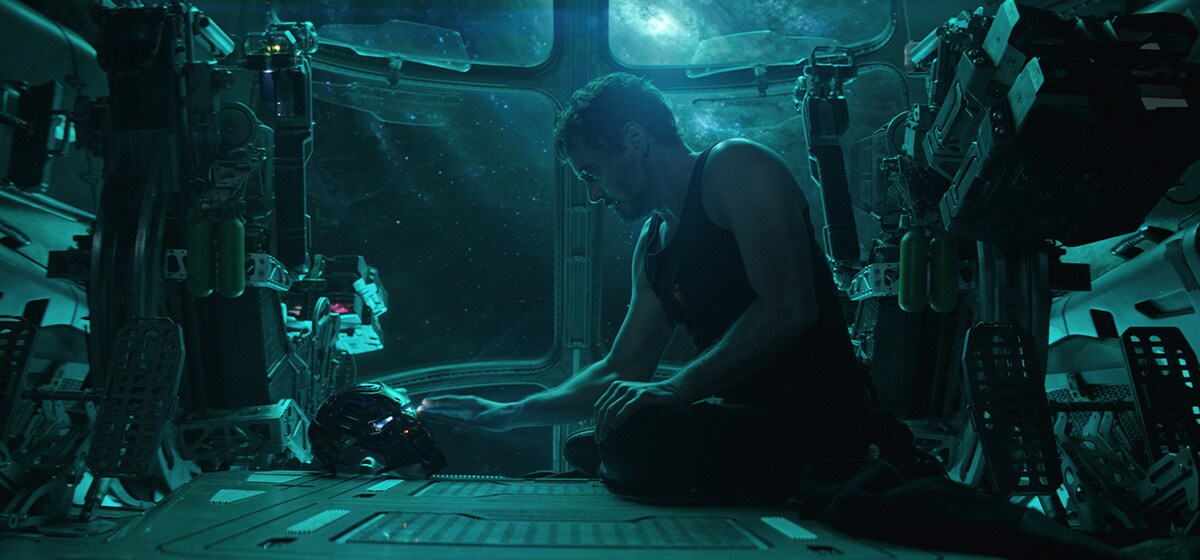
The stories that begin before Iron Man
Steve Rogers' main adventure in Captain America: The First Avenger belongs to the Second World War. His choice to enlist and the cost of his final wartime mission are the foundations of his later dealings with the Avengers. He also wakes in a modern world, a frame that must not drag the whole wartime story into the present day. A chronological viewer can begin with the historical story while remembering that the film's ending deliberately jumps forward.
Captain Marvel is the other clear departure from release order. Disney's own original promotion describes it as a story set in the 1990s, even though audiences first saw it in 2019. Carol Danvers' early relationship with Nick Fury predates the Avengers assembling on screen. Some secondary summaries of Marvel Studios' official timeline book give a narrower year, but the Disney source cited here says '1990s', not a specific month or day. That is the detail this guide can support without pretending to have read an unopened reference book.
There is a lesson in the shift from Steve to Carol to Tony Stark. The MCU is not one unbroken account of ever more elaborate gadgets. It is a history of people who inherit a world already shaped by others, often without knowing those earlier events happened. The audience learns that history in a different order from the characters.
The early modern era is a cluster, not three neat dates
Iron Man introduces Tony's change from weapons manufacturer to armoured hero. Before the first Avengers assembly, The Incredible Hulk, Iron Man 2 and Thor occupy a closely related early period, and Marvel's Fury's Big Week prelude is one official expression of that overlapping continuity. Knowing that the period overlaps, however, is not the same as checking the exact day on which every scene happens.
This is the first place where a confident-looking 'perfect order' breaks. Placing three whole films in a strict before-and-after chain may be convenient for watching, but it is a viewing convention, not a claim that one story ended before the next began. The films share S.H.I.E.L.D. activity and cross-film references, and their main action and end-credit sequences do not follow the same simple boundaries.
One concrete example is the move from Iron Man 2 towards Thor. A Disney investor conference transcript describes Agent Coulson arriving at a desert crater containing a hammer at the end of Iron Man 2. That is a first-party description of a specific linking moment. This guide does not claim to have timed both scenes frame by frame. The defensible statement is that the hammer connects the two stories while their wider event intervals need care.
The Avengers then makes a different kind of chronological statement. It brings previously separate heroes together against Loki's invasion of New York. The team's formation makes sense after their solo stories, although it tells us little about the exact timing of every scene in those earlier adventures. As a narrative milestone, the first collaboration matters far more than a hard rank forced on parallel introductions.
After New York, consequences do not arrive in one straight line
The New York battle changes the characters' sense of what their world can survive. Iron Man 3 follows Tony into the consequences of that experience. Thor: The Dark World also belongs after the earlier Thor and Avengers stories; Disney's published movie storybook says Thor must restore order after those events. Neither source proves whether every central action of Iron Man 3 must precede every central action of The Dark World.
Captain America: The Winter Soldier tests Steve's faith in the institutions he thought he served. It belongs to his post-Avengers modern life, not to the historical period merely because he was born decades earlier. Meanwhile, Guardians of the Galaxy tells a cosmic story with its own relationships and calendar, and Guardians of the Galaxy Vol. 2 follows that team comparatively soon after its first adventure, not simply three in-story years later because the cinema releases were in 2014 and 2017.
Avengers: Age of Ultron brings another decisive change to the team's life, including the arrival of Vision and the Wanda and Pietro storyline. Ant-Man introduces Scott Lang while bringing Hank Pym's earlier history into the present through recollection. A flashback is valuable chronology, but a film should not be moved wholesale into the year of the oldest memory it shows.
These are not pedantic exceptions. They change the meaning of the stories. Tony's reaction to New York, Steve's distrust of secret power and the Guardians' growing sense of family develop through consequences, not through an automatically sorted cinema calendar.
Civil War, divided loyalties and stories told afterwards
Captain America: Civil War follows the Avengers into a dispute over accountability and state oversight. Disney's official film synopsis describes the collateral damage and political pressure behind the split. Black Panther and Spider-Man: Homecoming belong to the aftermath of that conflict, although their own recollections and references must not be turned into unchallenged universal date stamps.
Black Widow shows the problem with using a film's release year. Its main story belongs after the Civil War separation and before the crisis of Infinity War, yet its later tag points further forward. For a principal-action timeline, the main film and the tag should be annotated separately; a single number on the cinema release cannot explain both.
Doctor Strange involves an accident, training and an expanded understanding of reality, not one unbroken afternoon. Some events clearly have to happen before he can join later crossovers, but the precise intervals of his first transformation are not certified here by dated scene evidence. Thor: Ragnarok supplies another important causal lead into Infinity War, while Black Panther continues a Wakandan story shaped by Civil War.
The danger is less that we cannot recognise a broad chain than that we mistake the chain for a minute-by-minute calendar. A story can be demonstrably later in one character's life yet overlap with another's. The correct unit of description is often a causal relationship, not a year.
The Snap makes chronology visibly complicated
Avengers: Infinity War and Ant-Man and the Wasp show why that distinction matters. The central action of the latter follows Scott Lang and his allies, while a later credits sequence intersects the catastrophe associated with Thanos. It is a mistake to infer that every frame of one film comes before every frame of the other from release dates or the placement of credits alone.
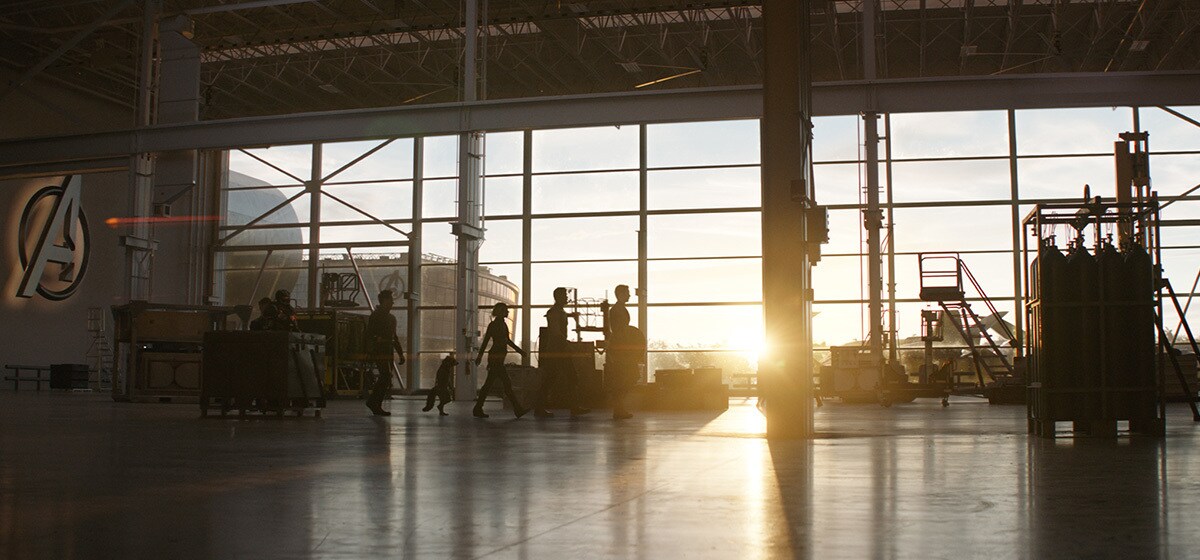
Avengers: Endgame makes the difficulty unavoidable. It starts in the aftermath of catastrophe, its main story develops after a substantial time jump, and its characters then visit earlier moments through time travel. Placing Endgame next to the original Avengers in a story-order list because one sequence returns to the New York battle would misdescribe the film. The principal action belongs to the aftermath, with the journeys annotated as visits to prior eras.
This also prevents a subtler mistake. Tony Stark's death is a released film fact. Robert Downey Jr.'s separate casting as Victor von Doom is a studio announcement for another film. A performer returning does not retime or undo Tony's ending, and an accurate MCU chronology follows the fictional evidence, not a theory inferred from a familiar face.

The later Earth stories and their separate continuities
After the Blip, Spider-Man: Far From Home follows Peter Parker through a world adjusting to enormous change. Sony's account of the later Spider-Man films supplies further relative links: No Way Home follows Peter's public identity crisis, and Brand New Day is described as taking place years after the preceding story. Relative timing is helpful. It is not permission to infer every intervening MCU story's fictional date from a UK cinema opening year.
Other modern films build distinct branches of the same larger universe. Shang-Chi and the Legend of the Ten Rings combines a modern protagonist's life with substantial family history. Eternals reaches much further back through flashbacks but has a modern conflict. Black Panther: Wakanda Forever deals with loss and succession in Wakanda, and Ant-Man and the Wasp: Quantumania places much of its drama in the Quantum Realm, where assuming ordinary Earth clock relationships without evidence is hazardous.
The Marvels ties together characters with histories in film and television. Guardians of the Galaxy Vol. 3 continues the cosmic team while revealing Rocket's past. Thor: Love and Thunder follows the Norse hero beyond older obligations. Captain America: Brave New World continues Sam Wilson's response to the shield Steve gave him in Endgame, and Thunderbolts introduces a different team dynamic from the original Avengers. These continuities are real, even though no complete, independently audited 38-film global ranking is established by the sources used here.
Alternate worlds are not earlier Earth-616 dates
Two recent films demand an explicit branch label. Deadpool & Wolverine draws on an alternate screen continuity and the Time Variance Authority, and the TVA's perspective cannot simply be given an ordinary Earth weekday. The Fantastic Four: First Steps takes place in Earth-828, a separate retro-futuristic world that Disney describes in its own first-party account. Its 1960s-inspired design is not evidence that Reed Richards lived alongside the young Steve Rogers on Earth-616.
Doctor Strange in the Multiverse of Madness also travels across worlds. Once a story changes universes, a simple chronological rank can communicate the wrong thing. A useful table preserves the film and identifies the branch, rather than pretending cross-universe scenes have one established single-world date.
The forthcoming Avengers: Doomsday is advertised as a convergence involving multiple worlds, and Disney UK identifies 16 December 2026 as its UK cinema opening. Neither its release date nor its promotional cast list shows how the plot will resolve those branches. It is sensible to prepare by understanding the difference between them, and it would be dishonest to describe an unreleased event as the final answer to a chronology the film has not yet shown.
The 38-film story-era map: every title, no invented tie-breaks
For anyone using this as a checklist, here are all 38 films from the MSM research roster, grouped by broad principal-story context. The rows give a defensible reading path, not a certified 1 to 38 in-world ranking. The order of titles within a row is a filing arrangement; some stories overlap, some span several eras and some belong to other universes.
| Broad story-era group | Films in the group | Qualifications |
|---|---|---|
| Earlier principal historical stories | Captain America: The First Avenger; Captain Marvel | Wartime main plot with a modern-day ending; a 1990s main plot. |
| The first modern heroes and the Avengers assembly | Iron Man; The Incredible Hulk; Iron Man 2; Thor; The Avengers | Hulk, Iron Man 2 and Thor overlap in the Fury's Big Week cluster; do not infer a hard internal order. |
| Post-New York and developing team histories | Iron Man 3; Thor: The Dark World; Captain America: The Winter Soldier; Guardians of the Galaxy; Guardians of the Galaxy Vol. 2; Avengers: Age of Ultron; Ant-Man | Guardians Vol. 2 sits close to Vol. 1 in its own story; Iron Man 3 against The Dark World stays source-limited. |
| The Civil War split and related solo histories | Captain America: Civil War; Doctor Strange; Spider-Man: Homecoming; Black Panther; Black Widow; Thor: Ragnarok | Black Widow's principal plot and its tag fall in different intervals; Ragnarok is the immediate Thor lead into Infinity War. |
| Thanos, the Snap and the return journeys | Avengers: Infinity War; Ant-Man and the Wasp; Avengers: Endgame | The Ant-Man and the Wasp credits overlap the Snap; Endgame has a post-Snap main plot with deliberate visits to earlier eras. |
| Later modern, cosmic and connected lines | Spider-Man: Far From Home; Shang-Chi and the Legend of the Ten Rings; Eternals; Spider-Man: No Way Home; Doctor Strange in the Multiverse of Madness; Thor: Love and Thunder; Black Panther: Wakanda Forever; Ant-Man and the Wasp: Quantumania; Guardians of the Galaxy Vol. 3; The Marvels; Captain America: Brave New World; Thunderbolts; Spider-Man: Brand New Day | This row deliberately asserts no fixed micro-order across unrelated heroes, cosmic stories, multiverse journeys or time jumps. |
| Separate-world and TVA-related branches | Deadpool & Wolverine; The Fantastic Four: First Steps | A TVA story with a different originating world; Earth-828, whose retro-futuristic period cannot be inserted into 1960s Earth-616. |
The table accounts for all 38 films exactly once. That is an inventory check, not a publisher-endorsed list of 38 unique story ranks. Marvel Studios' official timeline book and Disney+'s story-order collection may support finer choices, but their complete film-by-film content was not independently available for this guide. Until the disputes are resolved from sources, a labelled map is more useful than an apparently precise number that quietly treats release dates as fictional history.
Plotline: where the films actually connect
These are source-bounded continuity leads, not a certified set of planted-and-paid-off Easter eggs. Scene and timecode pairings remain unverified.
| THREAD_ID | PLANTED_AT | CLUE & PRIMARY EVIDENCE | REVEALED_OR_PAID_OFF_AT | CURRENT_STATE | OFFICIAL_SOURCE_LINK | CONFIDENCE |
|---|---|---|---|---|---|---|
| COULSON-HAMMER | Iron Man 2 ending, Coulson at a desert crater | Disney's 2011 investor transcript describes a hammer found in the crater | Thor and the S.H.I.E.L.D. hammer investigation | Studio text describes the link; the two released scenes are not independently timecoded | Disney investor transcript | Film link supported; payoff scene open |
| STEVE-SAM-SHIELD | Endgame, Steve passes the shield to Sam | Disney's 2025 Sam Wilson casting feature discusses the handover | The Falcon and the Winter Soldier, then Brave New World | Released film and TV character continuity; not a verified Easter egg | Disney feature | Studio-explicit; exact timecodes open |
| FIRST-STEPS-EARTH828 | The Fantastic Four: First Steps, separate world | Disney identifies Earth-828 as a different universe | Doomsday outcome and cross-world chronology are not released | Universe label only; not a planted and paid-off clue | Disney feature | Primary world fact; future unknown |
| INFINITY-ENDGAME | Infinity War defeat and aftermath | Disney's released-film synopses document the losses | Endgame attempts to repair the devastation, including visits to earlier eras | Broad causal continuity; exact two-scene payoff open | Disney Movies | High for the official synopsis; scene proof open |
Evidence count: 4 source-bounded continuity leads; 0 independently certified two-scene Easter eggs; 0 confirmed Doomsday outcomes; 0 of 38 films with a certified unique story position. A producer may later verify more scene-level material, and this guide should not upgrade itself automatically.
Hero Psychology: Steve Rogers
Steve Rogers is a useful figure to put at the centre of an MCU chronology precisely because his life refuses to stay in one era. Long before the super-soldier serum, his defining impulse is an unwillingness to accept that strength should decide who deserves help. The transformation changes what he can do, not the ethical question that made him want to act.
Being displaced from the Second World War into the modern age creates more than a scheduling problem. Steve is asked to defend a world built by institutions he did not watch develop. In The Avengers, he must cooperate with people whose assumptions about power differ from his. In The Winter Soldier, his suspicion of secret authority becomes a matter of practical judgement. In Civil War, loyalty to Bucky Barnes tests how far he will oppose colleagues who also believe they are acting responsibly.
There are costs to that consistency. Steve can be principled and inflexible at the same time. He is not automatically right whenever he resists a government decision, nor wrong whenever he trusts a friend. The drama is in watching him balance an old ethical instinct against situations in which nobody has a clean answer. This is a reading of released films, not a clinical label or a claim about his private thoughts.

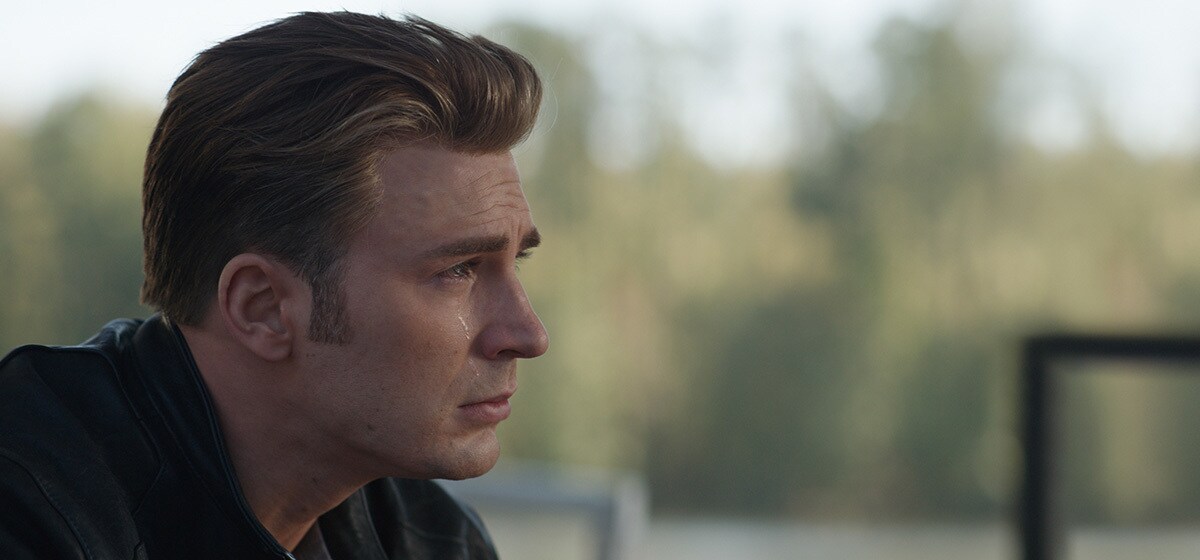
In Endgame, Steve finally makes choices involving both a wider community and his own private future. The later handover of the shield to Sam Wilson changes what his role means for another person. Disney has publicly traced that succession through The Falcon and the Winter Soldier and Brave New World. It matters not because the shield has magical authority, but because Steve's judgement about who should carry it becomes somebody else's burden to accept or question.
That is why a chronology that simply moves The First Avenger to an early number and stops thinking is inadequate. Steve's wartime action has consequences in the present, his modern ending returns to the question of what life he is entitled to choose, and his decision about Sam reaches beyond his own final appearance. He connects periods through responsibility, not through a perfect calendar.
For Doomsday, the publicly established facts are narrower. Disney has published promotional images and cast information, but nobody should use them to certify Steve's unreleased future decisions. The sensible preparation is to understand why he makes the choices he makes in the films we can already watch.
A practical way to use this timeline
If you want the main historical sequence, start with Steve's Second World War story and Carol Danvers' 1990s period, then move to the early modern Iron Man and Avengers assembly era. Follow the post-New York consequences, the Civil War split and the catastrophe and recovery through Infinity War and Endgame. Mark the stories that overlap, and keep world-changing end-credit tags separate from a film's main action.
When you reach the Fantastic Four or a TVA-centred story, turn to a labelled multiverse branch instead of slotting it into Earth-616 by costume style. That is a more faithful kind of guidance than a 38-number list invented for visual neatness: you keep the structure of the story and still know where the evidence stops.
Sources used in this guide
- Disney+ UK, Marvel movies in order: release order only, not story order.
- DK, Marvel Studios: The Marvel Cinematic Universe, An Official Timeline: catalogue entry confirming the book and its scope; interior pages were not accessed.
- Disney, A special look at Captain Marvel: the 1990s setting.
- Disney Movies, Captain America: Civil War.
- Disney Movies, Avengers: Infinity War.
- Disney Movies, Avengers: Endgame.
- Disney investor conference transcript, 2011: the Coulson and hammer linkage.
- Disney, Captain America: Brave New World cast feature: the shield succession.
- Disney, The Fantastic Four: First Steps cast feature: Earth-828.
- Disney+ UK, Countdown to Avengers: Doomsday: the UK date, 16 December 2026.
- Disney Publishing, Thor: The Dark World movie storybook.
- Sony Pictures UK, Spider-Man: Brand New Day: the relative-gap source.