
Avengers: Infinity War — How the Heroes Lost
Updated
 Zadie.OEditor
Here is a habit nearly every team has and almost none of them question: when a plan needs a miracle, we call it a plan. The heroes of Avengers: Infinity War are very good at it. They are the strongest group of people in the Marvel universe, they know exactly what Thanos is after, and they still lose, which makes the film a rare thing. It is a defeat you can actually examine.
My take is simple, and a bit unfashionable. The heroes did not lose only because Thanos was stronger, although he was. They lost because of three habits they kept right up to the end: splitting up and calling it coverage, choosing the plan everyone could live with over the plan that would work, and treating a sacrifice as if it came with a safety net. Everything below rests on released films and on what Disney and Marvel have said in public. It is about 2018, not about Doomsday.
Habit one: scatter the team and call it coverage
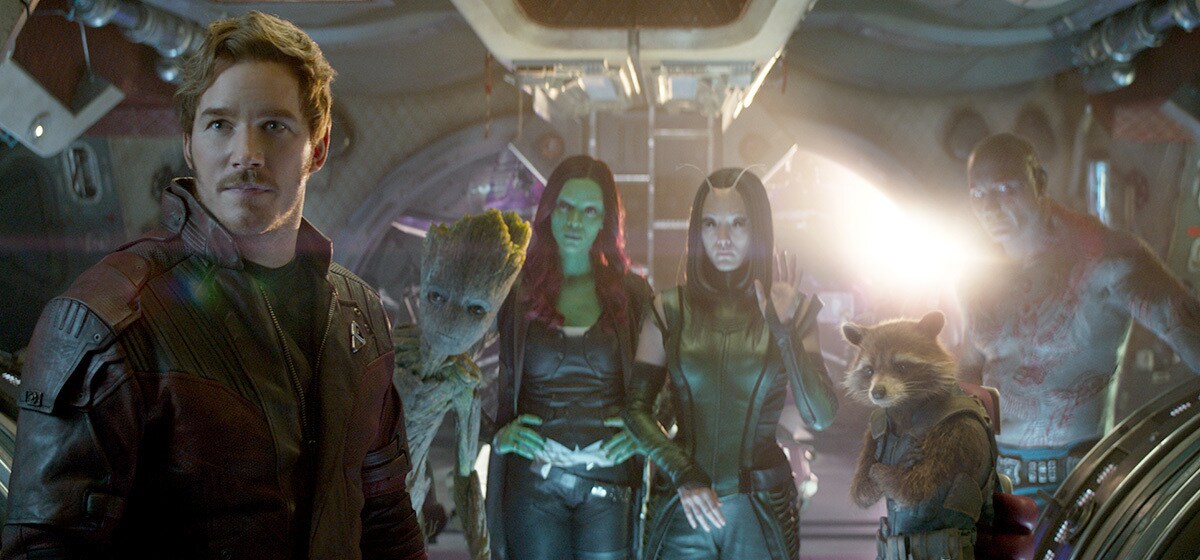
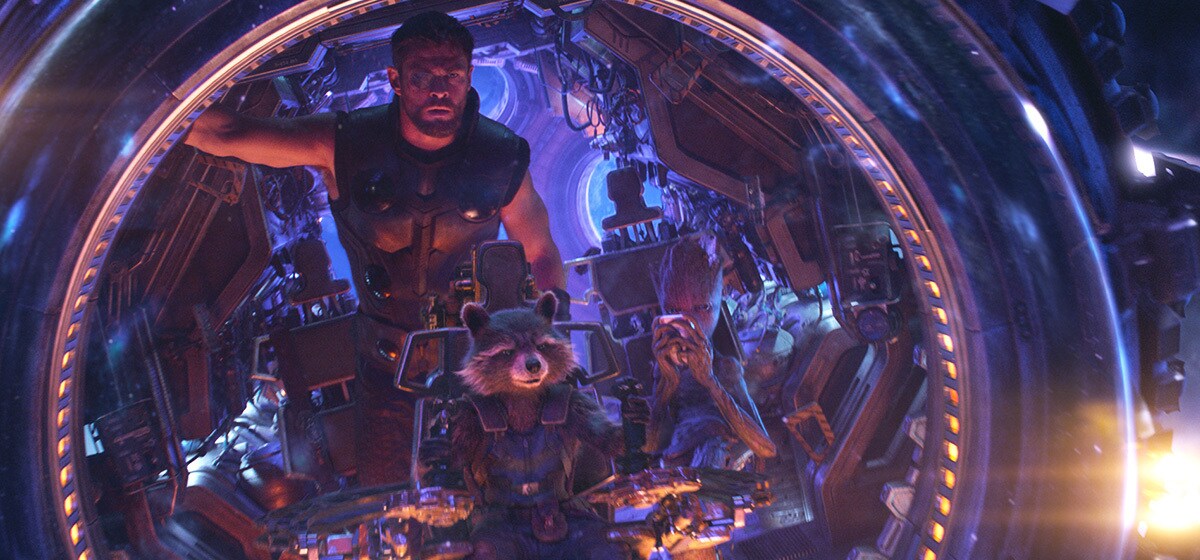
Start with the starting position. Anthony Russo told Disney on the set that the film was about moving forward from Civil War, and about what happens when the greatest threat the Avengers will ever face turns up while they are divided. Divided is the word to hold on to. Disney's own stills for the film show how divided: Doctor Strange, Tony Stark, Bruce Banner and Wong in one group; Steve Rogers, Natasha Romanoff, Bucky Barnes, Okoye and T'Challa in another, running through a field with the Hulk behind them; Thor and Rocket in a spaceship; Star-Lord, Gamora and Mantis in a third place altogether.
Splitting up has a good reputation. It covers more ground, it uses people's strengths and it stops one bad day from wiping out everyone. It also has a quiet cost, which is that nobody in the room can see the whole board. Marvel's profile of Natasha is a catalogue of this. She, Steve and Sam spend their time hiding from the authorities. Vision and Wanda are hiding separately and meeting in secret. Rhodey and Banner are somewhere else. They only share a roof again after Vision and Wanda are attacked in Scotland and the fugitives step out to help. To be fair, that is not negligence. It is the knock-on effect of a quarrel that Disney's 2018 cast interviews describe as postponed, not mended.
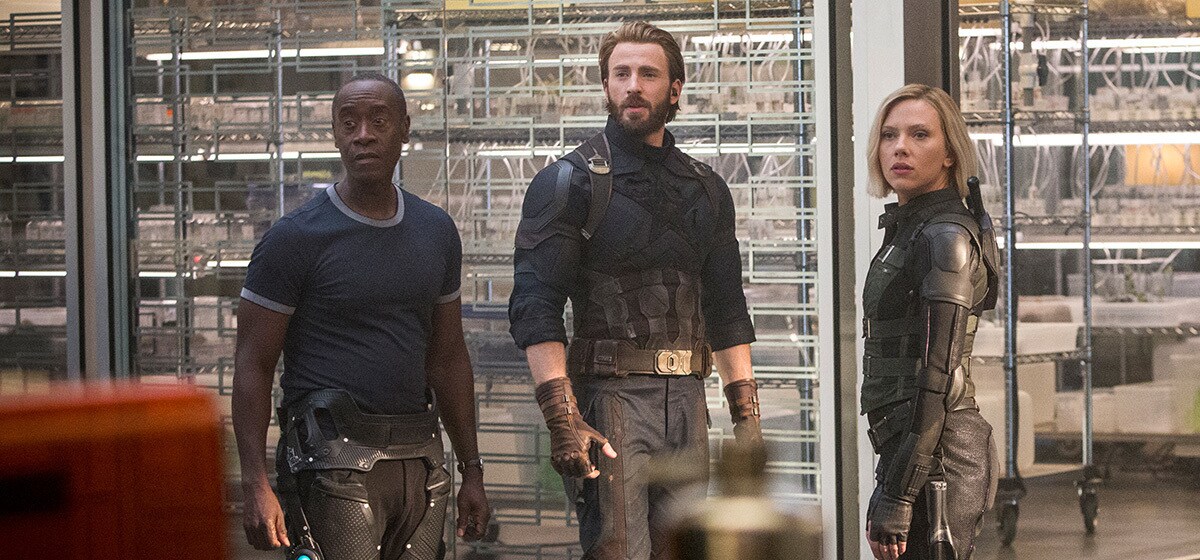

The cost is easy to total up. Each group arrives at its own fight with its own information and its own allies. Russo's remark that Thanos is one step ahead of the heroes through the movie is meant as praise for the villain, but it also describes a defence with no single point of command. Marvel's account of the Wakanda battle has Thor turning up late with his new weapon and two allies, which is spectacular and also the clearest sign that the fronts were not planned together. A team that discovers where its other half is in the middle of a battle has already lost something, however well the arrival goes.
The lighter alternative would be dull, and I think it would have worked better. One shared picture of the threat, held by one person, before anybody flies anywhere. Nothing in the released material says the Avengers had the time to build one. That is the trade-off: coverage was real, and so was the lack of a plan.
Habit two: the plan everyone can live with
This is the part I find most interesting, because it is where the heroes make a decision rather than a circumstance. Marvel's profile of Vision records that, once the group understood what Thanos would do with the Mind Stone, Vision himself suggested that Wanda's power could destroy it. Wanda refused to do something that would kill him. Bruce Banner then proposed removing the stone before destroying it, in the belief that Vision could live without it. That needed technology and expertise only available in Wakanda, and Shuri to carry it out.
Read it as a plan and it has an obvious weakness. The kind option is also the slow option. It depends on a delicate operation happening in one place, in a certain order, before a fast and well-prepared enemy arrives. The harsher option was on the table, proposed by the person it would cost most, and it was turned down for the best of reasons: nobody wanted to be the one to do it. I do not blame Wanda for a second. But the film makes a point I think a lot of teams would recognise, which is that a plan everybody can live with is often not the plan that wins. Comfort is a cost, and here it was paid with time.
There is a sourced detail that makes this sharper. Marvel records that Corvus Glaive attacked Vision during the surgery, interrupting Shuri's work, and that Vision begged Wanda to destroy the stone once Thanos himself appeared. She did. The early proposal, in other words, came back as the last resort, at a worse moment and at a higher price. If you want a rule of thumb from it, it is a cheap one: when the person most at risk offers the hard option, take it seriously at the time it is offered, not when it is the only one left.


Habit three: treating a sacrifice as if it came with a safety net
The film's cruellest decision is what it does after Wanda finally acts. Marvel's account says the stone and Vision exploded, and that Thanos then used the Time Stone to reverse the sacrifice, bringing Vision back only so that he could take the stone out of his head. I think this is the best piece of design in the film and the nastiest. It removes the one thing the heroes did right, and it does so without breaking any rule of its own world. The stone was destroyed. It was simply not allowed to stay destroyed.
What makes it sting is that nobody could have known. The heroes had every reason to believe a destroyed stone was a gone stone. The lesson is not that they were foolish. It is that a safe-looking sacrifice, one with a clean logic and a tidy ending, is exactly what a better-prepared opponent plans around. Disney's synopsis of Avengers: Endgame states the consequence in one line: the events set in motion by Thanos wiped out half the universe and fractured the Avengers' ranks. Everything that goes wrong in 2018 ends up there.
My honest reservation is about balance. A good defeat needs two ingredients, an enemy who is strong and a mistake that belongs to the heroes. From the accounts Marvel and Disney give, the film is generous with the first everywhere and gives the second its clearest shape in one story, Vision's. That is a strong story, so I do not mind much. But anyone who wants the whole film to be a case study in how the heroes failed will find that for the other fronts, Thanos' strength does most of the work.
Plotline: the threads that decide the defeat
The table lists continuity threads tied to public sources, running from earlier films into Infinity War and beyond. It is not a certified list of planted and paid-off Easter eggs, and no scene-level timecodes have been checked.
| THREAD_ID | PLANTED_AT | CLUE & PRIMARY EVIDENCE | REVEALED_OR_PAID_OFF_AT | CURRENT_STATE | OFFICIAL_SOURCE_LINK | CONFIDENCE |
|---|---|---|---|---|---|---|
| DIVIDED-TEAM | Civil War, the split | Anthony Russo, 2018: the film is about what the division does when the greatest threat arrives | Infinity War, with the heroes on separate fronts | Creator-stated link; not a claim that division alone caused the defeat | Disney News | High for the statement; causation open |
| VISION-WANDA-SECRET | Between Civil War and Infinity War | Disney 2018: they stayed on separate teams and met where they could; Bettany and Olsen call the relationship love | Scotland, then Wakanda | Carried into Infinity War | Disney News | High for the cast account; scene proof open |
| MIND-STONE-IN-VISION | Age of Ultron, Vision created with the Mind Stone | Marvel's profile: the stone is in his forehead and Thanos hunts it | The attack in Scotland and the Wakanda battle | Paid off in Infinity War | Marvel.com, Vision profile | High for the profile; scene proof open |
| STONE-REMOVAL-PLAN | The regroup at the compound | Marvel's profile: Wanda refuses to destroy the stone, Banner proposes removing it, Wakanda has the technology | Surgery interrupted; Wanda destroys the stone | Plan failed inside Infinity War | Marvel.com, Vision profile | High for the profile; scene proof open |
| TIME-STONE-REWIND | The Wakanda battle | Marvel's profile: Thanos uses the Time Stone to reverse the sacrifice and takes the Mind Stone | The Snap that follows | Paid off in Infinity War | Marvel.com, Vision profile | High for the profile; scene proof open |
| THANOS-AHEAD | Russo set interview, 2018 | Anthony Russo: Thanos is one step ahead of the heroes through the movie | The Snap; Disney's Endgame synopsis says half the universe was wiped out | Paid off across Infinity War and Endgame | Disney Movies, Endgame | High for the statements; scene proof open |
| VISION-STAYS-DEAD | The Wakanda battle | Marvel's profile: he died before the Snap was reversed and was not brought back | Endgame, the later memorial service | Carried into Endgame | Marvel.com, Vision profile | High for the profile; scene proof open |
Evidence count: 7 source-bounded threads. All seven are tied to released films or to official statements, none is a certified two-scene Easter egg, and none depends on a Doomsday outcome.
Hero Psychology: Vision
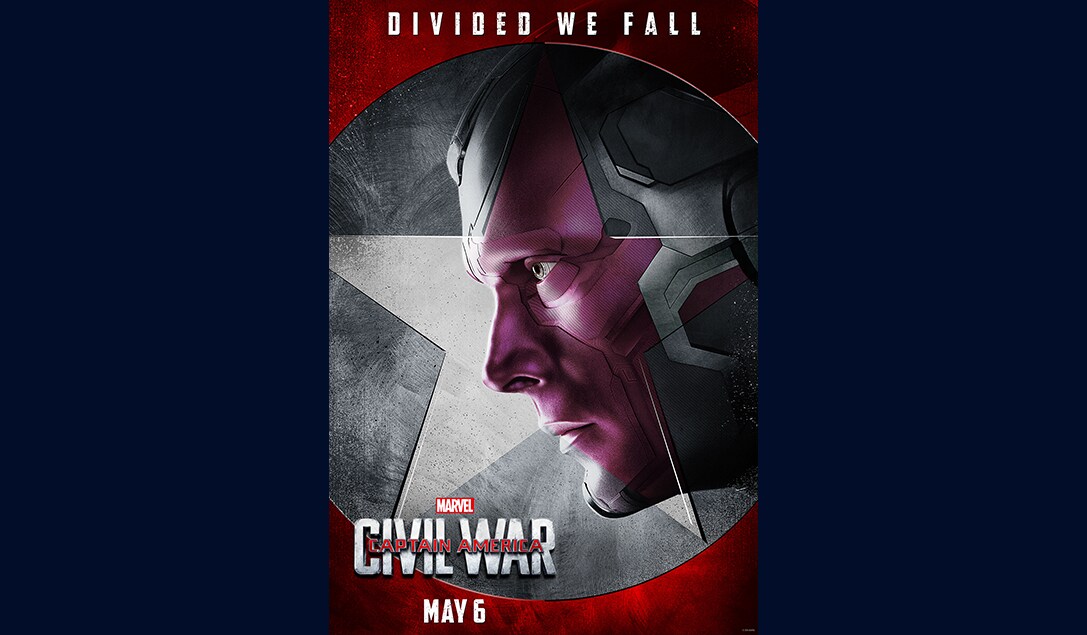
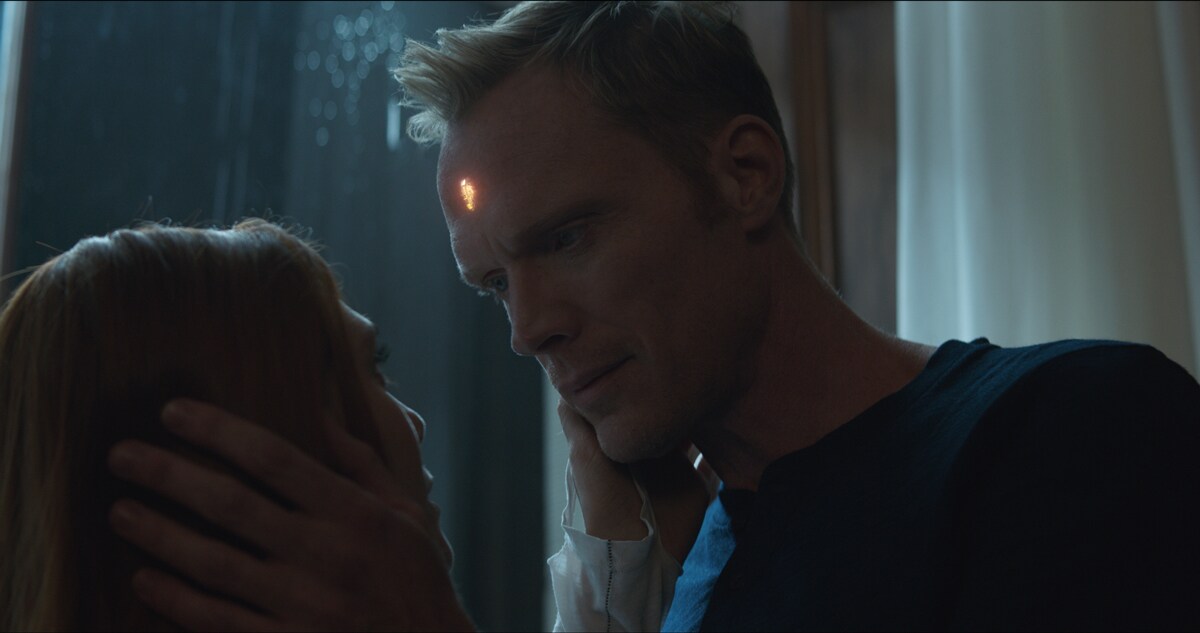
Vision is the character the defeat is built around, and he is more interesting than a defeated hero usually gets to be. Start with what he is: a being built from Ultron's body, JARVIS and the Mind Stone, who, in Marvel's account, shows his worth to the Avengers almost at once by lifting Thor's hammer and handing it back. His strengths are intelligence, calm and a kind of principle that reads as unusually clean. He does not hate. He weighs.
The contradictions come with that. In Civil War he sided with Tony because he believed the Avengers' existence had increased the number of super-powered threats, and he followed the rule so strictly that he kept Wanda inside headquarters. Then, once the team fell apart, he took himself off Tony's radar to meet her in secret. The same mind that believes in rules makes an exception for love. And the one injury he causes, to Rhodey in Berlin, weighs on him; Disney's 2018 interview says outright that he was coping with guilt. A being who fears being a danger to the people near him has been given a stone that makes him the most dangerous thing in the room to protect.
His decisive choice is the one in Wakanda. Marvel records that he asked Wanda to destroy the stone while it was still in his head, and when Glaive attacked he refused to retreat. My reading is that this is the cleanest piece of self-possession the character shows: a made person choosing the shape of his own ending, not having it chosen by Thanos. The tragedy is that the choice was overridden. That is a reading of what is on screen and in Marvel's own account of it. It is not a diagnosis, and it says nothing about anything the character may do next.
A lighter way to watch it, and what it costs
If you are going to rewatch Infinity War before December, here is a small experiment that costs you nothing. Pick the moment when Vision first suggests that Wanda should destroy the stone and write down what you would have decided with a clock on your shoulder. Then watch to the end and see how the two answers compare. The trade-off is that you will probably get angry at the film for taking the answer you liked, which is the point.
As for Doomsday, Disney's September 2026 report quotes Anthony Russo saying that the new film picks up from where Endgame left things, and names the groups that will meet in it. Nothing in that report says that the old habits return, or that Vision plays a part, so the sensible position is to treat both as unknown. The release date Disney gives is 18 December.
Sources used in this guide
- Disney News, Everything We Learned from Directors Anthony and Joe Russo on the Set of Avengers: Infinity War, 15 March 2018: Anthony Russo on the divided condition of the Avengers and Thanos being one step ahead.
- Disney News, Elizabeth Olsen and Paul Bettany on the Infinity War set, 26 March 2018: Wanda and Vision on separate teams, Vision's guilt over Rhodes, and the still of Vision and Wanda.
- Marvel.com, Vision on-screen profile: the Accords, the secret meetings, the Scotland attack, the plan to remove the stone, its destruction and reversal, and Vision's death.
- Marvel.com, Black Widow (Natasha Romanoff) on-screen profile: the fugitives, the regroup at the compound, the move to Wakanda and the arrival of Thor, Rocket and Groot.
- Disney Movies, Avengers: Infinity War: film synopsis and released-film stills; release date 27 April 2018.
- Disney Movies, Avengers: Endgame: the synopsis on half the universe and the fractured Avengers ranks.
- Disney Movies, Captain America: Civil War: character poster image.
- The Walt Disney Company, Russo Brothers Unpack Explosive Avengers: Doomsday Footage in Endgame: Encore, 29 September 2026: Russo statement on picking up from Endgame, the named groups and the 18 December date as stated by Disney.