
What to Watch Before Avengers: Doomsday
Updated
 Hiroshi.TEditor
You do not need to watch every Marvel film before Avengers: Doomsday. Disney+ itself makes that point. It is welcome guidance if you have a handful of evenings rather than a month. It also creates a more useful problem: which earlier stories genuinely explain the people and concepts named in official publicity, and which are merely enjoyable extras?
The method here is simple. Give priority to a work if it explains a major character's decision, establishes a screen idea that official Doomsday marketing has already invoked, or introduces a confirmed returning group. Do not add a film just because it contains a familiar face. And keep the difference between what we know from released stories and what has not happened on screen yet.
For UK readers, Disney UK Press and the regional Disney+ guide give 16 December 2026 as the cinema opening. The US Disney Movies listing says 18 December. An older generic UK page has also displayed the later date. Check your chosen cinema's screening time before making plans, but do not treat the American date as the UK opening. This guide covers previously released films and television, together with studio-announced cast and publicity. It cannot promise a scene or outcome in the unreleased film.
First: understand the Avengers' loss and handover
If time is tight, begin with Avengers: Infinity War and Avengers: Endgame, in that order. The first is the failed effort to stop Thanos; the second explains both the cost of reversing his victory and the gaps left in the old team. Tony Stark dies. Steve Rogers grows old and gives Sam Wilson his shield. Thor leaves the rule of New Asgard to Valkyrie. Each ending changes what being an Avenger means for somebody else.
Those moments matter more than memorising the movement of every Infinity Stone. A watchlist is useful when it helps you recognise a decision. Steve's shield is a transfer of responsibility; Thor's departure from the throne is a different choice about leadership; Tony's sacrifice means that a familiar actor appearing in a later film cannot simply be treated as the automatic return of the same character.
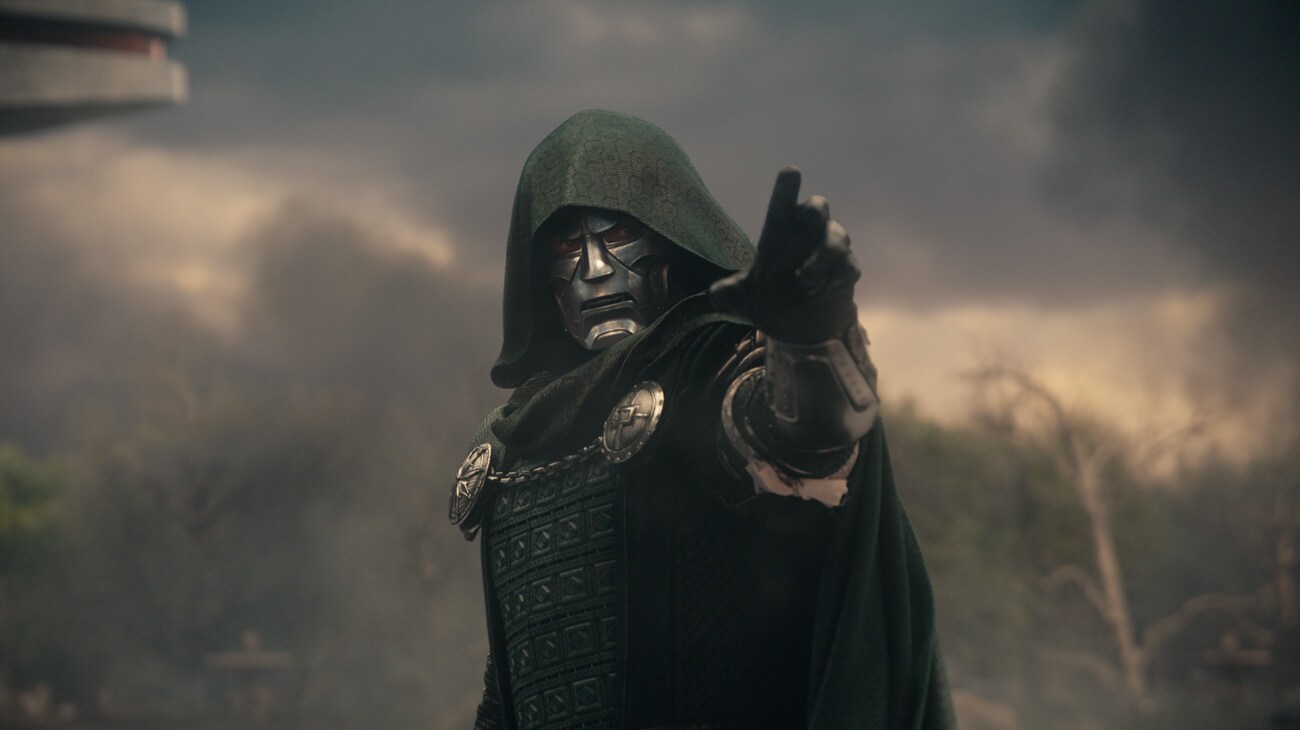
Marvel has confirmed Robert Downey Jr. as Victor von Doom. That is a character casting statement, not proof that Tony survived or that Doom is secretly a Stark variant. We will know whether the screenplay addresses the visual resemblance only after the relevant story is actually shown.
Second: follow the shield from Steve Rogers to Sam Wilson
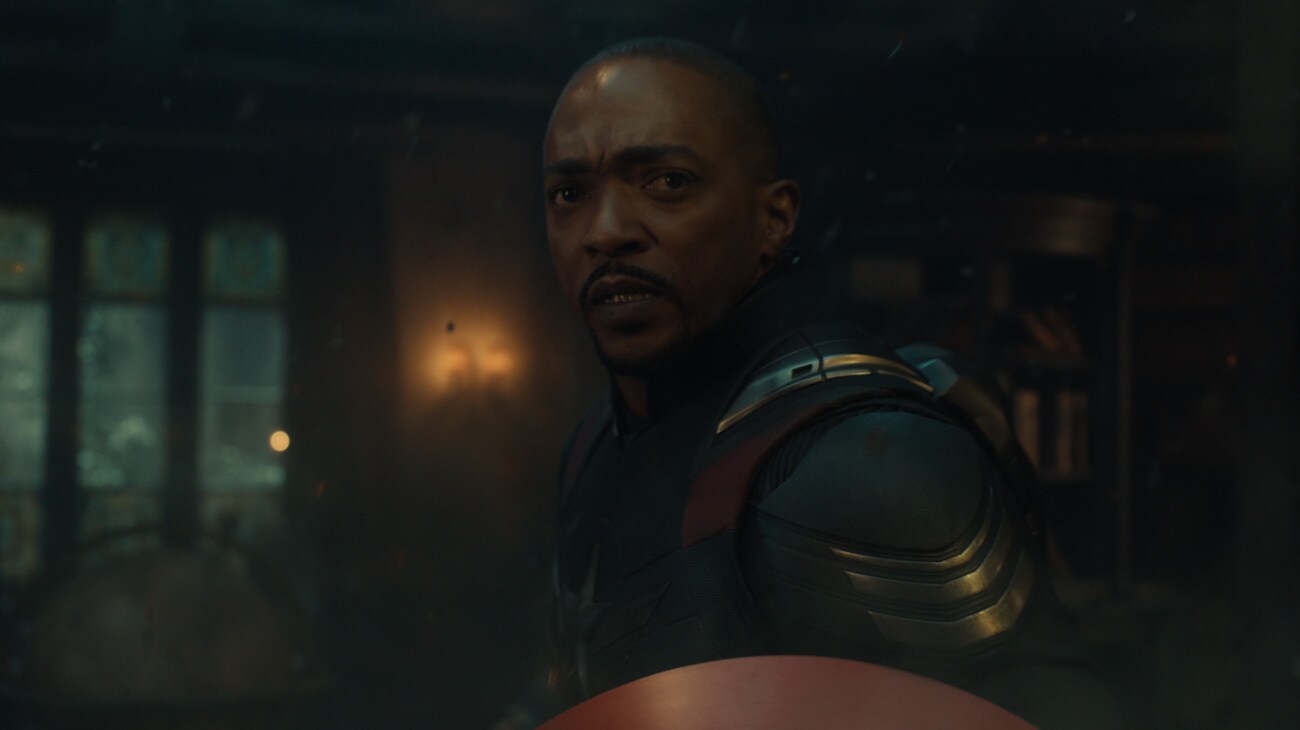
After Endgame, the most directly useful Sam Wilson stories are The Falcon and the Winter Soldier and Captain America: Brave New World. The series examines why accepting Captain America's emblem is not the same as automatically being accepted by everyone the emblem is meant to represent. Sam's work with Bucky Barnes places the argument in personal and political terms, rather than treating the shield as equipment that grants moral authority.
Brave New World then shows Sam operating as Captain America without Steve's super-soldier abilities. Disney's publicity emphasises his humanity and capacity to seek common ground. If you skip these two, you can still recognise Captain America on a poster, but you lose the particular tension that makes Sam an interesting successor: he must decide when to use an inherited symbol and when to question the expectations attached to it.
If you know Steve's background already, Captain America: The First Avenger is optional. If you do not, it gives the shield's earlier significance. The practical priority is therefore Endgame, Sam's series, then Brave New World; an origin story is context, not compulsory homework.
Third: learn what the TVA actually is
Choose Loki if you want one major Disney+ addition. The Time Variance Authority, branching realities and the prospect of multiple histories are established in that series. Disney's 2026 publicity for Doomsday has explicitly mentioned TVA characters and incursions. That makes the series a much stronger recommendation than an arbitrary multiverse-themed adventure.
The important part of Loki's development is not a glossary. He starts as someone desperate to preserve his own importance and gradually confronts the cost of treating other people's lives as pieces in his private game. The TVA supplies a setting in which that choice has consequences on a vast scale. Its characters appearing in promotional material gives a documentary connection to the new film; it does not establish who caused the incursions, how they end, or whether any particular Loki scene has been planted as a secret final-act reveal.
Doctor Strange in the Multiverse of Madness is a useful extra if you want a released screen treatment of crossing realities and the damage that can follow. It should not replace Loki as the primary explanation of the TVA. Nor should anyone claim that the new film must reproduce precisely the same incursion mechanics without confirmation from the new screenplay.


Fourth: watch the Fantastic Four make decisions together
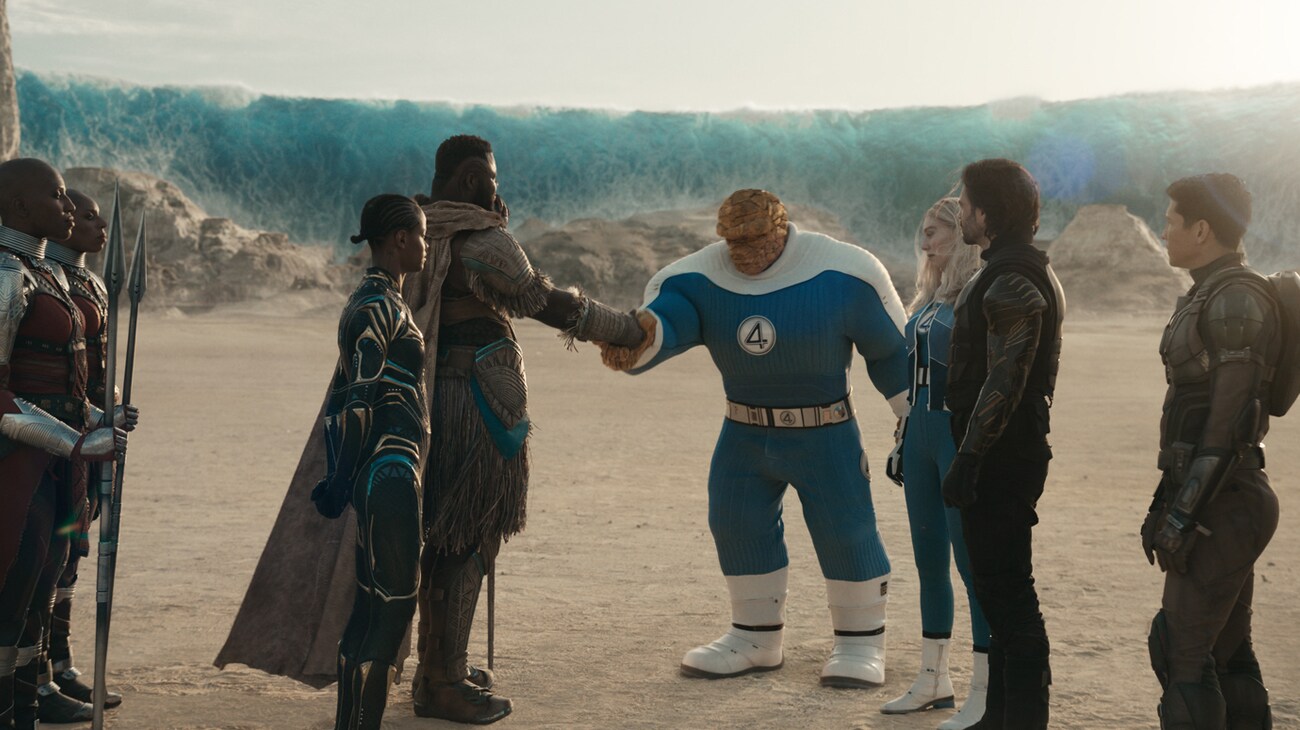
The Fantastic Four: First Steps deserves priority because the announced ensemble includes that family. Disney has identified the film's setting as a separate retro-futuristic world, Earth-828. That matters: its visual resemblance to the 1960s does not place every event into a simple chronological slot on the Avengers' main Earth. Different worlds cannot be merged merely because one film uses an older-looking design.
Pay attention to the relationships among Reed Richards, Sue Storm, Johnny Storm and Ben Grimm. Their problem-solving is shared, often argumentative, and not reducible to Reed being the most intelligent person in the room. Doom's comics rivalry with Reed provides another reason to recognise the family, but comic publication history is not a film spoiler. Marvel's official Fantastic Four history documents Doom as Reed's long-standing rival. It does not certify which conversation or confrontation will appear in Doomsday.
If you cannot watch the entire new feature and are tempted to substitute old, unrelated Fantastic Four film adaptations, note the trade-off: they may familiarise you with character names but not necessarily with the particular performers and world now in Marvel Studios' continuity. Choose the released First Steps feature first.
Fifth: add extras according to your interest
Interested in the X-Men? X-Men (2000) and X2 introduce the older film-world versions of Professor Xavier, Magneto and the fear faced by mutants. Their legacy performers appear in the official new-film publicity. That does not make the Fox films retroactively ordinary Earth-616 MCU history, nor does a cast listing reveal how characters will meet.
Interested in the newer Avengers-related team? Thunderbolts* is more useful than reading a cast spreadsheet. It gives the characters their own context and explains how a group with disputed loyalties became a team. Florence Pugh and other ensemble performers are officially involved in Doomsday, but the exact loyalty of their characters in its new crisis remains unknown.
Interested in Thor himself? Start with Thor (2011), then Thor: Ragnarok and Thor: Love and Thunder. The first concerns the difference between entitlement and worthiness. Ragnarok strips away a home and a crown. Love and Thunder brings Jane Foster into the story again and asks what care means when not every loss can be reversed. This sequence is not a collection of proven Doom clues. It is Thor's character history.
A three-session route and a longer route
For just three viewings, choose Infinity War, Endgame and First Steps. That covers the greatest Avengers loss, its consequences and the newer family's relationships. If you have a fourth, begin Loki rather than pretending the entire series can be replaced by a few out-of-context clips. If you have more time, follow Sam's two later stories, then pick the X-Men or Thunderbolts route according to interest.
This is an editorial priority list, not a statement that the films occurred in the numbered order above. The shared MCU film-and-TV story timeline is a separate research project, still awaiting complete scene-level chronology certification. The two should not be quietly combined.
Four continuity leads, none a proven future payoff
One: Steve hands Sam his shield in Endgame; subsequent released stories explore Sam's response. Two: Thor puts Valkyrie in charge of New Asgard, and later Thor stories follow his life outside the old crown. Three: Loki establishes the TVA, and official advance Doomsday publicity mentions TVA characters. Four: First Steps establishes the Fantastic Four family in its own world whilst comic history provides a Reed–Doom rivalry. These are useful connections, but exact two-scene planted-and-paid-off certification has not been completed. No future ending is confirmed by these four entries.
Hero psychology: why Thor is worth watching carefully
Thor begins his own film series confident that inherited power will make him a suitable king. His reckless actions against the Frost Giants undermine that assumption; losing the hammer is only one part of discovering that strength and judgement are separate things. The loss of Asgard in Ragnarok makes the distinction harsher. What he is responsible for is a community, not simply a palace.
In Infinity War, grief and revenge drive his response to Thanos. In Endgame, his retreat from an old public identity shows how badly he has been shaken. He then lets Valkyrie lead. That decision is a useful measure of growth: leadership can include recognising when somebody else is better placed to carry it.
The contradiction remains. Thor can be affectionate and generous, yet still longs for the grand act that resolves everything at once. A weapon can stop an attack; it cannot bring back his mother, father, brother or the dead of Asgard. Love and Thunder moves his story towards care and the limits of what even a god can control. That is a reading of released films, not a claim to know his private thoughts in a movie not yet seen.
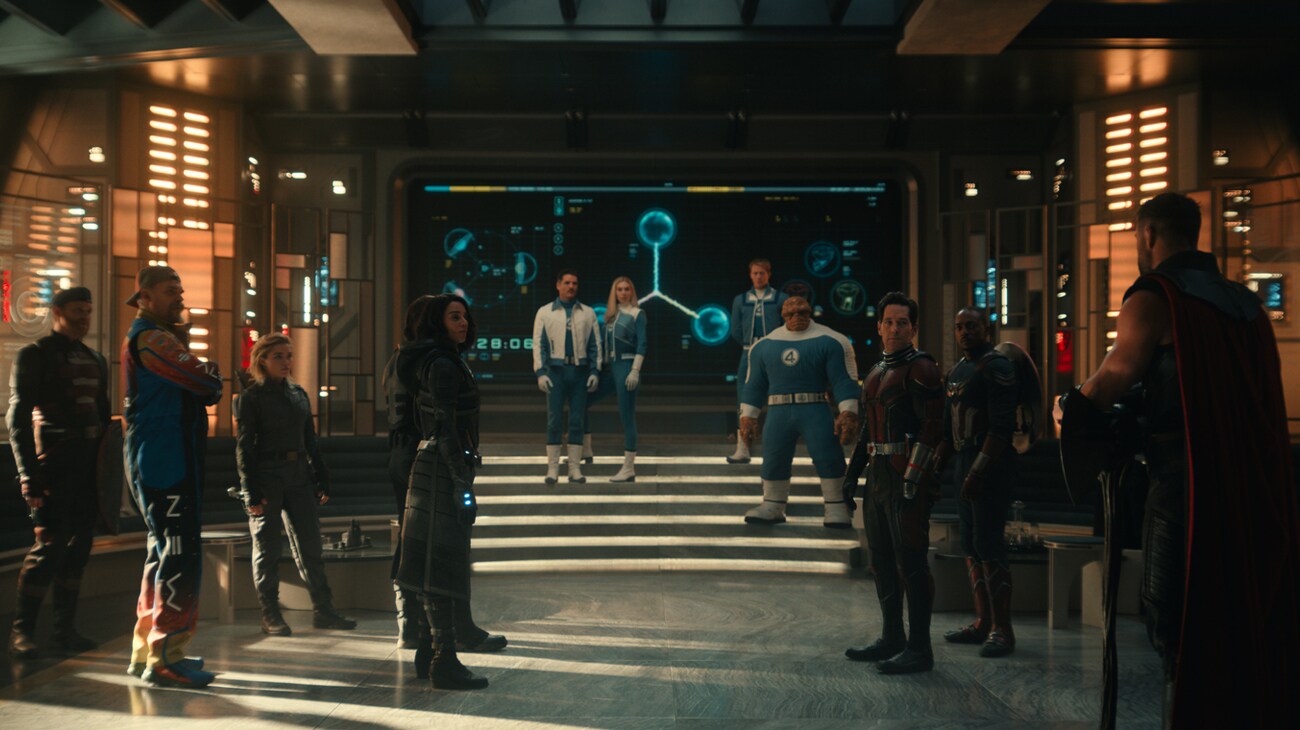
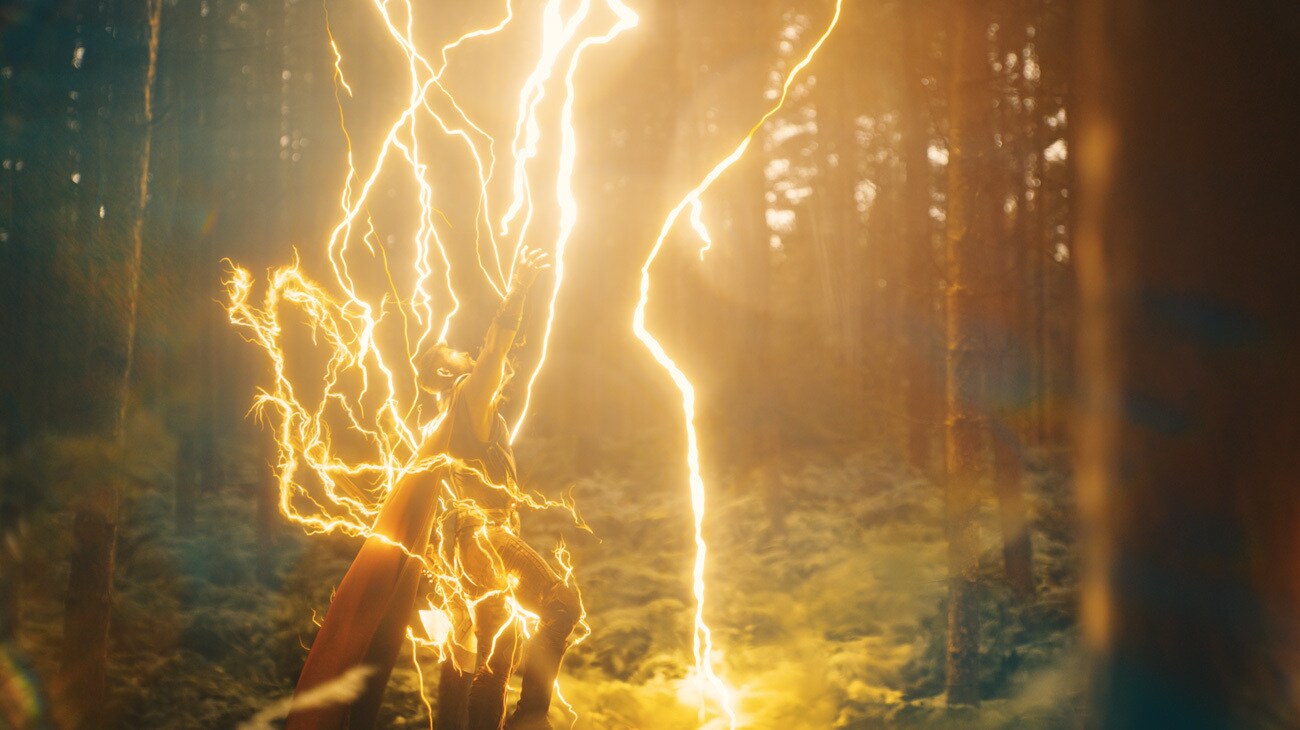
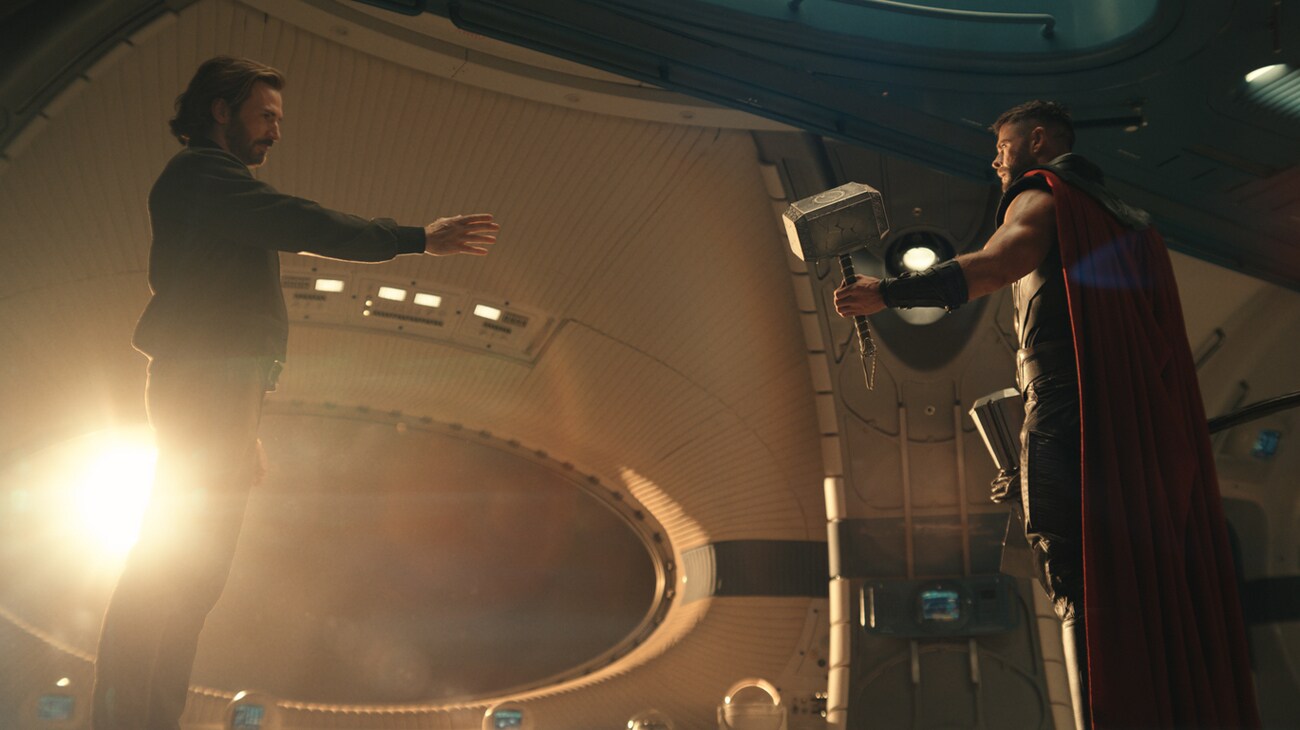
Chris Hemsworth is in the announced Doomsday ensemble, and Disney's own gallery now shows Thor in promotional scenes. These images establish presence, not a final choice. The reader should watch for whether he listens to people whose idea of saving a world differs from his. If the film tests the lesson, the earlier stories explain why it matters.
If you reach the cinema knowing why Steve's shield, the TVA's remit, the Fantastic Four's family and Thor's changing attitude to authority matter, you have done enough preparation. The job of the new film is to tell its story. Your job is to notice what the characters choose when they can no longer solve a crisis by acting alone.
Source and image provenance
All image files are linked to exact Disney-owned CDN source paths from the publishers' own film and press galleries. They show released stories or publisher-disclosed Doomsday promotional frames; they are not invented plot screenshots. Attribution and source links are adjacent in ARTICLE1. Public website image rendering and rights terms remain separate audit items.
- Disney+ UK: viewing guidance and territory opening date
- Disney UK Press: release announcement and official footage
- Disney: confirmed performers
- Disney: official Russo brothers/TVA publicity context
- Marvel: Fantastic Four comic and Doom history
- Disney Movies: six original direct-file stills and character captions
- Disney UK Press: Loki/TVA original still
- Disney UK Press: Fantastic Four original still
Historical comparison does not confirm unreleased film outcomes. UK regional 16 December date differs from Disney's US 18 December listing; exact cinema showing times must be checked independently.